

Game providers are the companies (or teams within larger groups) that design, build, certify, and deliver casino games-like slots and live tables-to operators through direct integrations or aggregators. Practically, knowing "who the provider is" helps you judge content quality, integration effort, compliance readiness, and ongoing support across markets like Thailand-facing sites.
Common Myths and Core Concepts
- Myth: The casino website "made the games." Reality: the operator licenses content from third-party studios, platforms, or aggregators.
- Myth: "Top" providers are only about graphics. Reality: math models, stability, certification, and reporting are usually the deciding factors.
- Myth: One integration equals access to everything. Reality: aggregators speed up access, but each title still has rules, configs, and compliance constraints.
- Core concept: A provider is not just a brand; it's a delivery chain (game build → compliance → hosting → integration → monitoring).
- Core concept: "Live" and "RNG" are different production and risk models, so live casino game providers operate more like broadcast studios plus gaming platforms.
How Game Providers Are Structured: Studios, Developers, Aggregators
Myth: "Provider" always means the same thing. Correction: it can mean a game studio, a platform/remote gaming server (RGS) vendor, a content aggregator, or a hybrid that does multiple roles. Practical implication: always ask what part of the stack they own and support.
In day-to-day industry usage, online casino game providers are the entities whose identifiers appear in back office reports (game IDs, provider IDs, round references) and whose services you integrate to launch titles. A studio may create the game, but the "provider" label often attaches to whoever distributes it and takes responsibility for uptime, reconciliation, and change control.
Think of three common shapes:
| Provider type | What they primarily do | What you get | Common trade-off |
|---|---|---|---|
| Game studio (RNG) | Designs game logic, math, art, audio; sometimes operates its own RGS | Distinct titles and features; direct roadmap access | More integrations if you want many studios |
| Platform / RGS vendor | Hosts game sessions, wallets (sometimes), reporting, jackpot services, compliance tooling | Operational backbone; consistent APIs and controls | May limit flexibility if the platform dictates rules |
| Aggregator | Bundles many studios under one technical and commercial gateway | Faster expansion and a broader catalog | Less direct control over per-studio quirks and updates |
| Hybrid group | Runs studio + RGS + aggregation under one umbrella | One contract can unlock multiple layers | Vendor concentration risk |
Practical implication: when someone offers a "casino game providers list," verify which entries are original studios versus aggregators reselling the same titles-otherwise you can double-count "content" that is identical.
Behind the Code: Technologies Powering Slots and Live Games
Myth: slot outcomes are "picked" by the UI animation. Correction: outcomes are determined server-side (or in controlled client-server flows) by RNG logic and the game's math model; the front end mostly renders the result. Practical implication: testing and certification focus on the game engine and interfaces, not just visuals.
- RNG engine + game math: defines symbols, reel strips/weights, feature triggers, and payout rules; it produces a result per game round.
- Game client: HTML5/JS (commonly) that animates the outcome, manages states (base game/bonus), and handles localization.
- Remote Gaming Server (RGS): session orchestration, round lifecycle, idempotency, and authoritative game state for disputes.
- Wallet and settlement interfaces: debit/credit calls, rollback handling, and reconciliation identifiers (round ID, transaction IDs).
- Game-to-operator reporting: event logs, game KPIs, and error codes used by support and fraud teams.
- Live stack: studio cameras, game control units, video streaming/low-latency delivery, and dealer UI tied to the betting engine-this is why live casino game providers have operational constraints similar to broadcast production.
Practical implication: when evaluating "best slot game providers," ask for API error catalogs, rollback behavior, and incident response processes-these predict operational pain more reliably than theme quality.
Business Models: Licensing, Revenue Share, and White-Label Deals
Myth: you "buy the game once" and you own it. Correction: most arrangements are licensing plus ongoing commercial terms tied to usage, distribution, or revenue. Practical implication: align contract structure with how you plan to scale brands, markets, and content breadth.
- Direct studio licensing: operator integrates the studio/RGS and pays per agreed terms; good for priority access and deeper customization.
- Aggregator distribution: one contract + one integration unlocks multiple catalogs; fastest route to a wide lobby.
- Platform-led bundle: the platform provides wallet/session management and a curated content set; common when speed-to-market matters.
- White-label casino: operator brand sits on a provider's full stack (platform + content + back office); minimal engineering but limited differentiation.
- Market-limited licensing: titles restricted by jurisdiction, language, or brand; important for Thailand-facing operations using offshore licensing models.
- Promotional mechanics add-ons: jackpots, tournaments, free spins tools sold as modules rather than core game fees.
Practical implication: "top casino software providers" are often strong because they combine commercial flexibility with stable platform tooling, not because they own every game in the catalog.
Content Pipelines: From Concept to Live Release
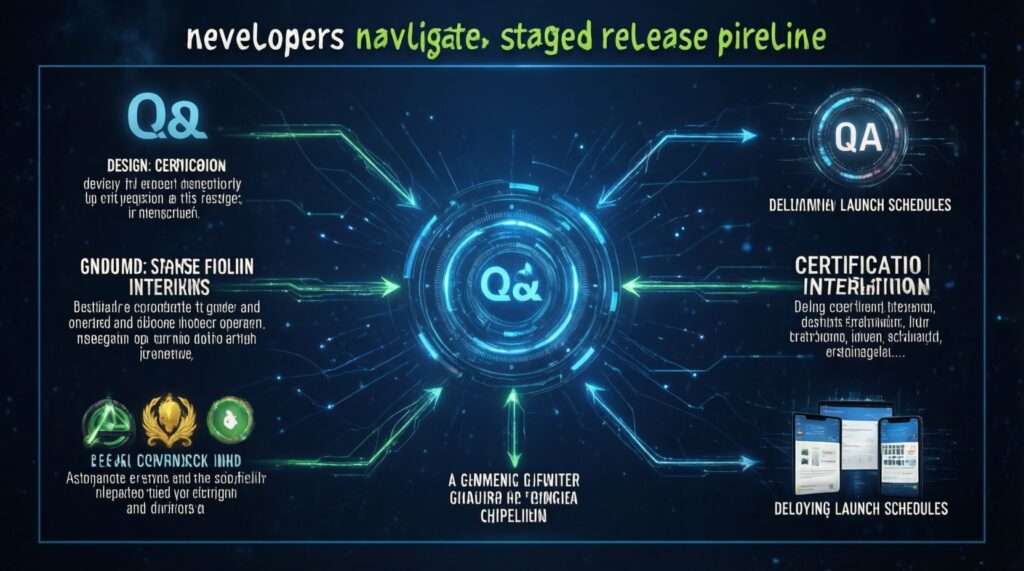
Myth: providers can publish a new game instantly. Correction: releases pass through design, implementation, QA, certification packaging, and operator configuration-then staged rollout. Practical implication: your launch calendar depends as much on compliance and integration queues as on creativity.
Where providers help you move faster
- Reusable frameworks: shared game engines reduce bugs and speed up new features (e.g., bonus frameworks, localization, accessibility).
- Standardized integration contracts: consistent wallet and reporting interfaces reduce operator-side regression risk.
- Pre-built back office tooling: configuration, bet limits, reality checks, and monitoring dashboards.
- Content operations: scheduled updates, asset pipelines, and release notes that keep operators aligned.
Where the pipeline limits your flexibility
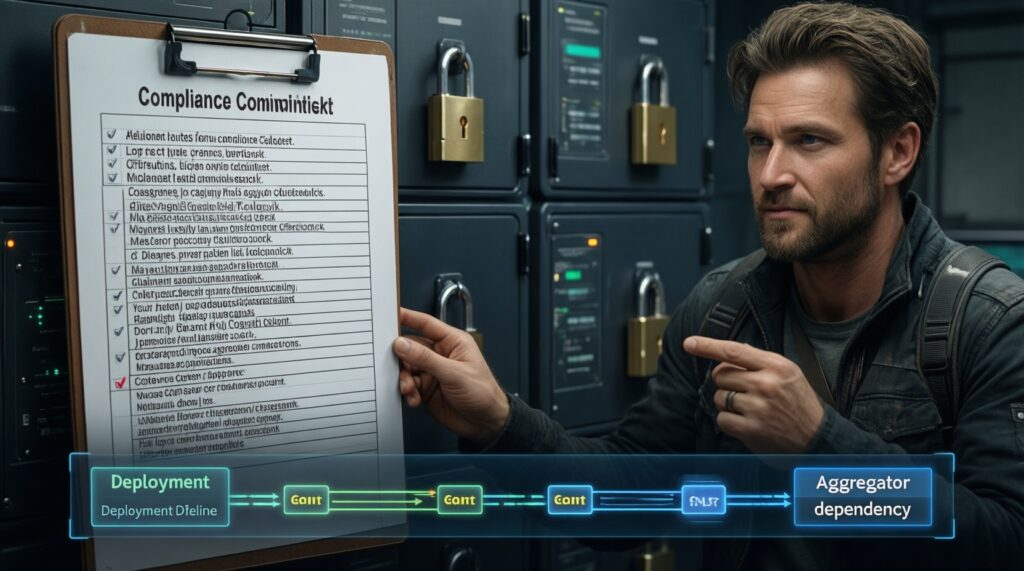
- Certification gating: even small changes (math, RNG components, critical bug fixes) can require re-validation and controlled deployment.
- Configuration boundaries: many games allow only a fixed set of bet limits, RTP variants (where applicable), and feature toggles.
- Dependency chains: aggregator updates, platform changes, or SDK upgrades can delay releases.
- Localization constraints: languages, fonts, and regulatory messages must match what the provider supports, not what marketing wants.
Regulation, Certification and Fairness Assurance
Myth: "certified" means the game can run anywhere. Correction: certification evidence and technical requirements vary by regulator, lab, and operator risk policy; content may still be geo-restricted. Practical implication: treat compliance as a per-market checklist, not a one-time stamp.
- Mistake: assuming fairness is proven by UI displays. Better: rely on round records, transaction logs, and auditable game event data.
- Mistake: ignoring change management. Better: require versioning discipline (game version, math version, config version) and release notes tied to builds.
- Mistake: skipping rollback and dispute flows. Better: validate idempotency, retry logic, and settlement reconciliation for interrupted rounds.
- Mistake: treating live tables like RNG slots operationally. Better: assess studio uptime, streaming redundancy, table limits, and peak concurrency handling.
- Mistake: evaluating a provider only by a lobby demo. Better: request integration docs, error codes, and sample logs to judge real-world operability.
How Operators Select and Integrate Provider Content
Myth: choosing providers is mainly a branding decision. Correction: operators select based on integration friction, commercial terms, compliance fit, and ongoing support-then optimize content mix. Practical implication: your "best" provider is the one that fits your stack and operating model, not the loudest brand.
Mini-case: narrowing a provider shortlist and shipping safely
- Define scope: markets served, device focus, desired mix (RNG vs live), and whether you need an aggregator to expand quickly.
- Build a shortlist: start with a verified catalog and avoid duplicates across aggregators; document a single "source of truth" for your casino game providers list.
- Run a technical due diligence: wallet flow, rollback rules, round IDs, reporting fields, language packs, and incident SLAs.
- Do a staged rollout: internal QA → limited traffic → full launch; monitor errors and reconciliation deltas before scaling promotions.
// Pseudo-flow: resilient round settlement (operator side)
debit(player, amount, roundId)
result = provider.play(roundId, bet, metadata)
if result.status == "OK":
  credit(player, result.winAmount, roundId)
  persist(roundId, providerGameVersion, transactions)
else:
  // retry-safe handling
  rollbackOrQueryRoundState(roundId)
  reconcileWithProviderLogs(roundId)
Practical implication: the integration quality you verify here is what separates stable launches from "it worked in the demo" surprises.
Practical Questions Operators and Players Ask
Are game providers the same as the casino operator?
No. Providers build and deliver the games; operators run the casino brand, handle payments, user accounts, and promotions.
Why do the same slots appear on multiple sites?
Because one studio title can be distributed via direct deals and via aggregators. The lobby may look different, but the underlying game build is often the same.
Do "top casino software providers" always make their own games?
Not necessarily. Many are platform-first and license or aggregate third-party games, while offering strong back office, wallet, and compliance tooling.
How can I tell which provider made a specific game?
Check the game info panel, paytable/about screen, or the provider tag in the lobby filter. Operators can also confirm via the provider ID in reporting.
What makes "best slot game providers" practical to operate?

Clear integration docs, predictable rollback behavior, strong monitoring, and disciplined versioning. These reduce downtime, disputes, and reconciliation work.
Are live casino game providers harder to integrate than RNG slots?
Often yes, because live involves streaming, table availability, limits management, and studio operations. The integration can be simple, but operations and support are more demanding.
Is using an aggregator always better than direct integrations?
No. Aggregators speed up catalog growth, but direct integrations can give better control, faster fixes, and clearer accountability for specific studios.