A mobile casino UX review should focus on three outcomes users instantly judge: speed (how quickly the app responds and recovers), safety (clear, consistent trust signals around money and identity), and fairness (transparent game rules and verifiability). Use a repeatable checklist and a short set of UI patterns to reduce friction without increasing fraud risk.
Snapshot: UX Criteria That Drive Trust and Speed
- Perceived speed beats raw speed: instant feedback, predictable loading, and fast recovery after errors.
- Trust is built on consistency: security cues must appear at every sensitive moment (login, deposit, withdrawal).
- Fairness needs proof, not claims: surface RTP, rules, and audit context where users make decisions.
- Onboarding should minimize steps while increasing confidence: progressive verification and clear reasons for checks.
- Money flows must be legible: fees, limits, statuses, and timelines should be visible without support tickets.
- Design for interruption: backgrounding, weak networks, and device switching are normal on mobile in TH.
Performance: Measuring Perceived Speed and Responsiveness
Best for: teams aiming to ship the best mobile casino app experience on mid-range Android devices, unstable networks, and high-traffic events, where users judge quality by responsiveness and clarity.
Not worth doing (or postpone): if you cannot instrument real-user performance, if your backend cannot provide stable latency/availability, or if you are operating without a clear compliance posture (you will optimize the wrong screens and increase risk).
- Track "time to first meaningful action" for key tasks: open app, open lobby, open game, place bet, confirm deposit/withdrawal.
- Define a "no-dead-air" rule: every action must show state within a beat (skeleton, spinner with label, optimistic UI where safe).
- Design for weak networks: show retry, resume, and offline-safe states instead of generic errors.
- Prefer consistency over peak speed: fewer unexpected pauses feels faster than occasional very fast loads plus stalls.
Security Signals: Designing Trust Into Every Screen
To evaluate and improve a safe secure mobile casino app, you need access to both UX and operational evidence, not just visual design.
- Environments and access: staging build with real payment/sandbox flows, test accounts across risk tiers, device lab (at least 1 mid-range Android, 1 iPhone), and logs for auth/payment events.
- Identity & session controls: MFA/biometric options, session timeout policy, device binding rules, and "new device" detection messaging.
- Payments context: deposit/withdrawal provider behaviors, status codes mapping, and dispute/chargeback handling flows.
- Compliance content: ability to display license/terms/responsible gaming notices in-app, plus localization for TH language and support.
- Tooling: analytics events for funnel steps, crash reporting, performance monitoring, and feature flagging to roll back risky UI changes.
Fairness Transparency: Communicating RNGs, RTP and Auditability
Risk-aware constraints (apply before changing UI):
- Do not overpromise outcomes (avoid wording that implies guaranteed wins); keep copy factual and consistent with terms.
- Do not expose sensitive anti-fraud logic (limits, triggers, exact thresholds) in user-facing messaging.
- Do not add "fairness" badges without verifiable backing; misleading cues erode trust and can raise regulatory risk.
- Do not bury key game rules behind multiple taps; lack of clarity increases disputes and support load.
-
Inventory fairness touchpoints by decision moment
List the screens where users decide to play or spend: lobby tiles, game detail, bet panel, deposit/withdrawal confirmation, and history. Your goal is to place fairness information where it prevents regret, not where it is ignored.
- Lobby: short "rules / RTP / provider" snippet on game detail entry.
- In-game: a single tap to "How this game works" that does not pause or break state.
-
Standardize the RTP and rules presentation
Use the same structure across all games: RTP (if applicable), volatility/variance descriptor (if used), key rules, and how bonuses interact with payouts. Consistency is what makes a fair online casino app feel legitimate.
- Make "RTP" a label with a short plain-English explanation (avoid jargon-only tooltips).
- Show bonus constraints (wagering, max cashout) at the moment a bonus is selected or applied.
-
Make auditability visible without overwhelming users
Provide a compact "Fair play & verification" section that points to game provider details, change logs (if you have them), and any certification references you are allowed to show. If you claim "licensed mobile casino app", include the license context in the same trust cluster.
- Place license/operator info in Settings and in the cashier area (where money decisions happen).
- Keep "Learn more" links in-app; avoid forcing users to a browser mid-flow.
-
Design bet confirmation and results for dispute prevention
Users believe an app is fair when outcomes are legible. Show stake, lines/selection, total bet, and a clear result summary with a "details" drill-down that matches history.
- Use immutable receipt-like history entries with timestamps and IDs users can reference in support.
- Prevent double-bets: lock controls during submission and show a progress state.
-
Align withdrawal transparency with fairness perception
Even if games are fair, delayed or confusing withdrawals destroy trust. If you position a fast payout mobile casino, make the payout timeline, steps, and statuses explicit, including what triggers review.
- Show status: submitted → processing → approved → sent (or equivalent for your providers).
- Explain "why verification is needed" in plain language, without exposing anti-fraud thresholds.
Onboarding and Account Flows: Reducing Friction While Preventing Fraud
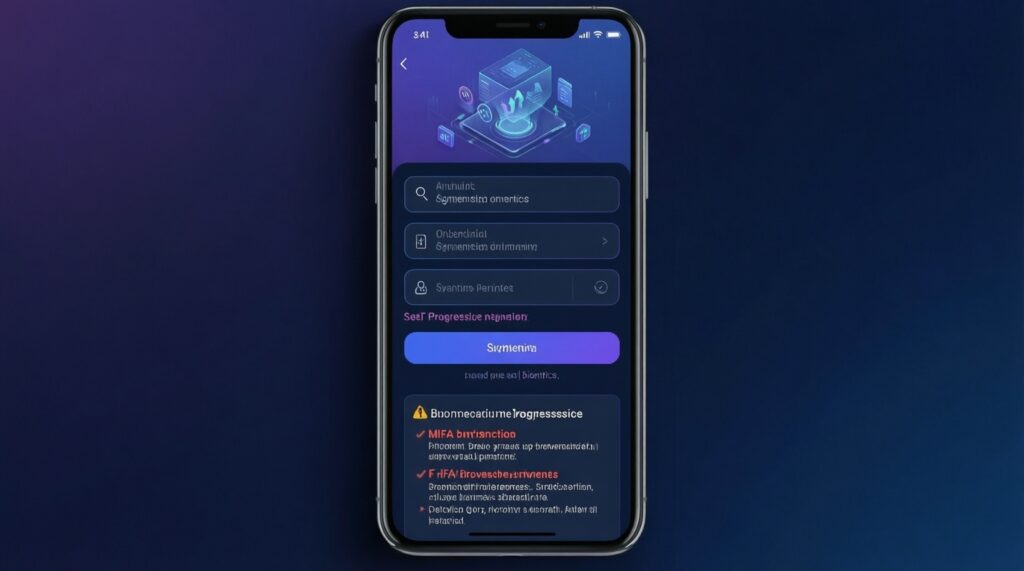
Use this checklist to verify the result after changes. It is designed to keep flows fast while avoiding easy fraud vectors (multi-accounting, bonus abuse, stolen payments).
- Login and signup clearly communicate what is required now vs later (progressive profiling), and why.
- MFA/biometric prompts appear after risk events (new device, withdrawal, changing payout details), not randomly.
- Cashier shows limits, fees (if any), and processing expectations before confirmation.
- Deposit success state includes: amount, method, reference, and a clear path back to play.
- Withdrawal flow includes: editable payout method with safeguards, status tracking, and a support-ready reference ID.
- KYC/verification explains document requirements with examples, and provides "save and continue" without losing progress.
- Error states are actionable: "Try again", "Use another method", "Contact support", and "Check connection", not generic failures.
- Account recovery (forgot password, change phone/email) has clear identity checks and does not lock legitimate users out.
- Responsible gaming controls (limits, self-exclusion) are reachable from Settings and cashier, and changes confirm clearly.
Interface Patterns for Rapid Play: Controls, Feedback and Micro-interactions

Common mistakes that make the app feel slow, unsafe, or unfair-even if the backend is fine:
- Unlabeled spinners that do not say what is happening (loading game, submitting bet, processing payment).
- State resets after backgrounding: returning users lose game context, bet settings, or cashier progress.
- Double-submission risks (tap-spam) on deposit/withdraw/bet buttons without lock + confirmation.
- Hidden money math: unclear total bet, unclear bonus application, unclear fees/limits until the end.
- Overusing modals that block navigation and create "trap states" on small screens.
- Inconsistent terminology across lobby/game/cashier (stake, bet, lines, payout, win, balance types).
- Ambiguous status language like "pending" without next step; users assume the app is dishonest.
- Trust cues only on one screen (e.g., license info only in Settings), while money screens feel anonymous.
- Support as a dead end: no chat/email visibility, no ticket/reference number, no "attach screenshot" guidance.
Testing and Monitoring: Labs, A/B, Real-User Metrics and Incident Playbooks
Alternatives and when they are appropriate:
- Heuristic review + screen recording audits (useful when): you need quick wins before a release; pair with a structured checklist and capture "time-to-action" on real devices.
- Remote moderated usability sessions (useful when): you are changing cashier/onboarding and need to catch confusion that analytics cannot explain; recruit users on mid-range devices common in TH.
- Feature-flagged rollout with holdout groups (useful when): you are tuning flows that affect revenue or risk (withdrawals, verification prompts); allows safe rollback.
- Incident playbooks + postmortems (useful when): you already have production traffic; define "cashier down", "login outage", and "provider latency" runbooks so UX messaging matches real recovery steps.
Practical Concerns Developers and Operators Frequently Face
How do we judge if we are the best mobile casino app without benchmarks?
Use internal task-based baselines: open app, open lobby, open game, deposit, withdraw, and view history. Track improvements release-to-release and compare across devices and network conditions.
What UX signals matter most for a safe secure mobile casino app?
Consistency at sensitive moments: clear identity state, secure session messaging, and transparent cashier statuses. If users can always answer "what is happening with my money and why," trust rises.
How do we support a fast payout mobile casino promise without creating fraud loopholes?
Make payout stages explicit and automate low-risk cases while reserving manual review for risk triggers. Use progressive verification and clear "why this is needed" copy without disclosing detection thresholds.
What's the simplest way to make a fair online casino app feel verifiable?
Standardize game detail pages with rules, RTP (where applicable), provider identity, and a clear link to fairness/audit context. Pair that with receipt-like bet and transaction history users can reference.
Where should licensed mobile casino app information live in the UI?
Place it in Settings, but also in the cashier and account areas where financial decisions happen. Keep wording factual and consistent with your legal/compliance content.
Should we show RTP inside the game or only on the game info page?
Show it on the game info page by default, and make it reachable in-game via one tap without breaking state. Avoid burying it behind long documents users will not read.
What do we do when providers cause slow loads or intermittent failures?
Design resilient fallbacks: labeled loading states, retry with context, and a safe exit back to lobby without losing the session. Monitor provider latency and trigger an in-app status message when degradation is known.