
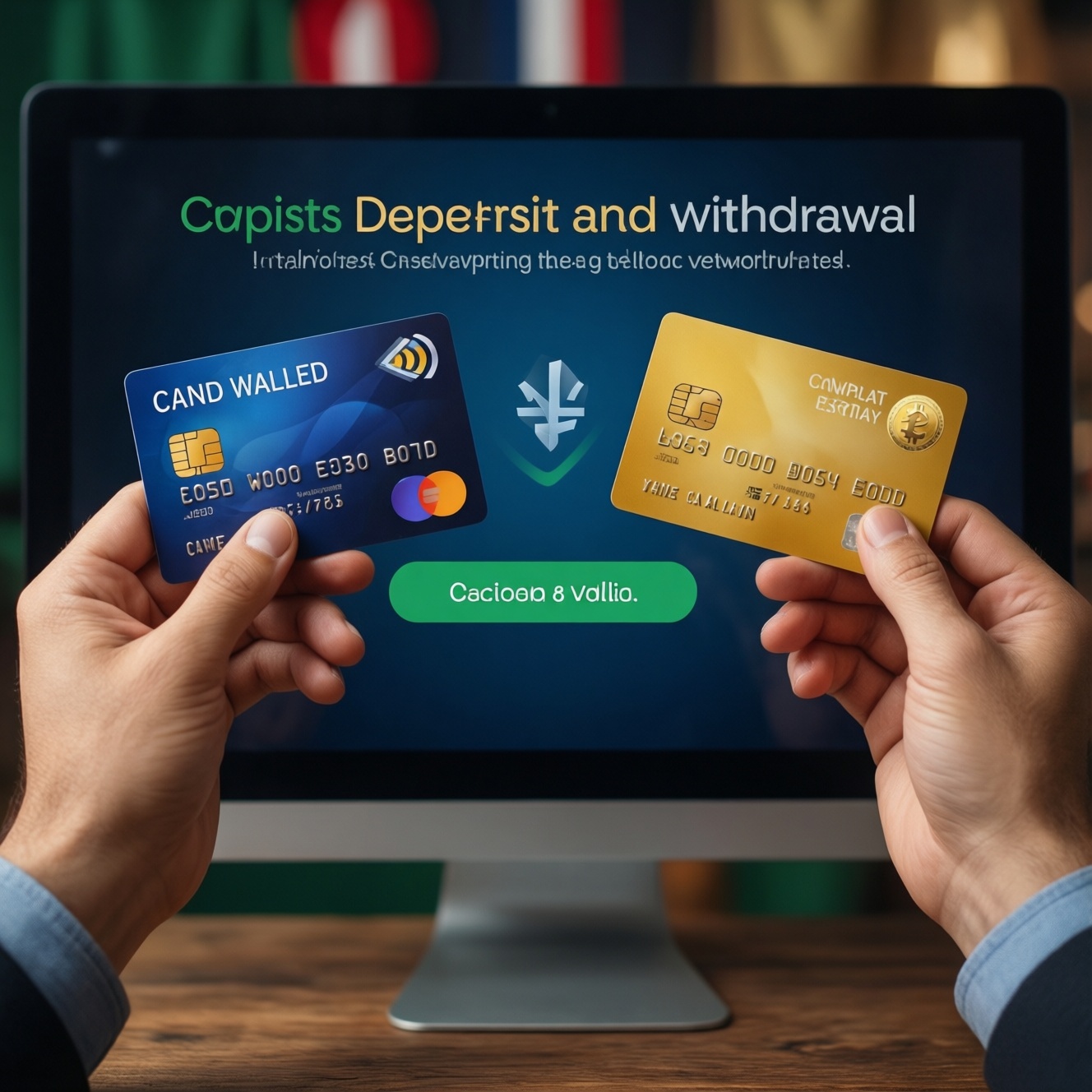
To choose among e‑wallets, cards, and crypto for casino-style deposits and withdrawals, start with your priority: speed, cost predictability, dispute protection, or privacy. E‑wallets are usually easiest for fast cashouts, cards win on broad acceptance and chargeback rights, and crypto works best when you can manage network fees, volatility, and strict address hygiene.
Quick decision guide for choosing payment methods
- If you want instant withdrawals online casino style (fast cashouts), start by checking whether the operator supports e‑wallet withdrawals to the same wallet you deposited with.
- If you want predictable budgeting and familiar controls, pick debit/credit cards, but expect more "deposit-only" setups and slower withdrawals.
- If you want borderless access and can handle operational discipline, use crypto-then optimize for network selection and confirmations.
- If your main concern is e-wallet vs card fees, compare (1) operator fees, (2) provider fees, (3) FX spreads, and (4) cash-advance classification risk.
- If you care about account safety, prioritize 2FA, name-matching, and clean transaction histories over "lowest fee" marketing.
How e‑Wallets Work: Speed, Limits, and Typical Fees
E‑wallets sit between your funding source (bank/card) and the merchant/operator, so your "deposit and withdrawal methods" become more controllable: deposits can be quick, withdrawals often route back to the same wallet, and you can separate spending from your main bank account.
Use these criteria to choose an e‑wallet (or decide against one):
- Deposit and withdrawal symmetry: can you withdraw to the same wallet you used to deposit (operator rules often require this)?
- Settlement speed expectation: does the wallet support near-real-time internal transfers and quick cashouts to your local bank?
- Funding method flexibility: can you top up via Thai bank transfer, local cards, or only international cards?
- Fee stack transparency: separate operator fees from wallet fees and FX spreads (this is where "cheap" options often become expensive).
- Limits and verification tiers: check how limits change after KYC and whether the limits fit your normal session size and withdrawal cadence.
- Currency support: THB support (or efficient conversion) matters; multiple conversions (THB→USD→THB) usually amplify costs.
- Security controls: 2FA, device management, withdrawal lock, and login alerts should be available and easy to use.
- Merchant category tolerance: some wallets are stricter with gambling-like merchants; confirm policy and local availability before committing.
- Support quality for disputes: wallet support varies widely; understand how you'll prove ownership, source of funds, and transaction intent.
Practical note: when people ask for the best e-wallet for online casino deposits, the real "best" is the one that (a) is supported by your operator for both deposits and withdrawals, (b) matches your legal name exactly, and (c) minimizes FX and intermediary steps in Thailand.
Card Payments: Chargebacks, Acceptance, and Fee Structures
Cards are often the easiest way to deposit because acceptance is broad, but withdrawals to cards are less consistent. The trade-off is strong consumer protections (chargebacks) versus higher compliance friction and potential extra costs when transactions are treated like cash advances.
| Вариант | Кому подходит | Плюсы | Минусы | Когда выбирать |
|---|---|---|---|---|
| Visa/Mastercard Debit Card | Most users in Thailand who want simple deposits | Widely accepted; direct link to funds; 3DS is common | Withdrawals to card may be unavailable; bank may decline merchant category; FX spread risk | When you mainly deposit and can withdraw via bank transfer or e‑wallet |
| Visa/Mastercard Credit Card | Users who need flexibility and dispute options | Strong chargeback tooling; temporary liquidity | Cash-advance treatment is possible; interest/fees can spike; stricter underwriting | When you value consumer protection and can manage statement discipline |
| Prepaid Card (reloadable) | Budget-controlled users, limited exposure | Spending cap by design; reduces main-account risk | Lower acceptance; reloading can be inconvenient; KYC may still apply | When you want "sandboxed" spend without linking your primary card |
| Virtual Card (bank/app-issued) | Online-first users who want safer card details | Easy rotation; reduces card-number leakage; good for online deposits | Not a withdrawal destination; can trigger extra verification; limits vary by issuer | When your priority is safer deposits and minimizing card credential reuse |
| Card-to-Wallet Top-up (card funds an e‑wallet) | Users who want card convenience but wallet withdrawals | Combines card funding + e‑wallet cashout paths; can simplify "same-method" rules | Two-layer fees possible (issuer + wallet); more KYC touchpoints | When the operator pays out faster to the wallet than to cards |
How to interpret e-wallet vs card fees in practice:
- Issuer side: the bank may add FX spread, international fees, or cash-advance-type fees depending on classification.
- Operator side: some operators charge card processing fees or impose higher minimums/maximums for cards.
- Operational side: cards can fail due to 3DS, MCC restrictions, name mismatch, or insufficient verification.
Cryptocurrency Transfers: Volatility, Privacy, and Costs
Crypto is fundamentally different: you are responsible for addresses, network choice, confirmations, and the asset's price movement while funds are in transit or waiting for processing. This is where crypto deposit and withdrawal fees are less about "a fixed percent" and more about network conditions, exchange spreads, and withdrawal policies.
Scenario rules of thumb (if... then...):
- If you cannot tolerate price swings, then avoid holding volatile coins during processing; consider minimizing exposure time and double-check whether the operator supports stable-asset rails you can actually withdraw and convert in Thailand.
- If you want fewer reversals and fewer intermediaries, then crypto can help-but only if you can securely manage wallets, backups, and address verification.
- If your priority is lowest friction cashout, then don't default to crypto; choose it only if you have a reliable off-ramp (exchange) that supports your identity, bank, and expected volumes.
- If you frequently move across countries, then crypto can simplify access-but plan ahead for KYC at exchanges and potential compliance questions about source of funds.
- If you're trying to optimize fees, then compare (a) exchange deposit/withdrawal policies, (b) network fees at the time you send, and (c) conversion spreads-this trio defines your real all-in cost.
Side‑by‑side Comparison Table: Fees, Speed, Security, and Limits
| Method | Speed (typical expectation) | Fee predictability | Chargeback/reversal risk | Limits (how they usually behave) | Best use |
|---|---|---|---|---|---|
| E‑wallet | Fast deposits; withdrawals often faster when supported | Medium (watch FX + layered fees) | Low to medium (depends on wallet policies) | Tiered by KYC; can be practical for repeated cashouts | Frequent deposits + quicker withdrawals |
| Card | Fast deposits; withdrawals inconsistent and often slower | Medium to low (issuer classification can surprise) | High (chargebacks exist; merchants may restrict) | Issuer limits; operator limits can be tighter for cards | Simple deposits, strong consumer controls |
| Crypto | Depends on network + confirmations; processing queues vary | Low to medium (network fees + spreads vary) | Low (irreversible if sent correctly) | Usually flexible on-chain; off-ramp exchange limits apply | Cross-border, self-custody, reduced intermediaries |
Selection algorithm (use it before you change your cashier settings):
- Write your top priority: speed, lowest all-in cost, dispute protection, or privacy/independence.
- Check what the operator supports for withdrawals (not just deposits); many "deposit and withdrawal methods" lists look larger than the actual payout list.
- Confirm "same-method" rules: can you withdraw to the same instrument, and does it require full KYC first?
- Estimate the all-in cost path: funding fee + FX + withdrawal fee + off-ramp fee (this is where crypto deposit and withdrawal fees and wallet spreads hide).
- Choose a fallback method for failed cashouts (e.g., e‑wallet primary, bank transfer backup) to avoid being forced into the slowest channel.
- Do a small end-to-end test deposit and withdrawal before scaling up, then lock the method that behaves reliably.
Regulatory, KYC and Safety Considerations for Each Method
- Name mismatch: using different names across bank, wallet, exchange, and operator commonly triggers holds and repeated KYC.
- Layering too many hops: card → wallet → operator → crypto → exchange adds fees and increases compliance questions; simplify the route.
- Ignoring FX mechanics: THB conversions can occur at the bank, wallet, operator, and exchange-don't assume a single conversion.
- Relying on chargebacks as a strategy: chargebacks are for genuine disputes; misuse can lead to account closures and payout freezes.
- Using shared or custodial wallets without controls: for crypto, unclear ownership evidence can block withdrawals and complicate source-of-funds checks.
- Address mistakes in crypto: wrong network/chain selection or incorrect address is usually irreversible; always verify network compatibility.
- Weak account security: missing 2FA on e‑wallets/exchanges is a common cause of theft; enable 2FA and secure recovery methods.
- Skipping small verification early: waiting until a large withdrawal to complete KYC often causes long delays; verify before you need the cashout.
- Not documenting funds flow: keep receipts/screenshots for deposits, swaps, and withdrawals; it speeds up support and compliance reviews.
Persona‑based Recommendations: Traveller, High‑volume Trader, Casual User, Privacy‑focused
For a Traveller, the best default is an e‑wallet that supports cross-border use and reliable cashouts, with a card as backup for deposits. For a High‑volume Trader, crypto can fit if you already operate with disciplined wallet hygiene and a trusted off-ramp; otherwise a verified e‑wallet with higher tiers is steadier. For a Casual User, a debit card for deposits plus an e‑wallet for withdrawals is usually the least operationally complex. For a Privacy‑focused user, crypto is the closest fit, but only if you accept stricter scrutiny at off-ramps and you prioritize security over convenience.
Common practitioner concerns and brief answers
Which deposit and withdrawal methods usually minimize payout delays?
Methods that allow withdrawal back to the same account you deposited with-most often e‑wallets-tend to reduce manual checks. Always confirm the operator's payout list, not just the deposit list.
How should I compare e-wallet vs card fees without getting misled?
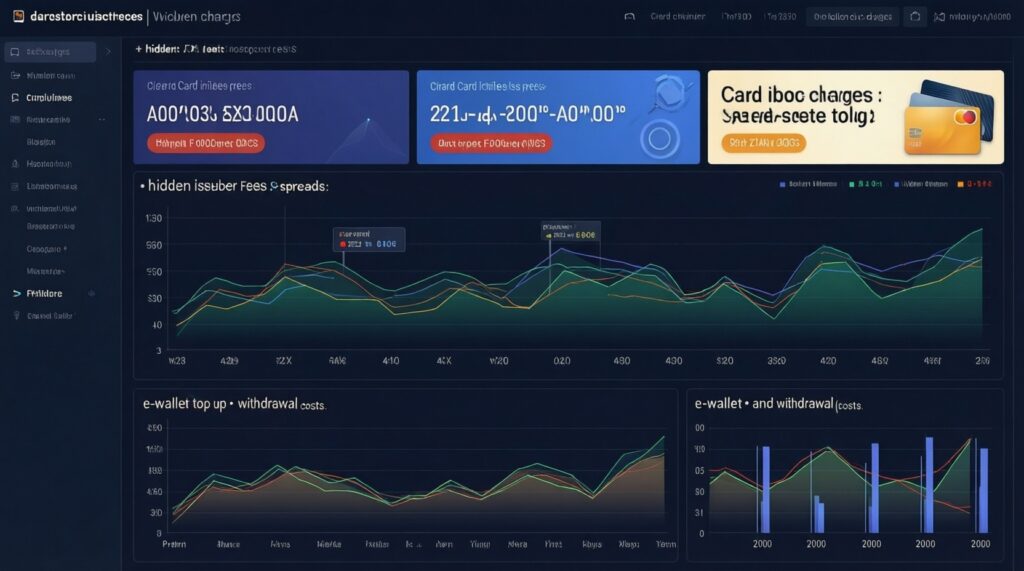
Compare the full path: issuer fees and FX spread (card), wallet top-up and withdrawal fees (e‑wallet), and any operator-side processing fees. A "zero fee" banner can still hide FX costs.
What drives crypto deposit and withdrawal fees in real use?
Network conditions, exchange withdrawal pricing, and conversion spreads typically matter more than the operator's headline fee. The cheapest chain is useless if your operator or exchange doesn't support it end-to-end.
What is the best e-wallet for online casino deposits in Thailand?
The best choice is the wallet that your operator supports for both deposits and withdrawals, matches your legal name, and offers a clean THB funding/cashout route. If withdrawals are "deposit-only," it's not a good primary wallet.
Are instant withdrawals online casino claims realistic?

They can be, but only within the operator's risk rules and supported payout rails. "Instant" typically fails when KYC is incomplete, the method can't receive payouts, or the transaction needs manual review.
Why do card deposits succeed but card withdrawals fail?
Many setups accept cards for pay-ins but restrict card pay-outs due to processing constraints and chargeback exposure. In those cases, the operator routes withdrawals to e‑wallets or bank transfers instead.
What's the safest default setup for intermediate users?
Use an e‑wallet with 2FA for both deposits and withdrawals when supported, keep a debit card as a deposit backup, and avoid crypto until you can confidently manage addresses and off-ramp steps.