
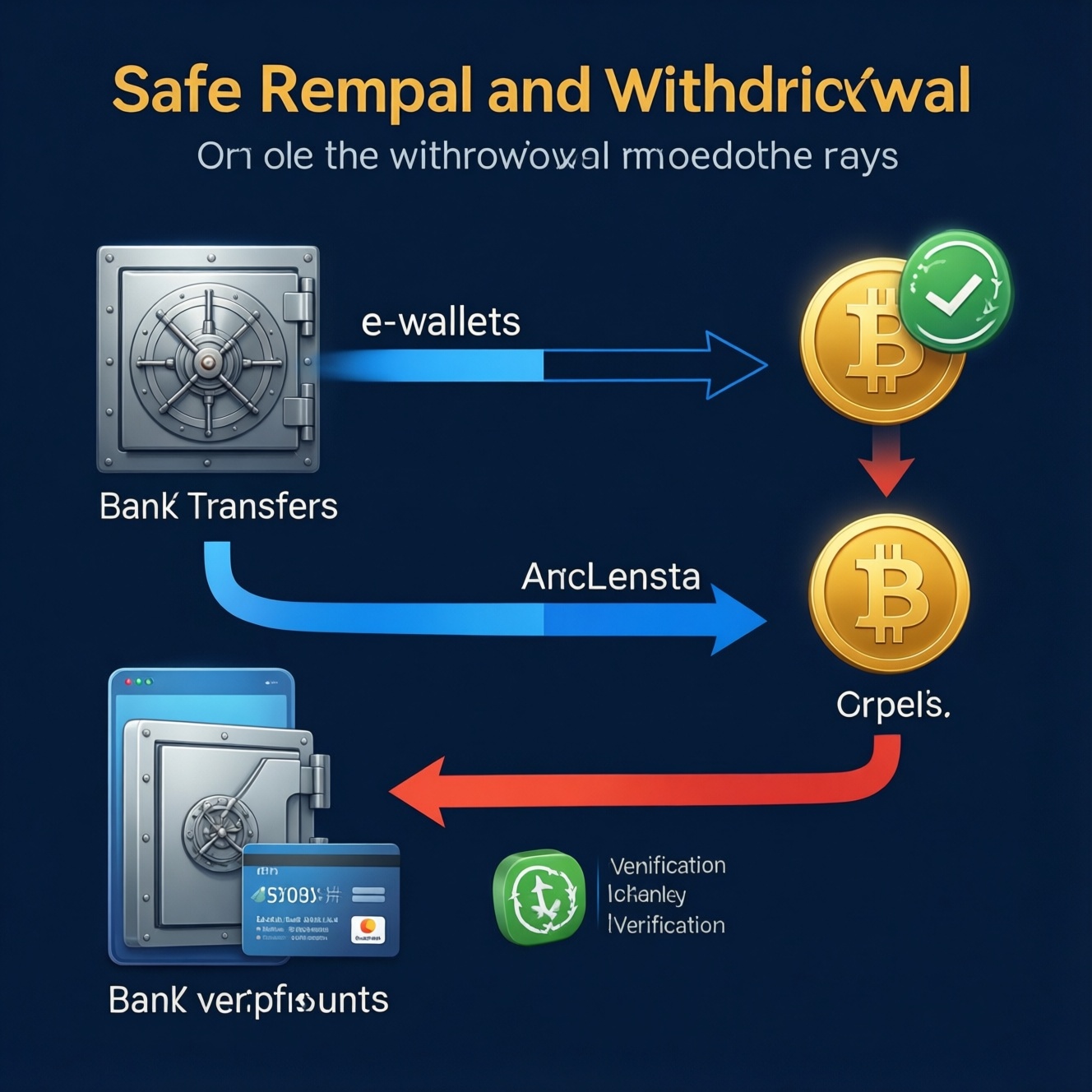
This deposit and withdrawal guide shows safe, repeatable workflows for funding and cashing out via e-wallets, bank transfers, and crypto, including the most common verification checks that trigger delays. Follow the preparation checklist first, then use the step-by-step deposit flow and the withdrawal checklist to reduce failures, holds, and mismatched-account rejections.
Quick Reference: Essential Steps at a Glance
- Use the same name and currency across your profile, payment method, and bank/crypto accounts.
- Complete KYC early: ID + selfie + proof of address, and add any required bank/account ownership evidence.
- For e-wallets and cards, deposit a small test amount before large transfers.
- For bank transfers, copy the reference/remark exactly and keep the receipt/screenshot.
- For crypto, verify network + address + memo/tag; send a small test transaction first.
- Before withdrawing, re-check limits, fees, and whether a "same-method" payout rule applies.
Overview of Payment Options: E-Wallets, Bank Transfers, and Crypto
Choose a channel based on speed, reversibility, and how strictly your name must match. For Thailand (TH) users, bank transfers are usually the cleanest for compliance and audit trails; e-wallets are convenient for frequent top-ups; crypto is best when you can manage network details and wallet custody.
| Channel | Best for | Typical processing pattern (no guarantees) | Common friction points | When not to use |
|---|---|---|---|---|
| E-wallets | Fast deposits, smaller repeated funding | Often quick; withdrawals may require extra checks | Name mismatch, wallet not in your name, chargeback-like disputes, wallet limits | If the wallet is shared, business-owned, or uses a different legal name |
| Bank transfer | Higher-value funding and payouts with traceable records | Can be same-day or next-business-day depending on cutoffs | Wrong reference, intermediary banks, bank holidays, beneficiary details errors | If you cannot provide bank ownership evidence or your bank blocks the merchant category |
| Crypto | Borderless transfers when you control a wallet | Network-confirmation dependent; can be delayed by congestion | Wrong network, missing memo/tag, address errors, compliance screening flags | If you are not confident with networks, custody, or tax/reporting obligations |
Preparing Your Account: Verification, Limits, and Risk Controls
Do the account verification steps for withdrawals before you need the money. Most withdrawal delays are preventable: missing KYC, inconsistent identity data, or an unverified payout method.
What you should have ready (practical checklist)
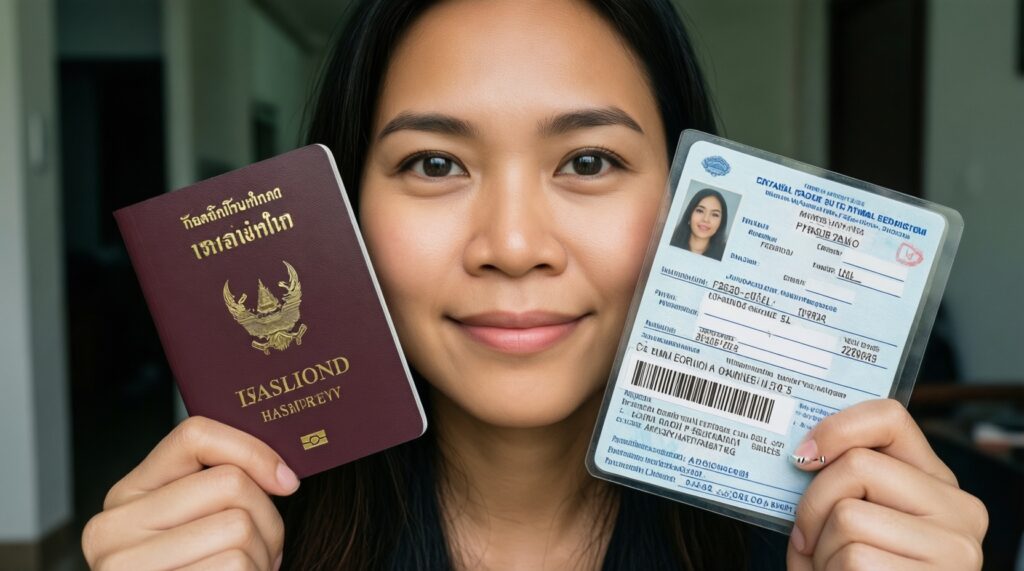
- Government ID: passport or Thai national ID (clear, uncut corners, readable numbers).
- Selfie / liveness check: selfie matching the ID; avoid hats, heavy filters, or glare.
- Proof of address (recent document): utility bill, bank statement, or official letter showing your name + address.
- Bank ownership evidence (for bank payouts): screenshot/photo of bank app page showing your name and account number, or an official statement.
- E-wallet ownership evidence (if requested): profile screen showing your name/ID and wallet identifier.
- Crypto wallet readiness: access to your receiving address and any required memo/tag; ability to sign in securely.
Risk controls that reduce failed payouts
- Enable 2FA (authenticator app preferred) and keep backup codes offline.
- Use one primary device and avoid VPN/proxy during verification and withdrawals (frequent IP changes can trigger review).
- Keep a "clean trail": deposit and withdraw using methods in your own name; avoid third-party funding.
- Track limits: daily/monthly caps, per-transaction minimums, and method-specific restrictions.
Depositing Funds: Step-by-Step Procedures for E-Wallets and Bank Transfers
This section covers how to deposit and withdraw using e-wallets (deposit side) and a bank transfer deposit and withdrawal deposit workflow. Use a small test first when setting up a new method.
-
Confirm account identity details
Check that your profile name, date of birth, and address match your documents. Small mismatches (middle name order, different transliterations) often pass deposits but block withdrawals.
- If your bank uses a different spelling than your ID, update the platform profile to match the bank's legal display where allowed.
-
Select the payment channel and currency
Pick e-wallet or bank transfer, then select your intended currency (often THB). Avoid unnecessary conversion unless you understand the rate and any provider spread.
- If the platform supports local rails, prefer local bank transfer for fewer intermediary steps.
-
For e-wallet deposits: link and verify ownership
Log in to your e-wallet from the official app/site, confirm it is in your name, and authorize the deposit. Keep a screenshot of the success page with transaction ID.
- Edge case: if your wallet is registered under a nickname that doesn't match your ID, expect a withdrawal review later-fix the name first if possible.
-
For bank transfer deposits: copy beneficiary details precisely
Copy the beneficiary name, account number, and any reference/remark exactly as provided. Incorrect references are a top reason deposits need manual matching.
- Save the transfer receipt from your banking app (date/time, amount, reference).
- Use your own bank account; third-party transfers commonly trigger compliance holds.
-
Validate posting and reconcile
Confirm the deposit appears in your balance and matches the sent amount. If it doesn't post after a reasonable time window for that channel, open a support ticket and attach the receipt/transaction ID.
- Do not send repeated transfers to "force it through"; duplicates complicate reversals and reviews.
Fast-track mode: 4-step deposit algorithm
- Verify profile name + currency, then enable 2FA.
- Choose channel (e-wallet or bank transfer) and do a small test deposit.
- Save proof (transaction ID / bank receipt) immediately.
- Reconcile balance; if missing, contact support with proof instead of retrying multiple times.
Withdrawing Funds: Secure Workflows for Crypto and Bank Payouts
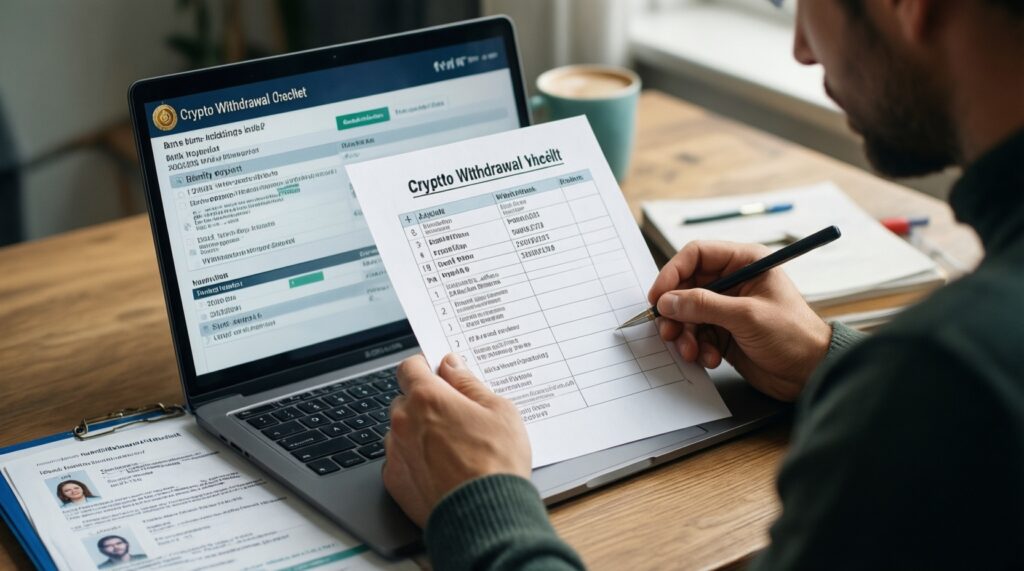
For a crypto deposit and withdrawal guide approach on the withdrawal side, accuracy matters more than speed. For bank payouts, ownership and matching details matter most. Use this checklist before you submit.
Pre-withdrawal checklist (use all items)
- Identity verification is approved (ID + selfie + proof of address, if requested).
- Payout method is in your own name and matches your profile name.
- You are withdrawing to the same method family if the platform enforces it (e.g., deposit via bank → withdraw via bank).
- For bank payouts: account number, bank name, and any branch codes are correct.
- For crypto: correct network is selected (do not confuse token standards), address is copied from your wallet, and memo/tag is included if required.
- Withdrawal amount respects method limits and leaves room for any fees.
- 2FA is enabled; you can access email/SMS for confirmation without delay.
- You are on a stable connection; avoid switching devices/IPs mid-request.
Result verification after submission
- Record the withdrawal ID, timestamp, and method used.
- For bank: monitor bank app notifications and statement entries.
- For crypto: track the on-chain transaction hash once issued and verify confirmations in a reputable block explorer.
Fees, Processing Times, and Currency Conversion Explained
Fees and timing vary by provider and can change without notice. The practical goal is to avoid preventable losses from double conversion, wrong network selection, and fee-blind withdrawals.
Common mistakes that create extra cost or delays
- Double conversion: depositing in one currency, the platform converting, then withdrawing in another currency adds spread twice.
- Ignoring intermediary bank behavior: international bank routes can add handling steps and unpredictable posting order.
- Withdrawing the full balance without fee buffer: some systems reject the request if fees push it over available funds.
- Assuming "instant" means final: an e-wallet confirmation may still be subject to internal review for withdrawals.
- Wrong crypto network: sending/withdrawing on the wrong chain can be irreversible or require complex recovery (often impossible).
- Missing memo/tag: certain assets/exchanges require it; missing it often means manual recovery, if available at all.
- Name mismatch across documents: even minor differences can trigger enhanced checks during cashout.
- Using third-party funding: a friend's bank account or shared wallet can pass deposits but block withdrawals.
Troubleshooting: Failed Transactions, Holds, and Compliance Flags
If something fails, act like an auditor: capture evidence, avoid repeated attempts, and switch to a cleaner method only when it reduces complexity.
Alternatives that are appropriate in specific situations
- Switch to bank transfer after repeated e-wallet issues: use this when wallet ownership cannot be proven or wallet limits are too low; provide bank ownership evidence upfront.
- Use a different crypto asset/network supported by both sides: use this when congestion or network restrictions are causing delays; still do a small test transaction first.
- Request manual review with a complete evidence bundle: use this when a compliance flag or hold appears; submit ID, proof of address, and proof of payment method ownership in one ticket.
- Wait for business hours/cutoff windows: use this when bank processing is involved; avoid submitting repeated withdrawals that create duplicate queues.
Evidence bundle checklist for support (copy/paste ready)
- Transaction ID / withdrawal ID and exact timestamp (with timezone).
- Amount and currency, plus method (bank/e-wallet/crypto).
- Bank receipt or e-wallet success screenshot.
- For crypto: address, network, and transaction hash (if issued).
- Proof of ownership (bank app page or wallet profile page), if requested.
Common Concerns and Quick Answers
Why was my withdrawal rejected even though deposits work?
Withdrawals usually apply stricter checks: name matching, KYC completion, and payment-method ownership. Fix the mismatch and re-submit with the same verified method.
What are the most common account verification steps for withdrawals?
Expect ID, selfie/liveness, and proof of address. For bank payouts, you may also need proof that the bank account is yours (statement or in-app account page).
Can I deposit with one method and withdraw with another?
Some platforms enforce "same-method" or "same-family" rules to prevent fraud. If unsure, deposit using the method you want to withdraw to later (often bank transfer).
What is the safest way to avoid crypto withdrawal mistakes?
Confirm the network, copy the address from your wallet, and include any memo/tag. Send a small test first whenever the destination is new.
My bank transfer deposit didn't arrive-what should I do first?
Check you used the correct beneficiary details and exact reference/remark. Then contact support with your bank receipt instead of sending another transfer.
Why does my transaction show "pending" for a long time?
Pending can mean manual review, bank cutoff timing, or crypto network congestion. Avoid repeated submissions; gather IDs/receipts and wait for the stated processing window if provided.
Are e-wallet withdrawals always instant?
No-some withdrawals are queued for verification or risk review even if deposits are fast. Keep your wallet in your legal name and complete verification early.