

For smooth play in mobile casinos for Android and iOS, you need fast startup, stable rendering, resilient networking, and low-friction identity and payments-without compromising privacy or compliance. This guide lists must-have app and web features, then gives a safe, user-clear implementation path for latency, reconnection, and checkout flows typical of the best online casino for mobile experiences.
Essential feature snapshot for smooth mobile casino play
- Cold-start and page-load optimization: cached assets, minimized JS, and predictable memory use.
- UI built for one-handed play: large tap targets, clear states, and consistent navigation.
- Network resilience: retry, reconnect, and session recovery without duplicate bets or actions.
- Payments designed for speed and safety: tokenized methods, clear confirmations, and transparent limits.
- Media/resource control: adaptive quality, frame pacing, and background/foreground state handling.
- Privacy and fraud controls that don't break UX: device signals, step-up verification, and clear consent.
Optimizing app and browser performance on Android and iOS
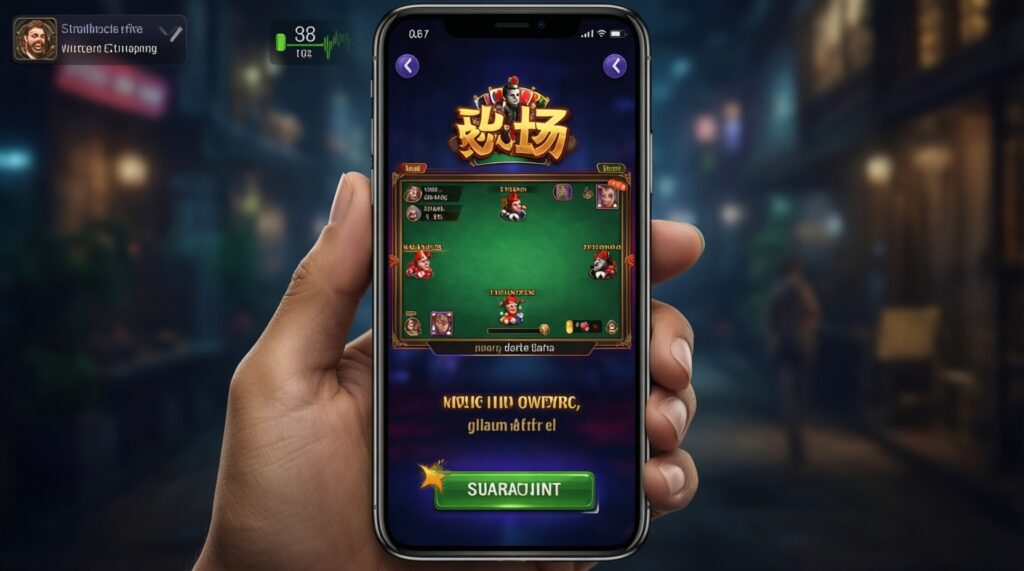
Problem: "Best mobile casino apps" feel sluggish when start-up, rendering, or memory behavior isn't tuned to mid-range devices and mobile browsers.
Fits well when: you ship frequent UI updates, have live game canvases/streams, or support both app and web for mobile casinos for Android and iOS.
Don't do this (yet) when: you lack baseline instrumentation (crash + performance traces), or your bigger bottleneck is back-end round-trip time; fix observability and API latency first.
- Android: enable baseline profiles/startup tracing; avoid heavy work on the main thread; trim APK size and split ABIs if relevant.
- iOS: reduce first-screen work; prefetch critical endpoints after consent; avoid blocking disk I/O on the main thread.
- Mobile web: ship a smaller initial bundle; defer non-critical scripts; ensure the first interactive view doesn't depend on third-party tags.
Cross-platform UI/UX components that keep sessions fluid
Problem: session drop-offs happen when navigation, states, and input handling differ across platforms or become visually "janky" under load.
What you'll need:
- Design system: shared component tokens (spacing, typography, colors) and platform-specific variants (Android ripple, iOS haptics where appropriate).
- State management: a predictable store pattern (unidirectional data flow) so bet slips, balances, and bonuses never desync between screens.
- Accessibility baseline: dynamic type support (iOS) and font scaling (Android), focus order, and readable contrast-critical for real money mobile casino flows.
- Permissions strategy: request only-in-time, with clear "why"; avoid blocking core navigation on optional permissions.
- Tooling/access: crash reporting, performance traces, feature flagging, and staged rollout access for both app stores and web deployments.
Implementation note: keep "money-moving" screens (deposit, withdrawal, wager confirmation) visually stable: no layout shifts after the user starts interacting.
Network resilience: latency handling, reconnection and offline tactics
Problem: intermittent mobile networks cause duplicated actions, stuck spinners, and balance mismatches-especially during deposits and gameplay confirmations.
-
Classify requests and make them idempotent
Tag every call as read-only, state-changing, or payment-related. For state changes, require an idempotency key so retries never create duplicate bets or transactions.
- Generate keys per user action (not per retry) and store them until confirmation.
- Surface a single "pending" state in UI until the server returns a final outcome.
-
Implement timeouts, retries, and backoff with guardrails
Use short, explicit timeouts per endpoint and exponential backoff for safe retries. Never auto-retry actions that could move money without an idempotency guarantee.
- Retry reads freely; retry writes only with idempotency and clear UI state.
- Stop retries on authentication errors and prompt a controlled re-login.
-
Design reconnection and session recovery
When connectivity changes, reconcile server truth: session, balance, active rounds, and pending actions. Recover the exact state rather than "guessing" locally.
- Android: listen to network callbacks; iOS: monitor path changes; web: use online/offline events plus heartbeat checks.
- After reconnect: call a single "sync" endpoint and update all dependent UI from that response.
-
Provide an offline-safe UX instead of broken screens
When offline, disable state-changing controls, keep navigation responsive, and offer a clear retry path. Make it obvious which actions are unavailable.
- Cache static assets (lobby images, rules pages) so the app still opens gracefully.
- Queue only non-financial, reversible actions; do not queue wagers or deposits offline.
-
Instrument latency and failure reasons end-to-end
Log request timing, error categories, reconnect frequency, and "pending" durations. Use this to tune what users experience as the best online casino for mobile performance.
- Correlate client request IDs with server logs for dispute-friendly traceability.
- Track payment-provider errors separately from network errors.
Fast mode: the shortened algorithm
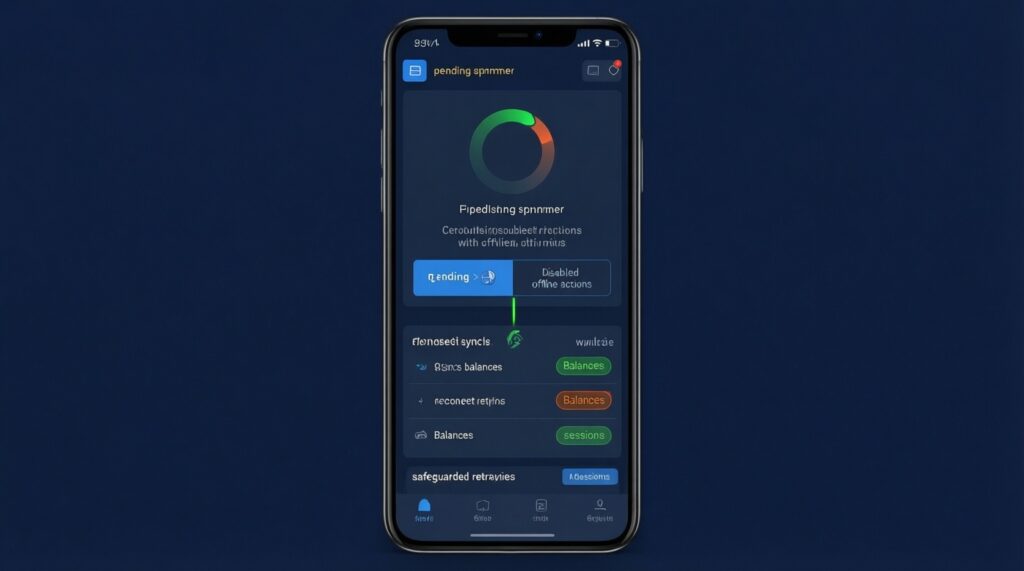
- Make all state-changing calls idempotent and show a single pending state.
- Add explicit timeouts + exponential backoff; never auto-retry money-moving actions without safeguards.
- On reconnect, run one sync call (session, balance, active rounds) and repaint UI from server truth.
- When offline, disable risky actions and keep the lobby readable via cached assets.
Payments, wallets and fast account flows without friction
Problem: deposits/withdrawals fail when the flow is slow, unclear, or insecure; users abandon before completing safe mobile casino payments.
Result check (use as a release checklist):
- Deposit and withdrawal screens clearly show currency, fees (if any), and confirmation steps before submission.
- Every payment attempt has a unique reference and a visible final status (success/failed/pending) that survives app restarts.
- Authentication is step-up only when needed (risk triggers), not on every payment.
- Users can switch between wallets/methods without losing typed amounts or encountering stale validation errors.
- Payment webviews/redirects return safely: you handle cancel, timeout, backgrounding, and deep-link return reliably.
- Error messages are actionable (e.g., "verification required" vs generic "failed"), without exposing sensitive internals.
- Limits and responsible play controls are discoverable and don't break the happy path for compliant real money mobile casino usage.
- Receipts/history are available immediately after completion and match the server ledger on refresh.
Adaptive media and resource management for consistent frame rates
Problem: games feel "choppy" when media is too heavy, decoding is expensive, or lifecycle handling leaks resources.
Common mistakes to avoid:
- Loading full-resolution images/video by default instead of using responsive sizes and adaptive bitrate.
- Leaving animations running while the app is backgrounded or the tab is hidden.
- Doing JSON parsing, image decoding, or layout-heavy work on the main/UI thread.
- Not handling low-memory warnings (iOS) or trimming caches (Android) leading to kills and relaunch loops.
- Using a single giant sprite/audio bundle that delays first interaction; split by lobby vs game vs cashier.
- Failing to cap concurrent network/media downloads; throttling prevents bursty stalls.
- Relying on timers for state updates when you should use events (visibility changes, network callbacks, push updates).
- Not testing on mid-tier devices and real networks; performance tuned only on flagship phones won't match "best mobile casino apps" expectations.
Regulatory, privacy and anti-fraud measures affecting user experience
Problem: compliance and fraud controls can add friction, especially for mobile casinos for Android and iOS where identity signals and OS privacy rules differ.
Practical alternatives (choose based on risk and jurisdiction, including Thailand-facing audiences):
- Progressive verification (step-up KYC): collect minimal data at signup, then request more only when users hit thresholds or attempt withdrawals; best when conversion is a priority.
- Risk-based authentication: trigger extra checks on device change, unusual geolocation, VPN/proxy signals, or rapid payment retries; best when fraud pressure is high.
- Hosted verification/payment pages: offload sensitive capture to specialized providers via redirect/webview; best when you need faster certification and simpler PCI/KYC scope.
- Privacy-first analytics: reduce identifiers, favor server-side aggregation, and provide clear consent; best when you want stable measurement without over-collecting user data.
Implementation and troubleshooting: common developer questions
How do I prevent duplicate bets when the user taps twice or the network retries?
Use an idempotency key per user action and disable repeat submission while the action is pending. The server must treat repeated keys as the same request and return the same final result.
What's the safest default when connectivity drops mid-transaction?
Assume the outcome is unknown and switch to a pending state. On reconnect, call a sync endpoint and display the authoritative status from the server ledger.
Should I build app-only, web-only, or both for best online casino for mobile reach?
Ship both when you need maximal distribution: app for performance and retention, web for instant access and easier updates. Keep core flows and state models shared to reduce inconsistency.
How do I keep "safe mobile casino payments" fast without weakening security?
Tokenize payment methods and use step-up verification only on risk signals. Make the success/pending/failed states explicit and persistent so users don't retry blindly.
Why does my lobby feel slower on iOS Safari than in the native app?
Common causes are large JS bundles, layout shifts, and heavy media decoding. Reduce initial payload, defer non-critical scripts, and use adaptive images/video tailored for mobile web.
What's the minimum instrumentation to compare best mobile casino apps performance across devices?
Track cold start, time to interactive, error rates by endpoint, reconnect frequency, and pending-state duration. Correlate client request IDs with server logs for dispute-friendly traces.
How do I ensure consistent UX for a real money mobile casino across Android and iOS?
Standardize critical components (cashier, bet slip, confirmations) with the same state machine and copy, then apply platform-native interaction patterns. Test the same scenarios on mid-range Android and recent iPhones under real network conditions.