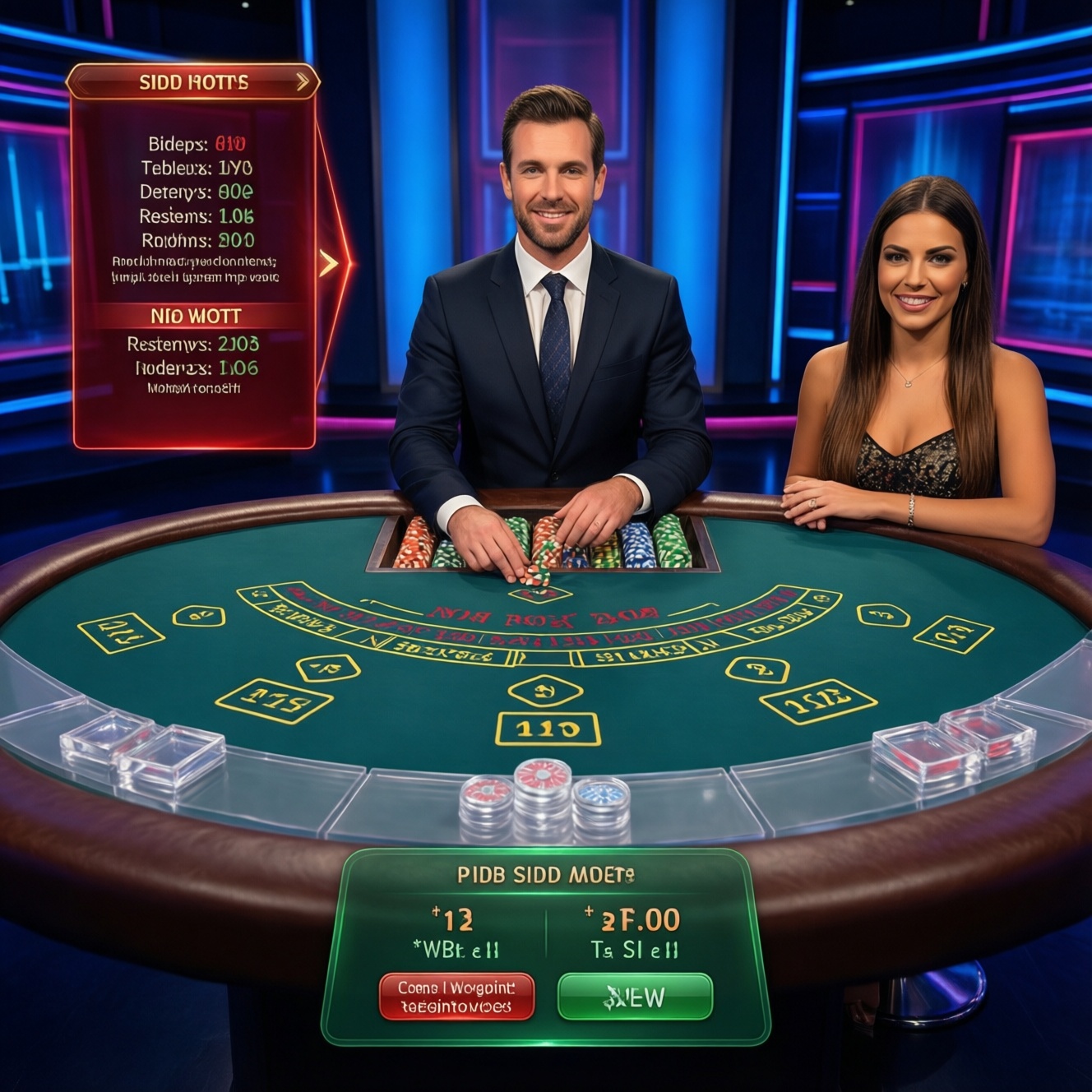
In a live dealer casino, RTP and enjoyment are shaped less by the base game and more by the "wrapper": game-show structure, side bets, and UI cues that steer choices. To improve experience without misrepresenting returns, separate base RTP from optional bets, design transparent UI defaults, and validate changes with controlled tests before rolling out to real players.
Primary Insights: RTP, Entertainment, and Design Trade-offs
- Game-show pacing and bonus triggers can raise excitement while quietly shifting player spend toward lower-RTP moments unless clearly labeled.
- Side bets usually drive volatility and can dominate perceived outcomes; treat them as a distinct product, not a "small add-on."
- UI defaults (preselected chips, sticky bets, countdown pressure) change behavior more than most rule tweaks.
- Fairness perception improves when you expose bet composition (base vs optional) and show real-time session summaries.
- For operators, the best live dealer casinos tend to win on clarity and consistency rather than novelty alone.
How Live Dealer Game Shows Structure Affects RTP
Who it fits: operators adding "live casino games" with presenters, wheel rounds, multipliers, or episodic bonuses; players choosing formats that feel like a show rather than pure table rhythm.
When not to do it: if your audience primarily wants traditional flow (e.g., to play live dealer blackjack online with minimal interruptions) or if you cannot clearly separate base-game RTP from add-on mechanics in the UI and in help pages.
| Feature | Likely RTP impact (directional) | Entertainment lift | Implementation complexity | Main risk to manage |
|---|---|---|---|---|
| Game-show "bonus rounds" (triggered events) | Often lowers effective session RTP if it nudges spend to add-ons | High | High | Players confuse base odds with bonus outcomes |
| Multipliers / lightning-style boosts | Can increase variance without changing base rules; can reduce effective RTP if tied to optional bets | High | Medium | Misinterpretation of "boosted" value |
| Side-bet menu (optional propositions) | Commonly reduces blended RTP when used heavily | Medium | Medium | Overexposure through sticky UI defaults |
| UI choice architecture (defaults, timers, bet grouping) | Indirect; shifts spend mix and therefore effective RTP | Medium | Low-Medium | Perceived manipulation and trust loss |
| Transparent "base vs optional" breakdown | Neutral to math; improves informed decisions | Low-Medium | Low | None (but requires precise copy and rules alignment) |
Side Bets Deep Dive: Mechanics, Volatility, and House Edge
To evaluate or redesign side bets safely (player-facing or operator-facing), prepare the following:
- Rules and payout tables: a single source of truth for each side bet, including exclusions, timing, and settlement order.
- Event logs: per-hand/per-round data with timestamps, bet composition (base vs side), stake, outcomes, and cancellations/voids.
- RTP model separation: calculate and communicate base-game RTP independently from side-bet RTP so "effective RTP" is not hand-waved.
- Volatility descriptors: categorize bets as low/medium/high variance using outcome frequency and payout dispersion (describe the method, not a marketing label).
- UI instrumentation: track impressions, clicks, preselect acceptance, time-to-bet, and removal rate for each side bet.
- Compliance-ready copy: short on-table explanations that match help pages and do not imply guaranteed value or "free" money (especially around live casino bonuses).
UI Elements That Shape Player Choices and Perceived Fairness
-
Map the decision moments, not the screens.
Identify every point where a player must choose: base bet, side bet, insurance/equivalents, rebet, chip size, and exit. In game-show formats, include bonus-trigger prompts and "last chance" timers.- Output: a decision map that lists moment → available actions → default state → time pressure.
-
Separate base play from optional spend in layout and language.
Place base bets in the primary visual lane and side bets in a clearly secondary lane with explicit "optional" labeling. If you offer live casino bonuses, show eligibility and wagering implications outside the betting surface to avoid confusion.- Use consistent terms: "Base bet," "Optional side bet," "Bonus round entry (if applicable)."
-
Remove manipulative defaults and make "no side bet" a first-class path.
Avoid pre-ticked or sticky side bets after a round ends; make removal as easy as adding. If you keep rebet, split it into "Rebet base" and "Rebet all" so players control blended RTP exposure.- Design check: a player can reach "base-only" in one tap/click from any state.
-
Make timing pressure transparent and optional where possible.
If countdowns exist, show remaining time clearly and avoid moving targets (e.g., shifting buttons). For accessibility and fairness perception, offer a "confirm bet" mode in settings for players who prefer deliberate play. -
Show a live, session-level summary that ties choices to outcomes.
Provide a compact panel: base stake, side stake, total stake, and recent outcomes, so players understand what drove variance. This is especially important for users who came to a live dealer casino expecting table-like predictability. -
Validate with controlled experiments before wide release.
Run A/B (or multivariate) tests on one change at a time: default state, side-bet placement, copy, and summary visibility. Define success metrics up front (trust, retention, complaint rate) rather than only stake uplift.- Operational note: pre-register the hypothesis and stopping rules to avoid "cherry-picking" wins.
Fast mode: a shortened workflow
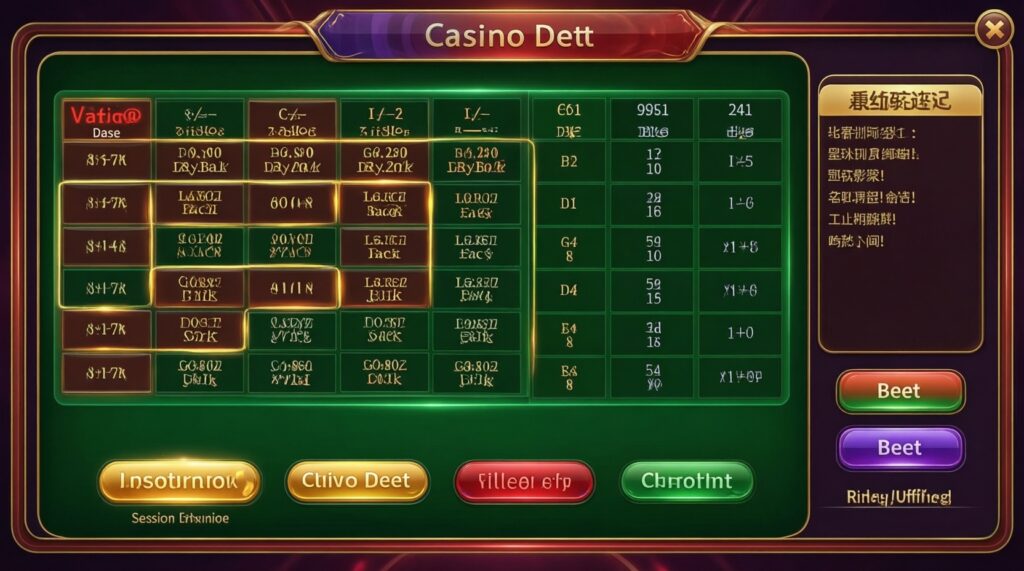
- Split RTP communication into base vs optional bets; reflect the split in the layout.
- Eliminate sticky/preselected side bets; provide "Rebet base" separately from "Rebet all."
- Add a session summary panel (base stake, side stake, total) and link to rules in one click.
- Test UI changes with a single hypothesis per experiment and guardrails for trust metrics.
Designing Entertainment Loops Without Masking True Returns
- Base-game rules, payouts, and settlement order are reachable from the table in one click/tap.
- Any multiplier/bonus messaging states whether it applies to base bets, side bets, or both.
- Side bets are never preselected after a round; rebet controls are explicit and reversible.
- Countdown timers do not obscure critical information (limits, bet breakdown, or rules links).
- Session summary distinguishes base stake from side stake and can be reset by the player.
- Promotions (including live casino bonuses) are displayed with conditions outside the bet-placement surface.
- Game-show interruptions (bonus wheels, presenter prompts) do not block the ability to leave the table.
- Help text uses consistent naming across UI, rules, and localized Thai/English variants where applicable in TH operations.
Quantifying Enjoyment: Metrics, Experiments, and Data Sources
- Measuring "fun" only via stake uplift. Pair revenue metrics with trust signals (refund requests, support contacts, negative chat sentiment) to avoid optimizing into backlash.
- Blending RTP across base and side bets in reporting. Always report base-only performance separately; otherwise you cannot see if UI pushed players into worse-value add-ons.
- Changing multiple UI levers at once. If you move the side-bet panel and change copy simultaneously, you lose attribution and cannot safely iterate.
- Ignoring distributional outcomes. Track how many players concentrate spend in side bets; averages can hide harm to a segment that churns.
- Not segmenting by intent. Users who came to play live dealer blackjack online behave differently from users seeking game-show volatility; evaluate separately.
- Under-instrumenting the decision funnel. If you do not log impressions and removals, you cannot distinguish "players love it" from "players didn't notice it."
- Running experiments without clear stopping rules. Define decision criteria up front to reduce false wins and avoid constant UI churn.
- Assuming "best live dealer casinos" patterns fit your audience. Borrow only what matches your table mix, localization, and risk tolerance.
Operational Checklist: Implementing Game Shows, Bets, and Interfaces
Use these alternatives when full game-show redesign is too risky or too heavy:
- Transparency-first upgrade (low disruption). Add base vs optional labeling, rules shortcuts, and session summaries before adding new mechanics. Use this when trust and clarity are the main gaps.
- Side-bet containment strategy (targeted volatility). Keep side bets but restrict UI exposure (no preselects, secondary placement, optional educational tooltip). Use this when players overuse side bets and complain about "unfairness."
- Game-show "lite" layer (moderate build). Introduce presenter pacing and periodic visuals without altering bet math. Use this when you want show energy while keeping RTP messaging stable.
- Promotion decoupling (bonus hygiene). Present live casino bonuses in a separate lobby module with clear conditions, not inside the betting panel. Use this when bonus confusion drives support load.
Practical Concerns Players and Operators Ask About Live Dealer Design
Does a game-show style table change RTP by itself?
The structure mainly changes effective RTP by nudging bet choices toward optional mechanics. The underlying base game can remain unchanged, but player spend mix often shifts.
Are side bets always "bad value" in live casino games?
They are usually higher variance and often have different expected return than the base bet. Treat them as a separate risk product and decide intentionally when to use them.
What UI element most commonly reduces perceived fairness?
Sticky or preselected side bets and unclear rebet behavior. Players interpret defaults as recommendations, especially under time pressure.
How can players protect themselves when they play live dealer blackjack online?
Stick to base bets unless you explicitly accept side-bet variance, and review the bet slip each round. Use session summaries to track how much of your stake goes to optional bets.
How should live casino bonuses be shown without misleading players?
Keep bonus info visible but separate from bet placement, and link to conditions in one click. Avoid language that implies guaranteed profit or "free" outcomes.
What makes players call a product one of the best live dealer casinos?
Consistent rules presentation, predictable controls, fast access to help, and clear separation between base play and optional mechanics. Novelty helps only when it stays transparent.