
KYC, AML, and 2FA are the three security pillars that decide whether an online casino can identify you, prevent illicit funds, and protect your account from takeover-while data storage controls determine what happens to your documents after upload. If you know where each control is applied, you can predict friction points, reduce lockouts, and limit exposure.
Security Snapshot: KYC, AML, 2FA and Data Storage Overview
- If a casino requests online casino KYC verification, then expect document checks (ID + selfie/liveness) plus database validation before higher withdrawals or payment method changes.
- If you see repeated questions about source of funds, then casino AML compliance rules are driving enhanced monitoring and manual review.
- If you enable casino two factor authentication 2FA, then account takeover risk drops, but recovery becomes stricter-plan for device loss.
- If the operator claims strong online casino data security, then look for encryption in transit, encrypted storage, strict access controls, and audit logs-not marketing statements.
- If you upload ID documents, then ask (or infer) how online casinos store personal data: segmentation between KYC vault and gameplay systems, retention rules, and deletion pathways.
How KYC Is Implemented in Online Casinos: Processes and Technologies
KYC (Know Your Customer) is an identity assurance workflow that ties a player account to a real person and a risk profile. In practice, online casino KYC verification is not a single "check"; it is a pipeline of capture, validation, matching, and decisioning that can be re-triggered when risk changes.
Typical KYC stages include: (1) data capture (name, DOB, address), (2) document ingestion (passport/ID, proof of address), (3) biometric matching (selfie vs. ID photo) and liveness checks, and (4) automated + manual review outcomes (approve, reject, request more info). If any stage fails, then the casino usually restricts withdrawals, payment changes, or bonus conversions until the gap is closed.
Common technologies are document authenticity checks (MRZ/QR parsing, template matching, tamper detection), biometric face matching, device fingerprinting, and rule-based decision engines. If the casino uses third-party identity providers, then your images often flow through vendor APIs; your risk exposure depends on the operator's vendor governance and retention settings.
Practical recommendations in an "if..., then..." format:
- If your ID address differs from your registration address, then update profile data first and upload a current proof of address to avoid a mismatch loop.
- If the upload keeps failing, then switch from screenshots to original photos/PDFs, ensure all corners are visible, and remove heavy compression or filters.
- If you are asked for a selfie/liveness video, then use a well-lit environment and avoid camera "beauty" modes; they can trigger spoof detection.
- If you plan large withdrawals, then complete KYC before depositing more-otherwise funds can be stuck in review queues.
AML Controls: Transaction Monitoring, Thresholds and Suspicious Activity Reporting
AML (Anti-Money Laundering) controls are systems and procedures that detect, investigate, and document potentially illicit financial behavior. Casino AML compliance typically combines real-time transaction monitoring, customer risk scoring, and case management for investigations and reporting.
- If deposits and withdrawals cycle quickly with minimal play, then monitoring rules may flag "rapid in/out" patterns and trigger enhanced due diligence.
- If multiple payment instruments are used (many cards/e-wallets) in a short window, then systems may classify the behavior as layering and require proof of ownership or funding source.
- If withdrawal destinations change frequently (new bank accounts/crypto addresses), then AML controls often force a cooling-off period and manual review.
- If the same device/IP touches many accounts, then monitoring may link them as a network and temporarily freeze transactions pending investigation.
- If your profile shows higher inherent risk (jurisdiction, payment type, historical chargebacks), then thresholds for alerts are usually lower and reviews happen earlier.
Mini-scenarios: how AML checks surface for real players
- If you deposit with an e-wallet but request withdrawal to a different method, then the casino may require withdrawal to the original funding source first (or proof explaining the change).
- If you win a large amount immediately after account creation, then a manual investigation may check for multi-accounting, bonus abuse, and payment ownership alongside AML questions.
- If you use VPNs or travel often, then a mismatch between login geolocation and declared residency can trigger a "verify address/source of funds" request.
Two-Factor Authentication in Practice: Choices, UX Trade-offs and Attack Vectors
Two-factor authentication (2FA) adds a second proof (something you have) in addition to a password (something you know). Casino two factor authentication 2FA is most effective when it is required for high-risk actions, not only for login.
Where 2FA is commonly applied (typical scenarios):
- If you log in from a new device or browser, then the casino may demand 2FA before issuing a session token.
- If you change your password, email, phone number, or withdrawal details, then 2FA should be required to prevent takeover-driven edits.
- If you initiate a withdrawal or raise limits, then 2FA can be used as a step-up check ("re-auth") to confirm intent.
- If you fail logins repeatedly or trigger bot-like patterns, then 2FA (or temporary lock) may appear as an anti-automation control.
- If customer support resets access, then stronger operators require 2FA re-enrollment plus identity re-checks before restoring full privileges.
Implementation choices and what they imply:
- If 2FA is SMS-based, then it's easier to adopt but more exposed to SIM-swap and interception risks; treat it as "better than nothing," not as a gold standard.
- If 2FA is authenticator-app (TOTP), then phishing resistance is better than SMS, but recovery depends on backup codes and secure device migration.
- If 2FA is email OTP only, then security largely collapses to email account security; protect your mailbox with its own 2FA.
How Casinos Store Player Data: Encryption, Segmentation and Retention Policies
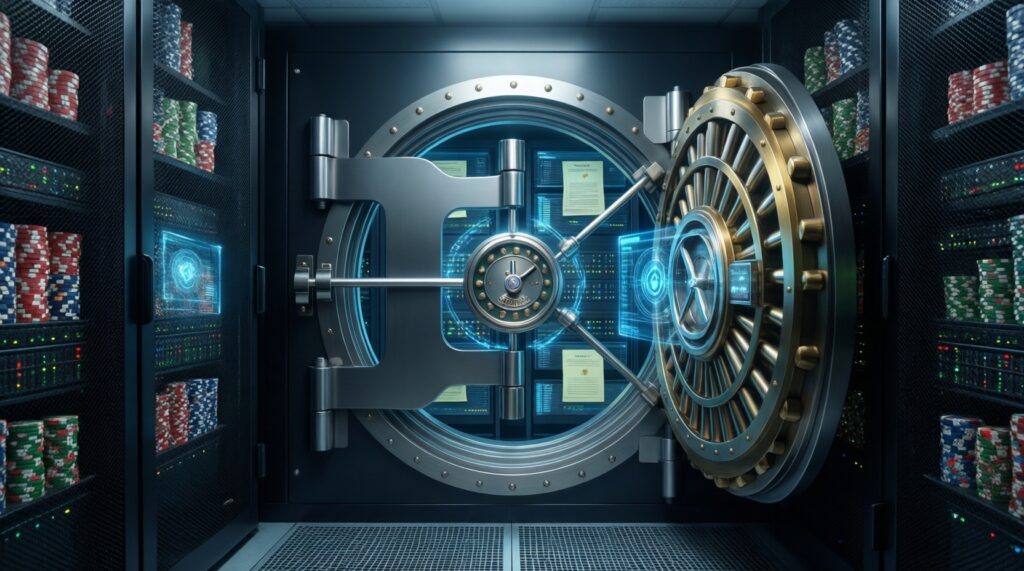
Player data storage is the set of controls that define where identity documents and account data live, how they are protected, and when they are deleted. When people ask how online casinos store personal data, the critical details are encryption, access scoping, and retention-because those define the blast radius of any breach or insider abuse.
What good storage practice looks like (benefits)
- If data is encrypted in transit (TLS) and at rest, then passive network interception and simple disk theft become far less useful to an attacker.
- If KYC documents are stored in a dedicated vault/service separated from gameplay systems, then compromise of one system does not automatically expose passport scans.
- If access is role-based with "need to know" rules, then support agents cannot browse documents outside specific cases.
- If audit logs are immutable and reviewed, then suspicious internal access can be detected and investigated.
Where limitations and exposure remain (constraints)
- If retention policies are "keep forever" by default, then your long-term exposure increases even if the casino's current security is strong.
- If third-party KYC/AML vendors are used, then your data footprint expands; contractual controls matter as much as encryption.
- If backups are not encrypted and access-controlled like primary storage, then backups can become the weakest link.
- If you share extra data beyond what is required (unredacted statements, unnecessary IDs), then you increase damage potential without improving verification success.
Detecting and Mitigating Fraud: Behavioral Analytics and Risk Scoring
Fraud detection in casinos is a risk engine that scores sessions, payments, and gameplay patterns to prevent account takeover, bonus abuse, and payment fraud. It typically uses behavioral analytics (how you type/click, device and network signals) plus rules and ML models.
- If you assume "KYC prevents fraud," then you miss that many attacks happen after KYC via phishing, credential stuffing, or SIM swaps; 2FA and session controls are still required.
- If you think "VPN always equals fraud," then you will get false positives; better systems weigh VPN use alongside device continuity, payment ownership, and behavioral consistency.
- If operators rely only on static rules, then attackers can iterate until they find thresholds; layered controls (rules + anomaly detection + manual review) reduce adaptation.
- If risk scoring ignores customer support flows, then social engineering wins; support actions (email changes, resets) must be high-signal events.
- If fraud tooling is not tuned for local payment methods and Thai user behavior, then both fraud losses and unnecessary KYC friction tend to rise.
Compliance Operations: Audit Trails, Third-Party Vendors and Regulatory Reporting
Compliance operations are the people-and-systems layer that turns KYC/AML policies into consistent, auditable decisions. This includes audit trails, escalation paths, vendor oversight, and producing regulator-ready records when required.
Mini-case (concept-to-practice): a player requests a large withdrawal after changing their phone number.
event: withdrawal_request(amount, destination)
if recent_change(phone_number) within risk_window:
  then require step-up auth (2FA re-check) and hold payout
if payment_destination != original_funding_source:
  then request proof_of_ownership and run AML review
if risk_score > threshold:
  then open case, freeze high-risk actions, assign to analyst queue
log: who approved, what evidence, timestamps, and final decision- If decisions are not logged with evidence and timestamps, then disputes become unresolvable and internal abuse becomes harder to detect.
- If third-party vendors are involved, then require: clear data retention settings, breach notification terms, access controls, and periodic security reviews.
- If the casino operates across multiple jurisdictions, then configuration management matters; rules should be versioned and mapped to each regulatory context.
Practitioner Concerns About Identity, Authentication and Data Handling
When does online casino KYC verification usually become mandatory?
If you attempt withdrawals, change payment methods, or trigger higher-risk signals, then KYC often becomes mandatory even if deposits worked without it.
What does casino AML compliance look for beyond "big withdrawals"?
If transactions show rapid cycling, unusual method switching, or linked-account behavior, then AML monitoring can flag you even at moderate amounts.
Is casino two factor authentication 2FA worth enabling if it adds friction?
If your password is reused anywhere or your email is a high-value target, then enabling 2FA is worth the friction because takeover prevention beats recovery.
What should I assume about online casino data security when uploading documents?
If the casino cannot explain encryption, access controls, and retention at a high level, then assume your documents could be exposed longer than necessary.
How online casinos store personal data: is it in one database with everything else?

If the operator is mature, then KYC documents are separated from gameplay and marketing systems; if not, then data may be centralized, increasing breach impact.
Can customer support bypass KYC or 2FA for "quick help"?
If support can override controls without strong verification and logging, then your account is exposed to social engineering; safer operators enforce step-up checks and audit trails.
What's the safest way to reduce repeated verification requests?
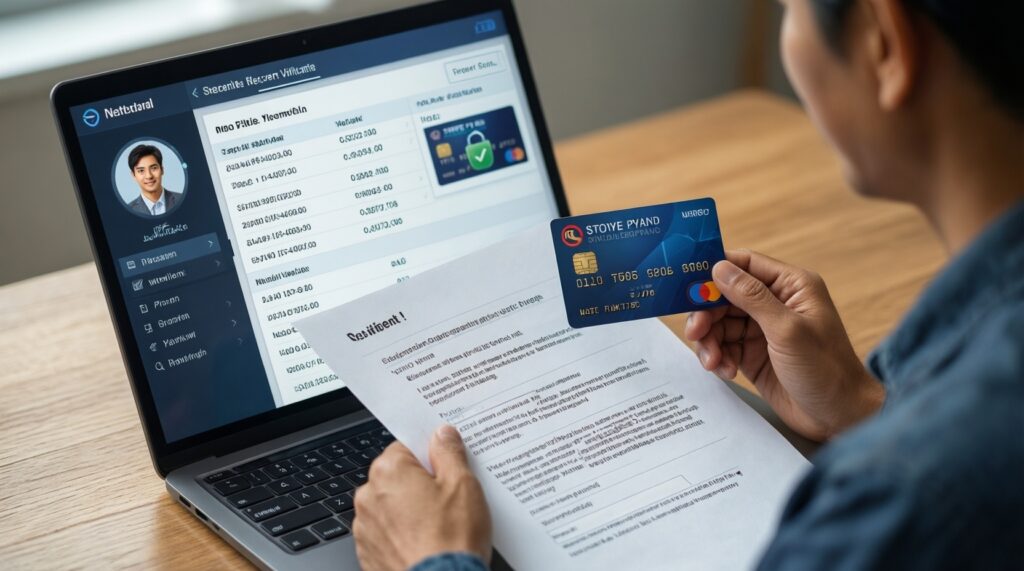
If your profile details match your documents and you keep a stable device/payment method set, then you reduce re-verification triggers caused by mismatches and anomalies.