
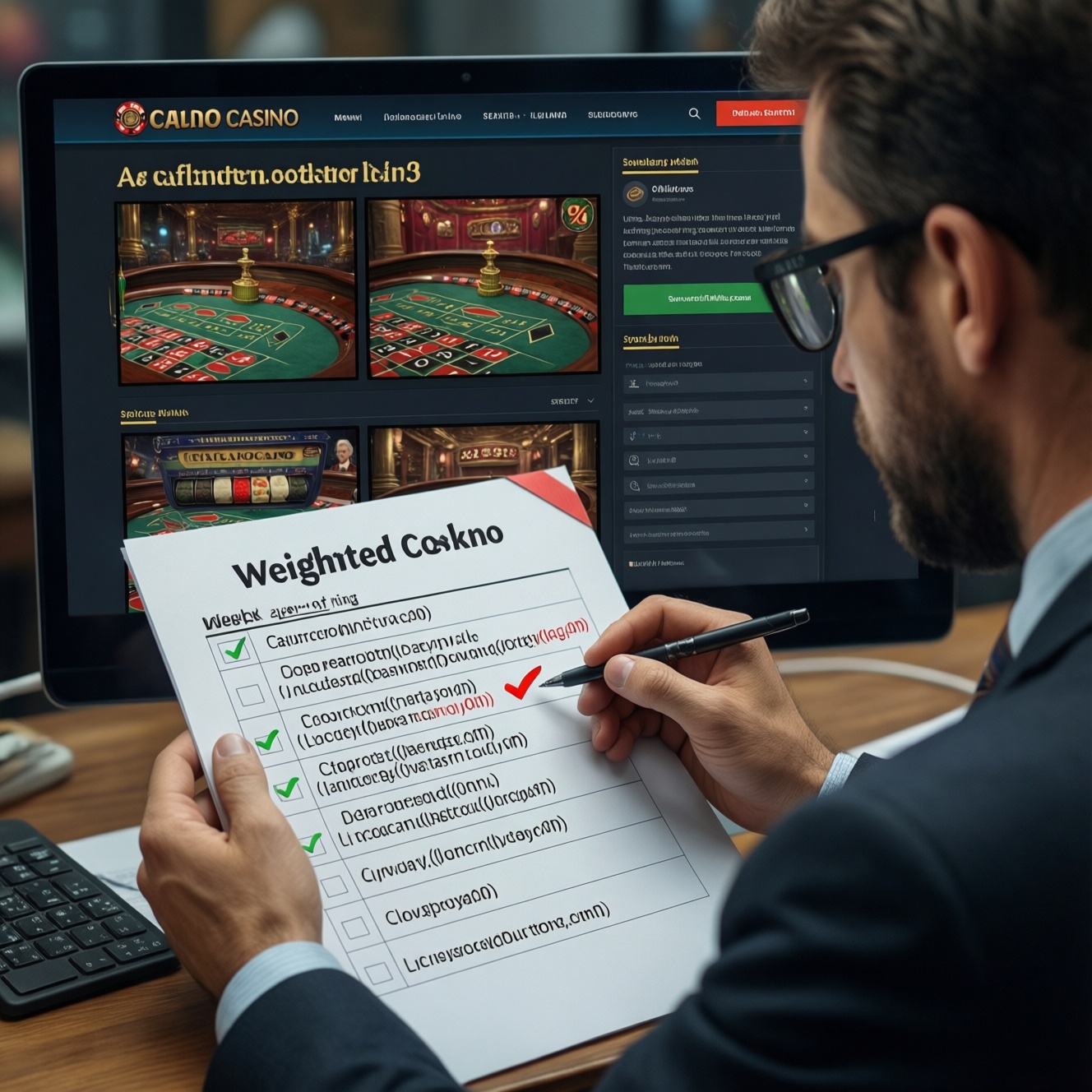
A replicable casino review checklist works when you score evidence, not impressions. Use a simple 0-100 weighted online casino rating system: collect screenshots/URLs, mark each criterion pass/fail against thresholds, then total the weighted score and attach a risk flag (low/medium/high). This casino review scoring system stays consistent across brands and markets.
Scoring Snapshot: How to Interpret the Checklist
- Score = evidence-based total (0-100): each category has a weight; you assign points only when you can verify documentation or observable behavior.
- Thresholds drive outcomes: a "pass" requires meeting the stated minimum; "fail" triggers a risk flag even if the overall score is high.
- Risk flag is separate from score: use low/medium/high based on the worst failed category (e.g., licensing fail = high risk).
- Recordkeeping is mandatory: store URLs, timestamps, screenshots, and chat/email transcripts so someone else can reproduce your result.
- Comparable reviews: this keeps best online casino reviews consistent because the same inputs yield the same outputs.
| Category (evidence-based) | Weight (0-100) | Pass threshold (minimum) | Auto risk flag triggers |
|---|---|---|---|
| Regulation & Licensing | 25 | Valid license can be verified on the regulator/issuer site; operator details match the casino's legal entity | High if license missing, unverifiable, or entity mismatch |
| Financial Practices | 25 | Withdrawal rules and fees are clearly disclosed; KYC and limits are stated before deposit; working cashout methods are visible | High if hidden fees/terms or unclear cashout rules; Medium if disclosures exist but are hard to find |
| Game Fairness | 20 | RNG/audit documentation is accessible and current; game providers are identifiable; RTP info is not misleading | High if fake audit claims or unverifiable providers; Medium if documentation is incomplete |
| User Journey & UX Risk | 15 | Account flows are consistent; critical terms appear before committing funds; mobile experience is stable enough to avoid user-error traps | Medium if key terms are buried; High if UX manipulates consent/withdrawal friction |
| Support & Accountability | 10 | At least two support channels; clear escalation path; responses provide case IDs or written confirmation | Medium if support is slow/opaque; High if no escalation or no written records |
| Responsible Gaming | 5 | Self-exclusion and limit tools exist; policy is easy to find; links to help resources are present | Medium if tools exist but are hard to use; High if no self-exclusion/limits |
Regulation & Licensing: Verifying Legal Standing
This check fits reviewers who want repeatable online casino review criteria for comparing operators and identifying red-flag risks early. Don't run it if you can't access the casino's terms, footer legal entity, and licensing page (for example, geoblocks or incomplete pages), or if local law in Thailand (TH context) requires professional/legal verification you can't perform.
Financial Practices: Deposits, Withdrawals and Fee Transparency
Prepare the following so your scoring is reproducible and safe:
- Clean browser profile: private window or a fresh profile to avoid personalized banners affecting what you see.
- Screenshot tool: capture full-page screenshots of T&Cs, banking pages, fee disclosures, and KYC text.
- Note template: a simple log with date/time, URL, what was checked, outcome (pass/fail), and evidence link.
- Non-sensitive test approach: do not deposit real funds just to "prove" withdrawals; rely on published rules and support confirmations where possible.
- Access to support channels: live chat/email to request written confirmation of fees, limits, and KYC triggers.
Game Fairness: RNG, Third-Party Audits and Return-to-Player
- Limitations you must accept: you cannot independently prove RNG integrity without lab access; your job is to verify credible evidence and detect inconsistencies.
- Do not gamble to test fairness: avoid "sample play" conclusions; short sessions are statistically meaningless and can be unsafe.
- Marketing can be misleading: treat badges and logos as claims until you verify them via issuer/provider sources.
- Regional availability varies: game lists and RTP values can differ by jurisdiction; record what you see in TH at the time of review.
-
Inventory the game providers and titles you can actually access. Open the casino lobby and record visible providers, game categories, and any provider-specific "about" pages. Save the lobby URL and take screenshots showing provider branding.
- Evidence to collect: lobby screenshots, provider list page (if any), and a sample of game detail pages.
-
Locate RNG/audit statements and validate that they are specific. Check the footer links, "Fairness", "RNG", "Security", and Terms pages for named auditors, report dates, and covered products. Score higher only when the statement names an auditor and scope (which games/which platform).
- Where to look: footer legal links, T&Cs, "About us", "Security", "Responsible gaming".
- Pass/fail cue: generic claims like "certified RNG" without issuer/scope should not pass.
-
Cross-check third-party claims against primary sources. If the casino names a testing lab/auditor or game provider, verify that the casino/brand appears on the issuer's own verification page or in an official report. If you can't verify, mark as "unverified" and cap the score for this criterion.
- Evidence to collect: issuer page URL or report PDF URL; screenshot of the listing matching the casino's legal entity or brand.
-
Verify RTP communication is not deceptive. Look for RTP disclosure on game info panels and compare wording across a few titles (e.g., "up to" vs. specific RTP). If RTP is missing entirely or presented only as a marketing slogan, score lower and add a medium risk note.
- Where to look: each game's info icon/panel, help pages, promotions pages that mention RTP.
- Document versioning and changes. Save timestamps and screenshots for audit pages and fairness statements; if the casino updates claims later, your review remains traceable. Use your notes to explain exactly what was visible during your check.
User Journey: Account Flow, Mobile Support and UX Risks
Use this result-check list after you've collected evidence, to confirm your scoring matches what a real user in TH would experience.
- Registration shows key terms before the user funds the account (bonuses, wagering, withdrawal limits, KYC triggers).
- Password reset and account recovery are available without forcing deposits or support-only loops.
- Mobile web experience keeps essential links accessible (T&Cs, fees, KYC, support), not hidden behind repeated redirects.
- Promotions do not pre-select opt-ins that change withdrawal rights without clear consent.
- Banking pages show methods, minimum/maximum limits, and processing expectations in the same place (not scattered across FAQs).
- Logout and session timeout behave predictably (no "stuck logged in" states on mobile).
- Critical actions (deposit, bonus activation) have confirmation steps that reduce user-error risk.
- Geolocation and language do not change legal entity details; if they do, treat it as a discrepancy and review licensing again.
Support & Accountability: Response Times, Escalation and Recordkeeping
Common scoring mistakes that reduce reproducibility and can inflate your result:
- Accepting verbal assurances without a written record. If chat agents won't provide written confirmation (email transcript or case ID), do not score the criterion as passed.
- Not testing escalation. Ask how to escalate a complaint and where to submit supporting documents; if the path is unclear, score lower even if the first-line agent is polite.
- Mixing brand and operator entity. Support may reference a brand name while the legal entity differs in the footer; treat mismatches as a licensing/compliance risk.
- Using one channel only. A single live chat widget is fragile; check email or ticketing availability for accountability.
- Failing to preserve evidence. Not saving transcripts, timestamps, and agent names makes your online casino rating system impossible to replicate.
- Confusing speed with quality. A fast response that avoids fees/KYC specifics should not earn full points.
- Letting promotions override policy. If support contradicts written T&Cs, default to written terms and flag the inconsistency.
Responsible Gaming & Player Protection Measures

If you can't fully verify a casino, or if your checklist produces a medium/high risk flag, use one of these alternatives depending on your goal:
- "Policy-first" review: score only what is publicly documented (limits, self-exclusion, dispute policy) and clearly label unverifiable items as not scored.
- "Regulator-first" screening: shortlist casinos only after licensing is verified; skip deep UX/game checks until the legal standing is confirmed.
- "Player-safety lens" comparison: prioritize deposit limits, cooling-off, self-exclusion, and clear withdrawal rules over game variety when compiling best online casino reviews.
- "No-deposit verification" workflow: avoid financial exposure by relying on written disclosures and support transcripts for fee/KYC/withdrawal policies.
Practical Clarifications for Replicating the Scoring System
How do I convert pass/fail checks into a 0-100 score?
Within each category, assign points only to items with verifiable evidence, then scale to the category weight and sum all categories. If a category has an auto-trigger (e.g., unverifiable license), apply the risk flag regardless of total score.
What counts as "verifiable" evidence for licensing?
A license number and legal entity that can be confirmed on the issuer/regulator's own site, matching the casino footer entity. A logo or "licensed" claim without independent confirmation should be treated as not verified.
Do I need to deposit money to review withdrawals?
No. For a safe workflow, score disclosures and written support confirmations, and mark operational performance as "not tested" rather than guessing.
How should I handle casinos that show different terms on mobile vs desktop?
Record both versions with timestamps and score using the stricter interpretation. If legal entity, fees, or withdrawal rules differ, flag at least medium risk and re-check licensing.
What if an auditor or RNG claim cannot be confirmed?
Cap the Game Fairness score and label the item "unverified." Treat repeated unverifiable claims as a higher risk signal than missing information.
How do I keep my results consistent across multiple reviews?
Use the same online casino review criteria, the same evidence log format, and the same thresholds every time. This is the core of a replicable casino review scoring system.
Is this checklist enough to call something "safe"?
No checklist can guarantee safety; it only reduces uncertainty by forcing evidence. Use the risk flag plus your "not tested/unverified" notes to communicate remaining uncertainty clearly.