
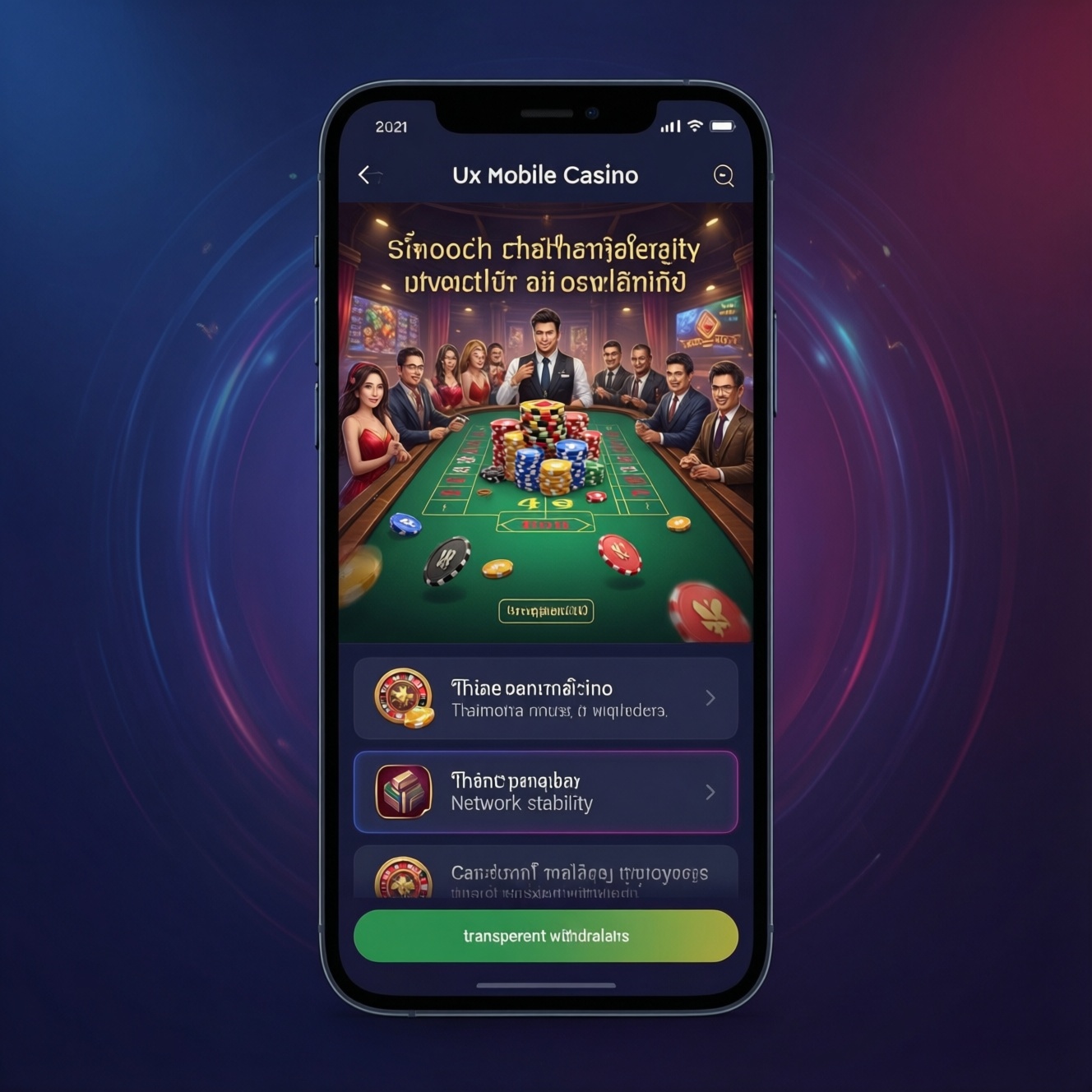
A great mobile casino app in 2026 is defined by three UX outcomes: users can start playing safely within minutes, the UI stays smooth under real-world Thai networks and devices, and banking flows are transparent with predictable timing. Use the checklist below to design, test, and monitor speed, stability, and withdrawals without compromising compliance.
Essential UX Metrics for Mobile Casino Apps
- Time-to-First-Play (TTFP): how quickly a new user reaches a playable demo or real-money lobby without confusion.
- Cold start experience: perceived speed (skeleton screens, progressive loading) and no blocking steps.
- Frame pacing: consistent animation and scrolling; avoid jitter during lobby browsing and game launch.
- Crash-free sessions: stability across device tiers and OS versions, especially after long play and returning from background.
- Banking completion rate: deposit and withdrawal attempts that finish successfully with clear status and receipts.
- Support deflection: fewer tickets about login, KYC, missing funds, and "pending" withdrawals due to better in-app explanations.
Onboarding and First-Session Conversion Flow
Best for: operators aiming to compete for "best mobile casino app 2026" placement, where first-session clarity and trust are the differentiator, not only game count. A strong flow is also essential if you support mobile casino app real money users who expect banking-ready UX from the first minute.
When not to optimize aggressively: if your regulatory/KYC obligations require full verification before any access, avoid "one-tap" shortcuts that create false expectations. Also avoid adding steps that increase friction (extra fields, forced permissions) unless they remove a larger risk (fraud, account takeover).
- Prioritized actions:
- Offer a Try / Demo path (where allowed) and a Play for real path with clear differences.
- Defer non-critical permissions (notifications, contacts) until value is demonstrated.
- Show banking and withdrawal rules early as short, scannable bullets (fees, limits, KYC triggers) to reduce surprises.
- Implementation tip: instrument the funnel with event names that match user intent (e.g., choose_demo, choose_real_money, open_wallet, start_kyc) so you can diagnose drop-offs by step rather than by screen.
Performance Benchmarks: Load Time, FPS and Resource Budgets
To credibly claim "fastest mobile casino app" internally (and to make it true for users), you need repeatable tests, device coverage, and clear budgets your teams can ship against.
What you need (access, tools, and test setup)
- Device coverage: at least one low/mid/high Android device commonly used in Thailand and one iPhone model; include a device with limited RAM.
- Network profiles: stable Wi‑Fi plus throttled mobile profiles (high latency / packet loss) to simulate real commuting usage.
- Build types: a performance build (release-like) and a debug build; ensure logging doesn't distort timing.
- Instrumentation: crash reporting + performance traces (e.g., Firebase Crashlytics/Performance, Sentry, Datadog-choose one stack and standardize).
- QA access: ability to trigger onboarding, login, lobby load, game launch, deposit, and withdrawal flows in staging with safe test payment methods.
- Implementation tip: add "performance markers" around key UX moments (app start → lobby visible, game tap → game interactive, wallet open → methods loaded) to align engineering and UX on the same timeline.
Compact metric table (targets and what to do when you miss)
| Area | Metric to track | Healthy signal (qualitative) | Common cause when it's bad | Fast fix to try first |
|---|---|---|---|---|
| Startup | Cold start → lobby visible | No blank screens; user sees actionable lobby fast | Blocking API calls; heavy SDK init; large images | Defer non-critical init; cache last lobby; use skeleton UI |
| Lobby scrolling | Frame pacing / jank | Stable scrolling with no stutters | Overdraw; too many carousels; unoptimized lists | Virtualize lists; reduce shadows; prefetch thumbnails |
| Game launch | Tap → game interactive | Clear progress and quick handoff to provider | Slow webview; DNS delays; repeated auth | Warm up webview; reuse sessions; optimize handshake |
| Stability | Crash-free sessions | Rare crashes; no spikes after releases | OOM; lifecycle bugs; third-party SDK issues | Fix top crash first; add memory guards; pin SDK versions |
| Memory | OOM / memory growth | No steady growth after browsing and switching games | Image leaks; webview leaks; unbounded caches | Cap caches; clear on background; audit image pipelines |
Stability: Crash Reduction, Memory Management and Monitoring
If you want to be the "most stable mobile casino app," treat stability as a weekly operational loop: detect, reproduce, fix, verify, and guard against regressions. The steps below are safe and user-friendly: they reduce crashes without adding risky friction to gameplay.
-
Define stability KPIs and alerting rules
Pick a small set of stability signals you will review every release and every hotfix window: crash rate trend, top crash signatures, and out-of-memory patterns. Set alerts for sudden spikes so you react before support tickets explode.
- Tip: tag dashboards by app version, OS version, device model, and country/region to catch Thailand-specific patterns (carrier/network + device mix).
-
Prioritize fixes by user impact, not by rarity
Fix the crashes that hit the most sessions or block core flows (login, lobby, wallet, game launch), even if the stack trace looks "simple." This is the quickest path to perceived stability.
- Start with: crashes after returning from background, during payment webviews, and during game provider handoff.
-
Reproduce with a controlled matrix
Reproduce top issues on a small device matrix: at least one low-memory Android, one mainstream Android, and one iPhone. Combine with network throttling and background/foreground switching, because many casino crashes happen during context switches.
- Tip: run "10-minute stress loops" (browse lobby → open game → back → open wallet → repeat) to expose leaks.
-
Harden lifecycle handling (background, rotation, interruptions)
Casino sessions are interruption-heavy: calls, chat apps, OTP SMS, and app switching. Ensure the app restores to a consistent state without double-loading, duplicated webviews, or stale auth tokens.
- Ensure idempotent navigation: re-opening the wallet or a game should not create duplicate instances.
- Show a safe recovery UI if a session expires: explain, re-auth, return to last stable screen.
-
Prevent memory leaks and unbounded caches
Track memory while browsing long lists, opening multiple games, and repeatedly opening the wallet. If memory grows steadily, cap caches, optimize images, and dispose provider webviews cleanly.
- Android tip: use LeakCanary in debug builds; iOS tip: use Instruments (Leaks/Allocations) during the same scripted loop.
-
Verify with release gates and rollback readiness
Before each release, run a short "core journey" test set that includes login, lobby, one game launch, deposit method view, and withdrawal status view. Keep the ability to rollback or remotely disable a problematic feature flag without breaking gameplay.
- Tip: treat game-provider integrations as "plugins" with kill switches for unstable endpoints.
Fast mode: stability loop you can run every release
- Watch: check crash dashboards for new top signatures per version within hours of rollout.
- Reproduce: run the 10-minute stress loop on one low-memory Android + one iPhone with throttled network.
- Fix: patch the highest-session-impact crash first; avoid broad refactors during hotfixes.
- Guard: add a regression test or runtime check (e.g., null/timeout guard) for the exact failure mode.
Banking UX: Fast, Transparent Deposits and Withdrawals
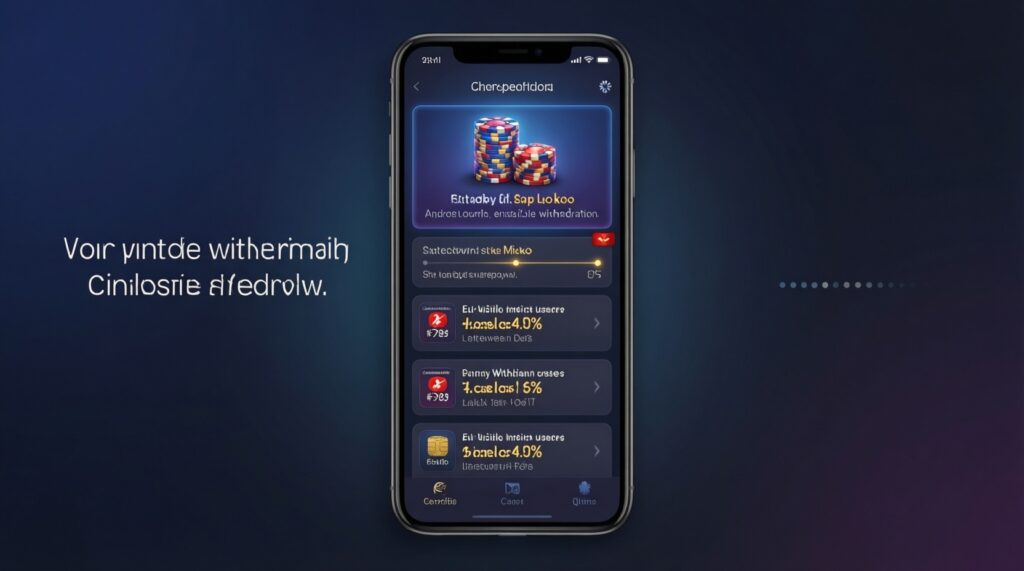
Banking UX is where trust is won or lost. If you market "mobile casino app instant withdrawal," your UI must set expectations clearly and show verifiable status changes without making users guess where their money is.
Verification checklist (run it end-to-end in staging)
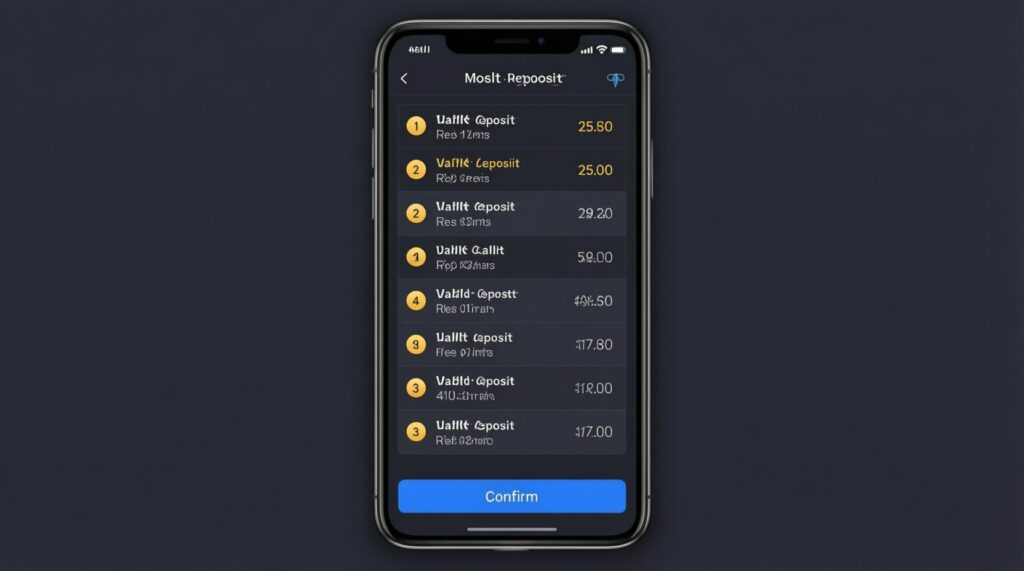
- Deposit methods are ranked by likely success (availability, last used, fastest path) and show any prerequisites before the user commits.
- The wallet shows fees, limits, and processing windows in plain language near the action button, not hidden in terms.
- Every deposit/withdrawal attempt ends with a receipt screen (amount, method, time, reference ID) and a path to view status later.
- Withdrawal status uses clear states (submitted, under review, approved, paid, failed) and explains what the user can do in each state.
- If KYC is required, the app explains exactly what is needed and why, and preserves the pending withdrawal request state where regulations allow.
- Failures provide actionable reasons (e.g., mismatch name, daily limit, method unavailable) plus the next best alternative.
- Support escalation is available from the receipt/status screen with pre-filled context (reference ID) to reduce back-and-forth.
- Users can find the transaction history from the main navigation in one tap, with filters (date, type, status).
- Security prompts (OTP/biometrics) appear only when risk is high, and never break the flow without recovery instructions.
Catalog UX: Discovery, Filtering and Contextual Recommendations
Lobby and catalog UX decide whether users explore or churn. Most "slow app" complaints are actually catalog complexity, oversized assets, and confusing categorization that hides what people came for.
Frequent mistakes to eliminate

- Overloading the lobby with multiple autoplaying banners, heavy animations, and nested carousels that create jank and feel slower than it is.
- Filters that reset after returning from a game, forcing users to rebuild the same selection repeatedly.
- Sorting that feels random because it ignores the user's last played, preferred providers, or device compatibility.
- No "continue playing" rail, so a second session starts from zero rather than from the last intent.
- Game cards without critical context (provider, volatility label if you use it, demo availability, recent play) causing extra taps and backtracking.
- Search that fails on local patterns (misspellings, transliteration) and returns empty results with no recovery suggestions.
- Recommendations that interrupt (popups) instead of supporting discovery contextually (rails, "because you played..." sections).
- Ignoring loading states: blank grids with spinners instead of skeletons and progressive rendering.
- One-size-fits-all assets that are too large for mobile, increasing data use and slowing down users on mobile networks.
Implementation tip: prefetch thumbnails for the next screenful and lazy-load provider logos; it improves perceived speed without changing business logic.
Compliance, Accessibility and Regional Customization
Choose the approach that fits your regulatory posture and product maturity in Thailand. These are alternatives, not add-ons; each changes how you structure onboarding, banking, and UI copy.
- Progressive verification (light → full KYC): appropriate when you can allow limited access first, then require full verification at withdrawal or higher-risk actions.
- KYC-first onboarding: appropriate when regulations or risk policy require strict identity checks before any meaningful access; optimize by making requirements explicit and minimizing retries.
- Region-aware UX packs: appropriate when Thai language, local payment methods, and local support hours materially change expectations; keep copy, formats, and method ordering region-specific.
- Accessibility-first UI defaults: appropriate when you want fewer errors and more trust; use readable typography, sufficient contrast, and touch targets that reduce mis-taps in banking screens.
Common operator concerns and quick fixes
Why do users drop during the first session even when the games are strong?
The first session often fails on uncertainty: unclear demo vs real-money paths, hidden banking rules, or too many early permissions. Reduce steps, show expectations early, and give a visible "first playable" moment quickly.
What's the quickest way to become the fastest mobile casino app in perceived speed?
Make the lobby appear fast with skeleton UI and defer non-critical SDK initialization. Then optimize tap-to-game by reusing sessions and avoiding repeated authentication handshakes.
How do we become the most stable mobile casino app without a long refactor?
Fix the top crash signatures by impacted sessions first, add lifecycle guards for background/foreground, and cap caches to prevent memory growth. Ship small hotfixes with rollback capability.
Users complain about "pending" withdrawals-how do we reduce support tickets?
Replace vague states with explicit status steps and a receipt screen that includes reference IDs. Add one-tap access to transaction history and pre-filled support escalation from the status view.
How can we credibly promote mobile casino app instant withdrawal without overpromising?
Show eligibility and prerequisites before submission, and present processing states with clear user actions. If instant payout depends on method or KYC, disclose that in-line near the withdraw button.
What breaks trust fastest in a mobile casino app real money flow?
Surprise requirements (KYC at the end), unexplained fees/limits, and missing receipts. Make rules visible before commitment and keep a complete audit trail in the app.