

A casino review framework is a repeatable set of tests that turns marketing claims into verifiable evidence: bonus rules, game fairness (RTP and RNG signals), payout reliability, support quality, licensing validity, and operator transparency. Use it to produce consistent online casino reviews and to separate best online casinos from risky ones using screenshots, timestamps, and documented T&Cs.
Reviewer checklist snapshot
- Record bonus terms exactly as shown (offer page + full T&Cs) before you deposit.
- Verify game fairness signals: displayed RTP, provider identity, and any accessible verification/audit notes.
- Run a controlled payout test with documented KYC steps, fees, and processing stages.
- Measure support responsiveness across channels using the same scripted questions.
- Validate the license number/issuer against official registers and match domains/brands.
- Check for transparency: ownership, dispute path, and terms that can change outcomes retroactively.
Bonus offers: evaluation criteria and red flags
This section is the backbone of casino bonus reviews: it fits reviewers who can read T&Cs carefully, track wagering progress, and document edge cases (max cashout, excluded games, time limits). Skip bonus testing if you can't control spend, if terms are unclear, or if you cannot afford to lock funds during wagering.
| Criterion | Test method | Metric/threshold | Pass/fail | Short note |
|---|---|---|---|---|
| Offer clarity | Screenshot offer page + full bonus T&Cs; note date/time | All key rules explicitly stated (wagering, max bet, expiry, excluded games) | Pass if no rule is implied or hidden behind support-only explanations | Ambiguity is a practical risk for players and reviewers |
| Wagering & contribution | List contributions per game category from T&Cs | Contribution table is present and consistent across pages | Fail if "house discretion" can void play without clear triggers | Look for conflicting terms between promo page and general rules |
| Max cashout / max win | Find caps in promo rules and withdrawal section | Cap is clearly quantified and applies consistently | Fail if cap appears only after deposit or inside withdrawal/KYC pages | This is a frequent source of disputes in online casino reviews |
| Bonus abuse clauses | Search T&Cs for "irregular play", "advantage play", "abuse" | Definitions + concrete examples provided | Fail if clauses allow voiding for normal play without definition | Document exact wording verbatim |
3-point quick audit checklist for bonuses
- Save screenshots of the promo page, full T&Cs, and any pop-ups that appear at opt-in.
- Highlight: wagering rule, max bet, excluded games, max cashout, expiry, and voiding clauses.
- Confirm the same rules appear in-account (bonus page) after activation.
Game fairness: RTP analysis and provable randomness
To assess "high RTP online casinos" claims responsibly, you need access to game info panels, provider details, and (when available) public RTP disclosures or verification notes. You are not proving mathematics; you are checking whether RTP and randomness claims are clearly disclosed, consistent, and tied to reputable game providers.
What you'll need before you test
- A test account with access to the lobby and game info screens (demo mode is helpful but not always identical).
- A way to capture evidence: screenshots and screen recordings with timestamps.
- A note template: game name, provider, RTP shown (if shown), game rules link, and any RNG/audit references.
- Basic understanding of RTP vs volatility and why short sessions cannot "verify" RTP.
| Criterion | Test method | Metric/threshold | Pass/fail | Short note |
|---|---|---|---|---|
| RTP disclosure | Open the game info (i) panel/rules; capture screenshot | RTP value (or RTP variant) is displayed or linked from official rules | Fail if RTP is claimed in marketing but not findable per game | Many casinos list "up to" RTP without game-level evidence |
| RTP variant control | Check whether multiple RTP settings exist; verify which is used | Casino clearly states which RTP configuration is active | Fail if casino can silently switch RTP variants without disclosure | Record both casino view and provider rules if accessible |
| Provider legitimacy | Confirm provider name matches game rules and lobby listing | Provider identity consistent across game, lobby, and footer | Fail if provider is missing or replaced by generic labels | Provider mismatch can signal a cloned/unsupported build |
| Randomness verification signals | Look for RNG/audit references in rules/footer/help | Verification references are specific (what is tested, by whom, where to verify) | Fail if "certified" is claimed with no traceable details | Keep the claim text + location for later dispute context |
3-point quick audit checklist for fairness
- For 5-10 popular titles, capture RTP/rules screens and provider attribution.
- Flag any "RTP up to" claims that cannot be mapped to specific games or variants.
- Note whether the casino provides verifiable audit/RNG references (not just slogans).
Payout process: limits, processing times and verification hurdles
This is how you test "fast payout online casinos" safely: use a controlled deposit amount, withdraw only to a payment method in your own name, and document every stage (request time, status changes, KYC prompts, and final receipt). In Thailand (th), pay extra attention to method availability and name-matching rules.
Preparation mini-checklist (before you withdraw)
- Set a small, predefined test budget and stop-loss; don't chase losses during a review.
- Use one account, one identity, and one payment method under your legal name.
- Screenshot: cashier pages (deposit/withdraw), fee notes, limits text, and KYC requirements.
- Prepare KYC documents in advance (only upload via the official secure channel).
- Start a timestamp log: request time, approvals, messages, and completion time.
-
Map the withdrawal rules before requesting
Open withdrawal T&Cs and cashier limits and capture screenshots. Record: minimum/maximum, fees, processing stages, and whether winnings from bonuses have extra restrictions.
- Note any "priority" tiers that require VIP status or high turnover.
- Check whether different methods have different review/approval steps.
-
Run a controlled deposit-and-play session
Deposit an amount aligned with your test plan and do a short, normal play session. The goal is not to "prove RTP", but to ensure the account is active and eligible for withdrawal under stated terms.
-
Request a withdrawal to a matching method
Submit the withdrawal to a payment method in your name and record the exact request timestamp and status message. Screenshot the confirmation screen and any reference ID provided.
- If the casino offers multiple methods, pick the one you can verify receipt for (bank statement/app receipt).
- Do not split withdrawals unless the casino requires it (document the reason if it does).
-
Handle KYC and source checks safely
If verification is requested, follow the exact upload instructions and document what was requested and when. Track whether the casino changes requirements mid-process.
- Fail condition: repeated requests for the same document without explanation.
- Red flag: pressure to use unofficial channels (personal chat accounts, external links).
-
Measure processing: stated vs observed
Compare the casino's stated processing language to your observed timeline using your timestamp log. Record each status change (e.g., "pending", "processing", "paid") with screenshots.
-
Verify completion and document receipt
Confirm the final receipt in your payment app/bank record and capture a proof-of-receipt screenshot (mask sensitive details). If the casino marks "paid" but funds are missing, open a support ticket and log the case ID.
| Criterion | Test method | Metric/threshold | Pass/fail | Short note |
|---|---|---|---|---|
| Limits transparency | Screenshot limits on cashier + T&Cs | Limits and fees are stated consistently across pages | Fail if limits change after deposit or differ by hidden rules | Document page URLs/paths inside the account |
| Processing honesty | Timestamp log from request to receipt | Observed stages match described stages (no unexplained holds) | Fail if "paid" status appears without actual transfer evidence | This is the core of a payout test in online casino reviews |
| KYC proportionality | List each document requested and the trigger | Requests align with stated policy; no moving goalposts | Fail if new requirements appear only after a win/withdrawal | Keep messages and ticket IDs |
| Chargebacks / reversals risk cues | Review terms for reversals and account closure effects | Clear rules on reversals, voids, and dispute path | Fail if operator can void balances without defined reasons | Note the dispute escalation route offered |
3-point quick audit checklist for payouts
- Keep a single timeline: request time, every status change, every message, final receipt.
- Check that KYC requests match written policy and don't expand after withdrawal.
- Confirm "paid" with external proof-of-receipt, not only internal status.
Customer support: channels, response benchmarks and quality scoring
Support testing determines whether problems can be solved quickly when bonuses, verification, or withdrawals stall. Use the same script across channels (live chat, email, messaging apps if offered) and score evidence-based outcomes: time to first reply, correctness, and whether the agent cites the actual T&Cs.
| Criterion | Test method | Metric/threshold | Pass/fail | Short note |
|---|---|---|---|---|
| Channel availability | Check footer/help/cashier for channels and hours | Channels and hours are clearly stated and reachable | Fail if "24/7" is claimed but chat is offline during tests | Capture offline messages and timestamps |
| Time to first response | Send the same question; record timestamps | First response time recorded and repeatable | Fail if responses are consistently absent or auto-only | Use a neutral script and keep logs |
| Answer quality | Ask about a specific term (e.g., max bet on bonus) | Agent references the correct policy and location | Fail if agent contradicts T&Cs or refuses to cite policy | Misquotes are critical in casino bonus reviews |
| Case handling | Request a ticket/case ID for a payout/KYC question | Ticket ID + follow-up path provided | Fail if no traceable case system exists | Essential for disputes |
Result verification checklist (score support on these)
- Live chat reachable and stable (no forced disconnects during your session).
- First response time recorded with timestamps (chat transcript or email headers).
- Agent answers the exact question without pushing unrelated promotions.
- Agent cites the relevant T&Cs clause or links to the exact policy page.
- Clear escalation path: ticket ID, expected next step, and where to follow up.
- Language fit for your audience (English/Thai availability where relevant in th context).
- No requests to share sensitive data through unofficial channels.
- Consistent answers across two channels (chat + email) for the same question.
3-point quick audit checklist for support
- Test at least two channels with the same script and keep full transcripts.
- Mark any contradiction between agent advice and written terms as a fail risk.
- Require a ticket ID for payout/KYC issues; otherwise resolution is hard to verify.
Licensing and regulation: validating credentials and jurisdictional risks
Licensing checks protect your readers and your methodology: a logo is not proof. Validate the license number/issuer, confirm the operator name matches the website/brand, and record the jurisdiction stated in terms. This section often differentiates "best online casinos" lists from promotional content.
| Criterion | Test method | Metric/threshold | Pass/fail | Short note |
|---|---|---|---|---|
| License claim presence | Check footer, terms, and about page; screenshot | License issuer + number + operator entity are stated | Fail if only a badge/logo is shown without identifiers | Record the exact legal entity name |
| Domain/brand alignment | Compare license holder name to site terms and brand | Entity and brand relationship is explained (group/DBA) | Fail if the licensed entity is unrelated or not mentioned in terms | Common risk in multi-brand setups |
| Jurisdiction clarity | Locate governing law/dispute jurisdiction clause | Jurisdiction is explicit and consistent across documents | Fail if jurisdiction is missing or contradictory | Impacts dispute options for players in th |
| Regulatory contact/dispute route | Look for complaints process and regulator contact | Clear steps and contact points exist | Fail if only internal complaints are allowed with no escalation info | Document where complaints are submitted |
Common licensing mistakes to avoid (reviewer-side)

- Accepting a footer badge as proof without capturing the license number and issuer.
- Not matching the operator legal entity in T&Cs to the brand/domain being reviewed.
- Ignoring mirror domains and alternative URLs that route to the same cashier.
- Failing to screenshot the "governing law" and disputes clause (it matters in practice).
- Mixing up software provider licensing with operator licensing.
- Overstating legality for a country; instead, report what the casino claims and what the terms state.
- Not saving evidence; licensing pages and footer text can change without notice.
3-point quick audit checklist for licensing
- Capture: license issuer, license number, and operator entity name from the site.
- Confirm the same entity appears in the terms, privacy policy, and payments pages.
- Record the dispute path and jurisdiction clause for reader risk assessment.
Operational transparency: terms, audits, ownership and conflict indicators
Transparency is your consistency layer across online casino reviews: it reveals whether rules are stable, who controls player funds, and how disputes are handled. If transparency is weak, you can still review the product experience, but you should label the risk clearly and avoid strong endorsements.
| Criterion | Test method | Metric/threshold | Pass/fail | Short note |
|---|---|---|---|---|
| Terms stability | Check version dates on T&Cs; archive screenshots | Terms have visible effective dates and change history cues | Fail if terms can change without notice and affect balances retroactively | Document exact clauses about unilateral changes |
| Ownership disclosure | Find company details in terms/about; screenshot | Company name, registration info (if provided), and contact are present | Fail if only a generic brand name exists with no entity identification | Helps when resolving disputes |
| Audit/verification transparency | Collect any audit references and where they apply | Claims are specific and tied to a scope (games, payouts, RNG) | Fail if audits are used as vague marketing with no scope | Don't infer facts beyond what's shown |
| Conflict indicators | Check affiliate disclosures, review incentives, and editorial policy | Disclosure is clear about commissions and review independence | Fail if incentives are hidden while content claims neutrality | Important when ranking best online casinos |
Practical alternatives when transparency is insufficient
- Experience-only review (no endorsement) - Use when the product is usable but operator details/terms are unstable; focus on UI, game catalog, and support behavior with explicit risk labeling.
- Provider-led review - Use when you can validate game providers and game-level rules but not operator credentials; review the software experience and avoid payout promises.
- Wait-and-retest approach - Use when terms or licensing information changes during your review window; publish a preliminary note and rerun the payout/KYC test later with a new evidence pack.
- Reader-safety shortlist - Use for "best online casinos" content: include only operators that pass licensing + payout documentation requirements; exclude the rest regardless of UX quality.
3-point quick audit checklist for transparency
- Save effective-dated copies of T&Cs, bonus terms, and withdrawal rules (screenshots + URLs/paths).
- Confirm the operator entity and contact details are present and consistent across documents.
- Disclose conflicts (affiliate relationships) and separate marketing claims from tested observations.
Common reviewer hurdles and quick fixes
How do I keep online casino reviews consistent across different sites?
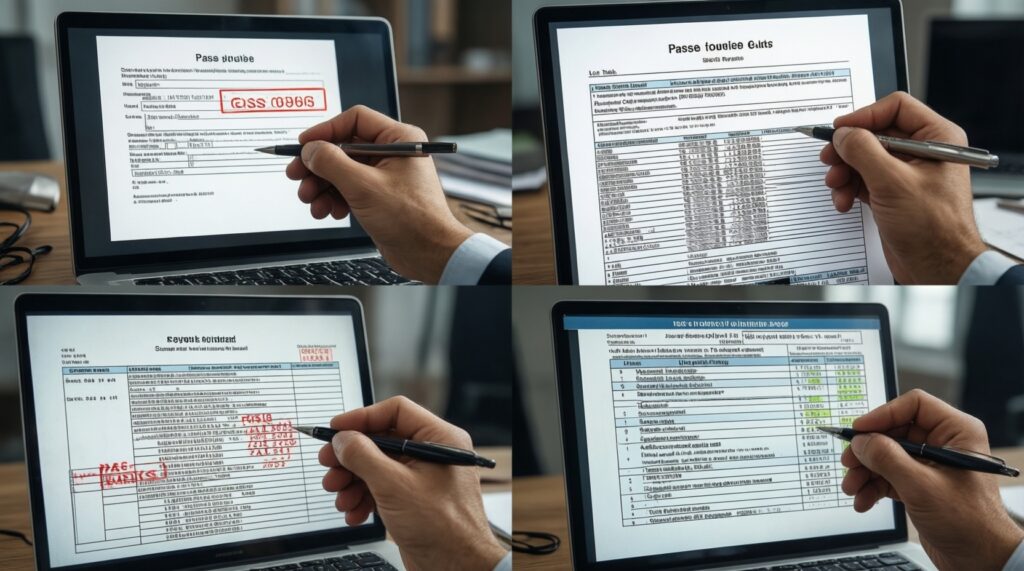
Use the same evidence pack every time: screenshots of T&Cs, a timestamp log for support and payouts, and a fixed set of test questions. Score "pass/fail" against your documented criteria, not against marketing language.
What's the safest way to write casino bonus reviews without misleading readers?
Quote rules exactly, show where you found them, and separate "terms stated" from "terms observed in-account." Avoid implying that a bonus is good unless you've mapped wagering, caps, excluded games, and voiding clauses.
Can I verify high RTP online casinos by playing for a few hours?
No-short play sessions can't validate RTP mathematically. Instead, verify whether RTP is disclosed per game/variant, whether provider attribution is consistent, and whether the casino's fairness claims are traceable to specific documentation.
What if a casino claims to be one of the fast payout online casinos but my withdrawal stalls?
Escalate using a ticket ID and document each status change with timestamps and screenshots. Compare the observed steps to the stated withdrawal process; if requirements change after you withdraw, record that as a major red flag.
How do I check licensing without becoming a legal expert?
Don't interpret legality for a country; verify what the casino claims: issuer, license number, operator entity, and jurisdiction clause in terms. If identifiers are missing or inconsistent, label the licensing as unverified.
How should I rank best online casinos if some have great UX but weak transparency?
Prioritize verified licensing, payout evidence, and stable terms over design. You can still mention UX strengths, but keep them out of "best" rankings if operator identity, dispute path, or key rules can't be verified.