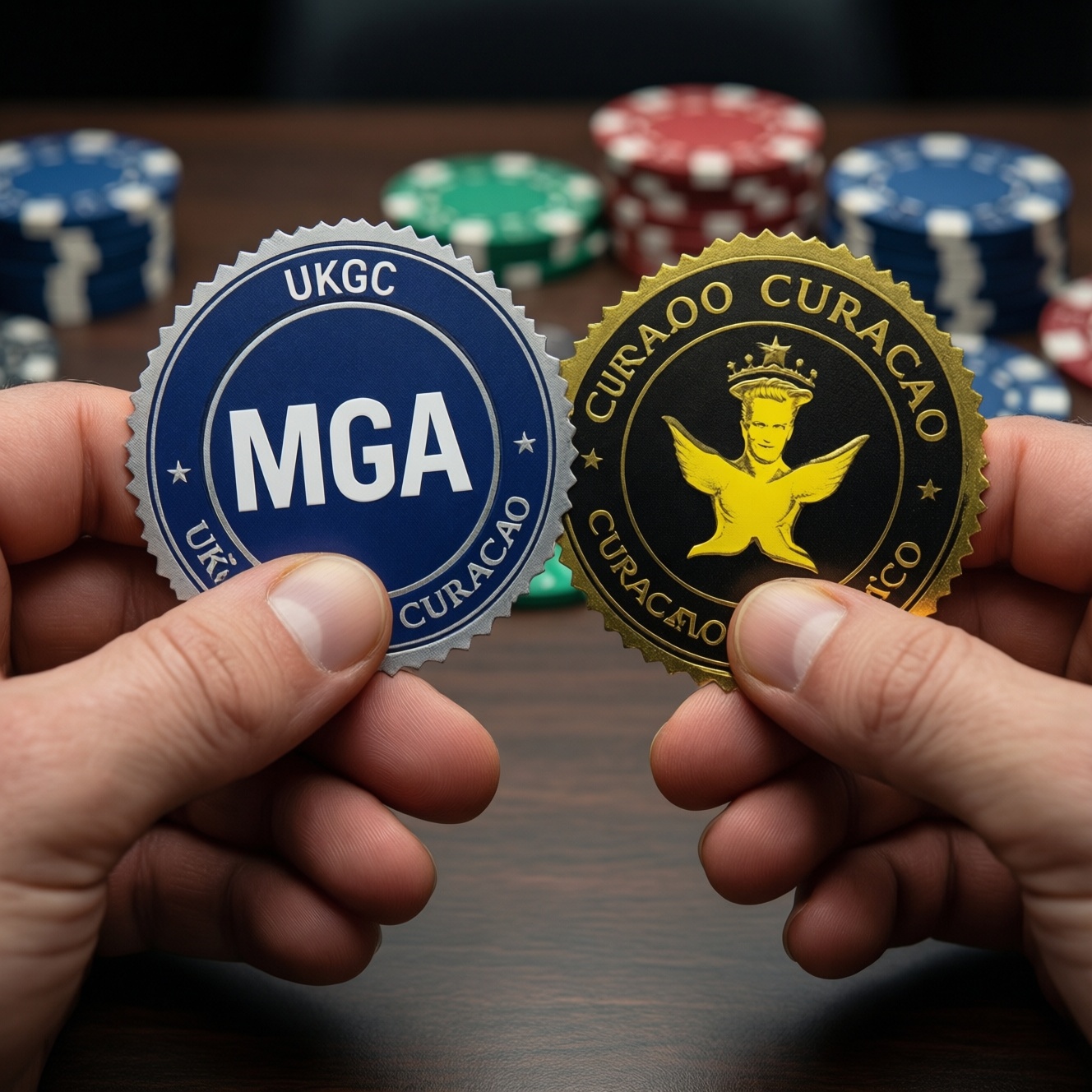
For player protection, UKGC generally offers the strongest enforceable safeguards, MGA is a close second with solid consumer and technical controls, and Curaçao often varies by operator maturity and sub-license structure. To choose the best option, match the license to your persona: how much legal recourse you need, how strict KYC you tolerate, and how you verify audits, funds handling, and dispute routes.
Practical implications for player safety
- If you want maximum leverage in disputes, prioritize jurisdictions with clear complaint pathways and active enforcement (often seen with UKGC licensed online casinos).
- If you value broad EU-style standards but want wider operator availability, MGA licensed casinos are commonly a balanced choice.
- If you choose Curacao licensed casinos, treat "license" as a starting signal only-verify audit evidence, payment reliability, and support quality operator-by-operator.
- For safe online casinos, prioritize proof: transparent ownership, clear T&Cs, documented KYC/AML, and independent testing statements.
- "Best licensed online casinos" usually combine strong licensing and disciplined operations: fast support, predictable payouts, and clean bonus rules.
Regulatory scope and legal enforceability
Use these criteria to decide what "protection" actually means for you in Thailand (th) context, where cross-border enforcement can be practical rather than local-court driven:
- Regulator reach and powers: ability to investigate, demand remediation, and sanction operators meaningfully.
- Complaint escalation path: whether you can escalate beyond the operator (and how structured that path is).
- Clarity of player contract terms: how strictly misleading or unfair terms are policed.
- Player funds handling expectations: whether the regime expects segregation/ring-fencing or equivalent controls (and how it is monitored).
- Payout reliability culture: how disputes around delayed/blocked withdrawals are typically handled (policy and practice).
- Identity and affordability checks: how strict verification is, and whether it reduces fraud/chargebacks at the cost of friction.
- Technical and RNG oversight: independent lab testing expectations, change control, and incident reporting discipline.
- Marketing and bonus compliance: how aggressively misleading promos, wagering traps, or unclear exclusions are challenged.
- Operator transparency: accessible license lookup, corporate identity clarity, and accountability if something goes wrong.
Consumer protections: deposits, payouts and dispute resolution
Below are practical "variants" you'll encounter when shopping across UKGC, MGA, and Curaçao. The license logo is not the product-your real outcome depends on how disputes are handled, how withdrawals are processed, and how consistently rules are enforced.
| Variant | Who it suits | Pros | Cons | When to choose |
|---|---|---|---|---|
| UKGC license (UK-focused operator) | Risk-averse players; long-term bankroll management; those prioritizing structured recourse | Typically the clearest dispute escalation expectations; stronger pressure on fair terms and safer operations | More verification friction; stricter limits and intervention can reduce "flexibility" | Choose when you want the highest confidence in complaint handling and operational discipline, even if onboarding is slower |
| MGA license (EU-style framework) | Players wanting a balance of protection and broad brand choice; bonus users who still want guardrails | Generally consistent licensing standards; common use of independent testing and compliance processes | Cross-border resolution can still be administrative rather than court-like for a Thai player; operator quality varies | Choose when you want a strong baseline and reputable ecosystem without the strictest friction |
| Curaçao license (baseline) | Players optimizing for game variety and access; crypto-friendly users; those comfortable self-verifying risk | Often broader payment and product flexibility; wide availability | Protection is less predictable: disputes, withdrawals, and policy clarity depend heavily on the operator | Choose only when you can validate the operator's operational maturity (audits, history, transparent terms) and accept higher variance |
| Curaçao license + strong governance signals (clear ownership, published policies, recognizable audits) | Intermediate players who want access but won't compromise on basic safeguards | Can approach "good enough" safety when paired with solid compliance, clean withdrawal rules, and credible testing statements | Still weaker formal recourse than stricter regimes; requires effort to verify | Choose when you need Curaçao-style access, but can confirm reliability indicators before depositing |
| Multi-jurisdiction group brand (same operator group holding more than one recognized license across markets) | VIPs and high-deposit players who want brand accountability and operational maturity | Better internal controls are more likely (payments, support, incident handling); more to lose reputationally | Rules and protections may depend on the site entity you register with; "group reputation" is not a guarantee | Choose when you can confirm which legal entity serves you, and the applicable dispute route for that exact entity |
Persona-based recommendations (Thailand-oriented)
- Conservative bankroll protector: lean toward UKGC-first, then MGA, and avoid Curaçao unless the operator shows exceptional transparency and track record.
- Bonus optimizer (intermediate): MGA often offers a workable balance; regardless of license, read exclusion rules, max cashout clauses, and withdrawal verification triggers before depositing.
- VIP / high-deposit player: pick the license with the most enforceable complaint path and the operator with the clearest payout workflow, dedicated support, and documented KYC steps upfront.
- Operator / affiliate choosing partners: prioritize jurisdictions where you can evidence compliance (policies, testing, AML controls) and where enforcement incentivizes long-term quality, not short-term acquisition.
Anti-money laundering (AML) and KYC standards compared
Use scenario rules to reduce account freezes and withdrawal delays-especially common around first withdrawal, large wins, changed payment methods, or inconsistent identity details:
- If you expect frequent withdrawals, then complete KYC early (ID + address + payment method proof where relevant) to avoid "win-then-verify" friction at payout time.
- If you use multiple deposit methods (e.g., card + e-wallet + crypto), then choose an operator with clear source-of-funds and payment ownership rules; otherwise expect delays or method restrictions.
- If privacy is your priority, then you'll feel less friction in looser regimes-but compensate by choosing operators with transparent AML policies and consistent withdrawal timelines.
- If you are a VIP or plan high limits, then favor stricter, more standardized compliance environments (commonly UKGC or MGA) to reduce arbitrary review outcomes.
- If an operator's KYC checklist is vague or support can't explain verification steps, then treat that as a payout-risk indicator regardless of license badge.
Technical security, RNG oversight and game fairness
- Verify the legal entity: check the license number, the operator name, and that it matches the site's terms and cashier entity.
- Check independent testing signals: look for clear statements about RNG/game testing labs and game certification (avoid relying on logos without details).
- Review game provider quality: prioritize well-known providers with consistent implementation standards; be cautious with unknown "in-house" games unless audits are clearly explained.
- Read withdrawal and bonus rules: confirm max cashout clauses, prohibited play patterns, and verification triggers; ambiguity is a fairness risk.
- Assess account security: confirm strong password rules, available 2FA if offered, and clear session/device management practices.
- Test support before depositing: ask a specific question (KYC timing, withdrawal steps, dispute channel). Slow or evasive answers predict worse outcomes later.
Sanctions, enforcement actions and license suspension mechanisms

Common selection mistakes that lead to poor player outcomes:
- Assuming a license badge automatically guarantees fast payouts, fair bonus enforcement, or good support.
- Registering with a different legal entity than you think (same brand, different jurisdiction), then discovering a weaker dispute route.
- Ignoring ambiguous clauses (operator discretion, undefined "irregular play," broad confiscation language) that enable unilateral actions.
- Depositing before confirming KYC requirements and payment method ownership rules.
- Chasing the highest bonus while skipping withdrawal limits, max cashout terms, or wagering exclusions.
- Not checking whether disputes are handled internally only, via a third party, or via a regulator-linked path.
- Using inconsistent personal details across accounts/payment methods, increasing fraud flags and review delays.
- Relying on "community reputation" without verifying current ownership, current license status, and current policies.
- Treating "RTP claims" as meaningful without transparent, game-by-game context and credible testing references.
Operator obligations: compliance checklist and implementation roadmap
For most players seeking the most enforceable protection, UKGC is typically the best fit; for a strong balance of standards and operator choice, MGA is often best; for access-first players and certain product/payment preferences, Curaçao can fit when the specific operator demonstrates mature controls and transparent dispute handling. For operators, the best choice depends on your target markets, risk appetite, and ability to sustain ongoing compliance.
Typical concerns from players and operators
Does an MGA or UKGC license guarantee my withdrawal will be paid?
No. It improves your odds by enforcing standards, but payout outcomes still depend on the operator's rules, KYC status, and your compliance with payment/bonus terms.
Are Curacao licensed casinos always unsafe?
No, but protection is less predictable. Treat Curaçao as "verify everything": ownership, policies, audits/testing statements, and withdrawal track record.
How can I confirm I'm registering under the license I expect?
Check the website terms for the contracting legal entity and match it to the license register entry (name and license number). Brands can operate multiple entities.
What is the fastest way to reduce KYC-related withdrawal delays?
Complete verification before your first withdrawal and use one payment method owned in your name. Keep your account profile consistent with your documents.
Do stricter regulators mean fewer bonuses and features?
Often, yes-promotions may be more controlled and verification more demanding. The trade-off is usually clearer rules and better dispute handling discipline.
As an operator, what creates the most player complaints across jurisdictions?
Vague bonus terms, inconsistent KYC triggers, and unclear withdrawal timelines. Clear policies and predictable workflows reduce disputes more than any single license badge.
What should I prioritize if I'm trying to find safe online casinos quickly?
License verification, transparent ownership, readable withdrawal rules, and credible audit/testing statements. If support can't explain the process clearly, move on.