

RTP (return-to-player) tells you the long-run average share of wagers a slot or casino game pays back, while volatility tells you how bumpy the ride is on the way there. Together, they shape what you're most likely to experience in a real session: steadier small wins, or long dry spells punctuated by rare big hits.
How RTP and Volatility Shape Your Expected Outcomes
- RTP is a long-run average, not a promise for tonight's session.
- Volatility controls variance: how often you win and how large wins tend to be.
- Two games can share the same RTP but feel completely different due to volatility.
- For practical play, match volatility to bankroll size and the time you plan to spin.
- "Higher RTP" helps expected value, but it does not eliminate losing streaks.
- Fair play is about audited RNG + transparent rules, not about "predictable payouts."
Defining Return-to-Player: What the Percentage Really Means
If you've ever searched return to player rtp explained, the core idea is simple: RTP is an expected return calculated over a very large number of bets. An RTP of X% means that, in theory, for every 100 units wagered, the game returns about X units over the long run-distributed unevenly across many outcomes.
Two boundaries matter in practice:
- Sample size: your session is tiny compared to the "long run," so your results can be far above or far below RTP.
- Rule set and configuration: some games can be offered with multiple RTP settings; always check the exact version you're playing.
RTP is closely related to house edge (house edge is the complement of RTP in a simplified view), but it says nothing about how quickly you'll likely swing up or down during a normal bankroll-sized session.
Volatility Explained: Frequency vs. Magnitude of Wins

If you want slot volatility explained in practical terms, think of volatility as the trade-off between how often you get paid and how big those payouts tend to be. It doesn't change the rules; it changes the shape of your results.
- Low volatility: more frequent small-to-medium wins; bankroll tends to fluctuate less per spin.
- High volatility: fewer wins overall; larger wins are more "concentrated" into rare events.
- Hit frequency vs. payout size: two games can both "hit" often, yet one pays mostly tiny wins while another saves value for bonuses.
- Bonus dependence: high-volatility games often store much of their value in bonus rounds or rare symbols.
- Session risk: high volatility increases the chance you'll experience long losing streaks even if RTP is good.
RTP vs. volatility at a glance (with practical examples)
| Factor | What it describes | What you feel in a session | Example outcome pattern (illustrative) | Best suited for |
|---|---|---|---|---|
| RTP | Long-run average return across huge samples | Does not "smooth out" in short play; still noisy | Over millions of spins, average returns cluster around the stated value | Comparing expected value across similar games (e.g., scanning for best casino games by rtp) |
| Low volatility | Lower variance of outcomes per spin | More frequent small wins; fewer extreme swings | Many small hits; occasional modest bonus; fewer long dead streaks | Shorter sessions, smaller bankrolls, steadier entertainment |
| High volatility | Higher variance; value concentrated in rare hits | Long dry spells; occasional big spikes | Many losing spins; infrequent bonus; rare large multipliers | Longer sessions, larger bankrolls, chasing big outcomes (with higher bust risk) |
| Same RTP, different volatility | Equal long-run average, different distribution | Two "equally fair" games can feel opposite | Game A: frequent small wins; Game B: rare big wins | Choosing a game that fits your time horizon and risk tolerance |
How RTP and Volatility Interact: Scenarios and Expected Runs
RTP tells you the destination in theory; volatility tells you how rough the road is. Use these scenarios to translate numbers into session expectations-especially when comparing lists claiming best rtp online slots.
- Same RTP, different feel: You play two slots with the same stated RTP. The low-volatility one "feeds" your balance with small returns; the high-volatility one may drain you for long stretches then suddenly jump if you catch a rare feature.
- High RTP + high volatility: Good long-run expectation for a slot, but your chance of ending a short session down is still substantial because outcomes are clustered into rare events.
- Lower RTP + low volatility: More frequent hits can create the illusion of "better" performance, yet the long-run drain may be higher.
- Bankroll-limited play: If you have a fixed bankroll (e.g., a set THB amount) and a limited time window, volatility often matters more to your experience than small RTP differences.
- Feature-chasing mistake: If a game's value is concentrated in bonuses, stopping before you realistically have time to trigger them can make results feel "rigged" even when they aren't.
A tiny "session simulation" to calibrate expectations (illustrative)
Use a simple mental model for why volatility dominates short runs. Assume 100 spins at a fixed bet:
- Low-volatility pattern: frequent small hits (e.g., many returns under 1× bet), occasional mid hits; your balance wiggles.
- High-volatility pattern: mostly losses; a rare bonus can return a large chunk of total value; without it, you may finish far below where RTP suggests.
Pseudo-logic for what "high volatility" often feels like (not real game code):
for each spin:
  if rare_event_triggers:
    payout = big_multiplier * bet
  else if common_small_hit:
    payout = small_multiplier * bet
  else:
    payout = 0
Measuring Fair Play: House Edge, Return Distribution and Game Integrity
"Fair play" is less about whether you personally win, and more about whether the game follows its published rules with a genuine RNG and transparent configuration. RTP is a theoretical average; integrity is about whether the process matches what's disclosed.
What RTP/house edge can tell you
- Expected value direction: higher RTP generally means a lower expected loss per unit wagered over large samples.
- Comparability: you can rank categories when looking for best casino games by rtp, assuming identical rules and stake constraints.
- Trade-offs: you can decide whether entertainment value is worth the expected cost for your session length.
What RTP/volatility cannot guarantee
- No session promise: a high RTP does not guarantee profit in 30 minutes or 300 spins.
- No "due" payouts: RNG outcomes are not required to "catch up" during your session.
- Not a fraud detector by itself: you still need to verify the exact RTP setting, rules, and provider disclosures.
- Volatility isn't standardized: "low/medium/high" labels can differ by provider and website.
Applying Theory to Practice: Bankroll Strategies and Session Planning
Practical play is matching game style to your constraints. If you're specifically hunting high rtp low volatility slots, you're usually optimizing for steadier sessions rather than maximum jackpot potential.
A practical selection process (use this as a checklist)
- Define your session: set a hard bankroll limit and a time/spin budget (e.g., "I can afford to lose this amount; I want at least N minutes of play").
- Pick a volatility tier that fits: choose lower volatility for shorter sessions or tighter bankrolls; choose higher volatility only if you can handle long losing streaks.
- Then compare RTP: within the same volatility tier and similar mechanics, prefer higher stated RTP.
- Set bet sizing to survive variance: reduce bet size when playing higher volatility so you can endure dry spells without busting quickly.
- Pre-commit to stop rules: decide your stop-loss and (optional) stop-win before starting; don't move the goalposts mid-session.
Common mistakes that distort results
- Over-betting high volatility: the most common reason people "never see the bonus" is running out of bankroll before variance has room to play out.
- Confusing hit frequency with profitability: many small wins can still be net-negative if most returns are below your bet.
- Chasing losses because "RTP says it should pay back": RTP is not a short-run repayment schedule.
- Assuming all RTP labels are equal: the same title can exist with different RTP configurations; check the info panel/help file where available.
- Switching games impulsively: hopping between high-volatility titles often increases emotional tilt without improving expected value.
Interpreting Provider Data: RTP Reporting, Audits and Red Flags
In Thailand-facing casinos, you'll often see RTP and volatility shown in the game info panel, in a help file, or on the provider's page. Treat these as configuration data: useful, but only when they clearly match the game version you're actually playing.
Mini-case: sanity-checking a game page before you play
- Locate the RTP statement: confirm it's tied to the exact game (not a generic "up to" marketing line).
- Look for volatility phrasing: provider label, volatility meter, or plain-language description (e.g., "rare big wins").
- Cross-check rules: confirm paytable, bonus triggers, and any special mechanics (buy-feature, ante bet, etc.).
- Watch for red flags: missing paytable, unclear RTP versioning, contradictory claims, or no provider attribution.
Quick red-flag checklist
- RTP is described only as "up to" with no exact configuration shown.
- The game has no accessible paytable/help section.
- Provider name is hidden or the title looks cloned/unauthorized.
- Volatility is claimed as "guaranteed frequent wins" (language that misrepresents RNG variance).
Practical Player Questions and Quick Clarifications
Does a higher RTP mean I will win more often?
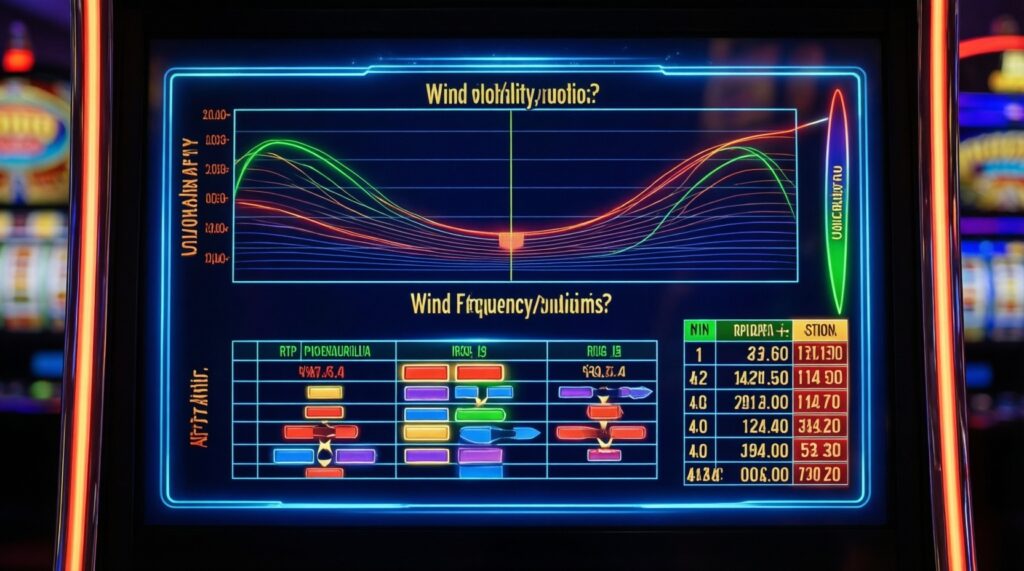
No. RTP is a long-run average; win frequency is more directly shaped by volatility and the paytable structure.
Are lists of "best rtp online slots" enough to choose a game?
They're a starting point, not a decision. You still need to match volatility to your bankroll and verify you're playing the exact RTP configuration.
What does "high rtp low volatility slots" actually imply for my session?
It usually implies a steadier experience: more frequent small returns and fewer extreme swings. It does not remove the possibility of losing sessions.
In simple terms, how is slot volatility explained to an intermediate player?
Volatility describes how outcomes are distributed: lots of small hits versus fewer but larger hits. Higher volatility increases the chance of long losing streaks before a meaningful win appears.
Is RTP the same thing as "fairness"?
No. RTP is an expected return metric; fairness depends on game integrity (RNG, correct implementation, and transparent rules) and playing the disclosed version.
How do I use "best casino games by rtp" without falling into traps?
Compare RTP within the same game type and volatility band, then apply bankroll/time constraints. Don't mix categories (e.g., slots vs table games) without accounting for different variance profiles.