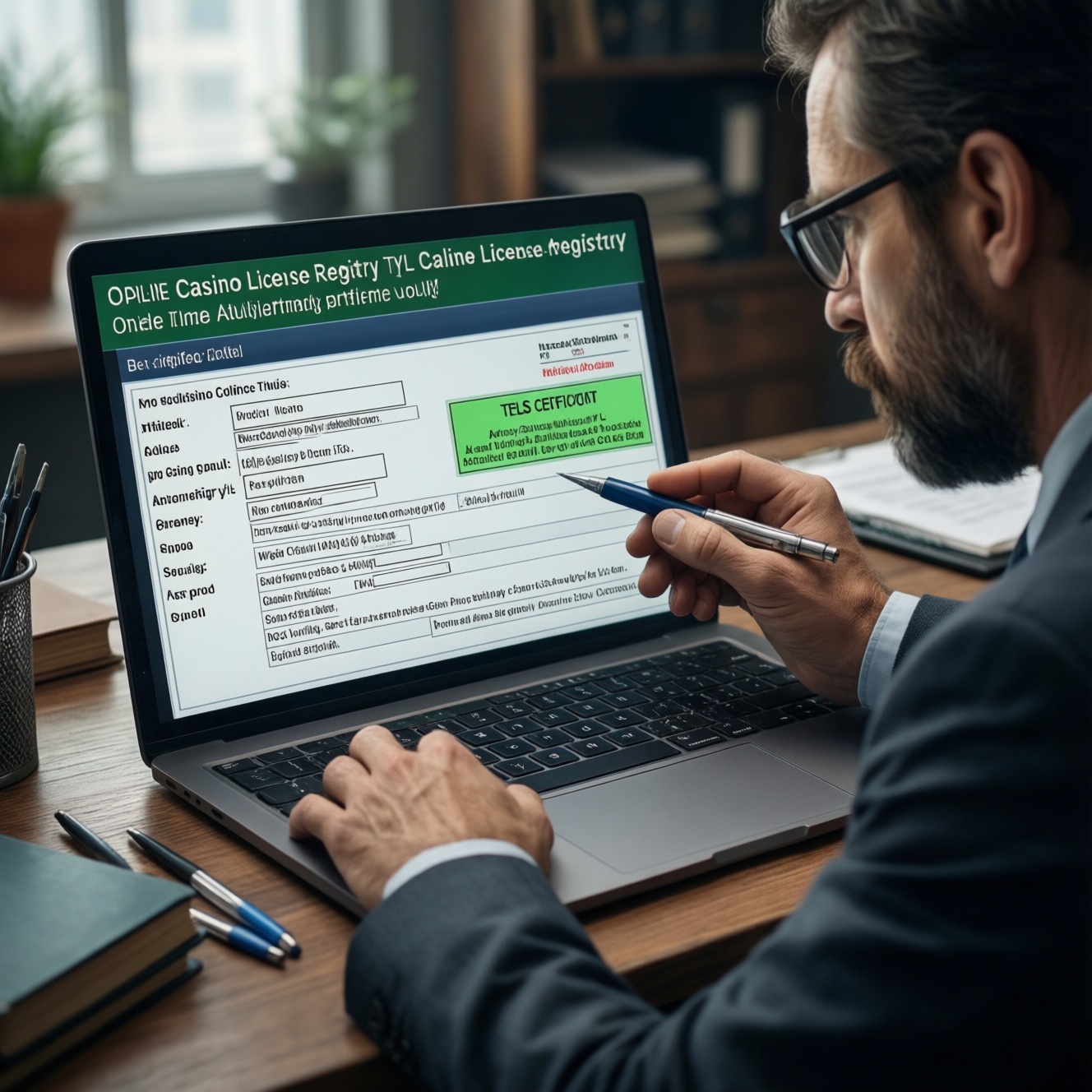
To verify an online casino's legitimacy, confirm the operator's MGA or Curacao license directly in the regulator's register, match the license holder to the site's legal entity, and audit encryption by checking TLS configuration and certificate details. This workflow reduces reliance on screenshots and marketing claims and focuses on evidence you can independently validate.
Critical Verification Checklist for Licenses and Encryption
- Find the casino's legal entity name and registration details in the site footer/Terms, not only the logo.
- Validate the license in the regulator's official register and confirm status is active and matches the same entity.
- Check the license scope (B2C, brand coverage, jurisdiction) and any conditions/limitations.
- Confirm domain-to-entity linkage (WHOIS history, corporate name, support emails, payment descriptors).
- Inspect TLS certificate issuer, validity, and hostname coverage; avoid relying on a padlock alone.
- Test TLS versions and cipher suites; require modern TLS and remove legacy protocols.
- Look for operational red flags (inconsistent entities, cloned certificates, unverifiable license numbers).
Understanding MGA and Curacao Licensing Frameworks
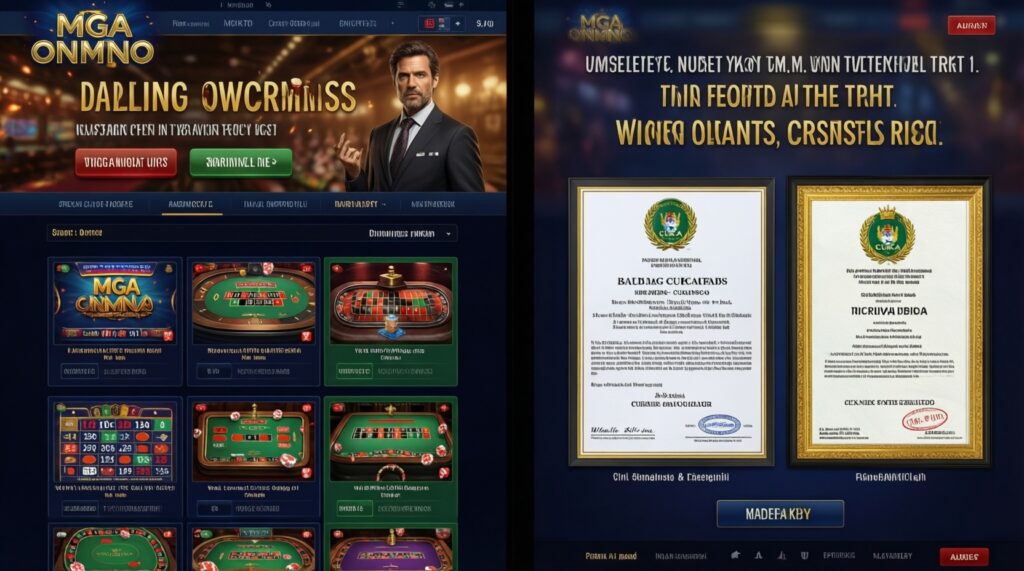
If you are comparing "คาสิโนออนไลน์ใบอนุญาต MGA ดีไหม" versus "คาสิโนออนไลน์ใบอนุญาต Curacao น่าเชื่อถือไหม", treat them as different governance models: the correct choice depends on your risk tolerance and how much verifiable compliance evidence you can collect. MGA checks tend to be more structured; Curacao checks depend heavily on validating the exact issuer/registry entry and the licensed entity behind the brand.
- Good fit: You want a repeatable, evidence-based verification process before depositing or sharing documents.
- Not worth doing: The site hides its legal entity, shows only a badge image, or blocks Terms/Policy pages by region; in that case, stop and pick a more transparent operator.
Resource: Use the official regulator register pages (MGA licensee search; Curacao license/issuer portals) rather than third-party "approved list" blogs.
Step-by-Step License Validation: Registers, Documents and Signatures

Before you attempt "ตรวจสอบใบอนุญาต MGA ออนไลน์" or "ตรวจสอบใบอนุญาต Curacao ออนไลน์", gather the exact identifiers you will cross-check. Avoid sending documents or making deposits until the steps below match end-to-end.
- What you need: casino domain(s), the legal entity name, license number (if shown), and the Terms/Privacy/Responsible Gambling pages.
- Tools: a browser, WHOIS lookup, and at least one TLS scanning method (browser certificate viewer, command line, or a reputable SSL/TLS test site).
- Access: ability to open the site without VPN ad injection; if you must use a VPN, keep notes of region-specific footer/legal text changes.
Diagnostic command (domain & TLS quick check):
openssl s_client -connect example.com:443 -servername example.com -tls1_2
Use it to confirm the certificate chain and whether the server negotiates modern TLS.
| What you verify | MGA (Malta) | Curacao | Encryption baseline (practical) |
|---|---|---|---|
| Primary evidence | Licensee entry in MGA register + matching legal entity in Terms | Correct issuer/registry entry + matching legal entity + traceable corporate details | TLS certificate + negotiated TLS version/ciphers + no mixed content |
| Most common failure | License number belongs to a different brand/entity | Badge shown without a verifiable registry entry; entity mismatch across pages | Old TLS enabled, weak ciphers, or certificate doesn't match the domain |
| What to match exactly | Legal name, license status, brand list/URL references (if provided) | Legal name, license status, issuer identity, sublicensing claims | Certificate SAN/CN covers the exact domain; valid chain; modern TLS only |
| Fast "stop" signal | No register entry found for the stated licensee | No authoritative registry confirmation for the stated license | Certificate errors, hostname mismatch, or HTTP resources on login/checkout pages |
Decoding License Metadata: Ownership, Scope, Validity and Conditions
-
Extract the legal entity from the website (not the badge).
Check the footer, Terms, and Privacy pages for the company name, registration number, and address. Save a PDF/screenshot for your records, because some sites swap entities depending on region.- Tip: search the page for "company", "limited", "ltd", "B.V.", "N.V.", or local registration identifiers.
-
Locate the regulator register entry and confirm "active".
Use the official MGA licensee search for Malta, or the relevant Curacao issuer/registry portal for Curacao. If you cannot find the exact legal name, treat the license claim as unverified. -
Match license scope to the product you will use.
Confirm the license covers B2C operation and the offered verticals (casino, live casino, sportsbook). If the scope is unclear or the site offers products outside the visible scope, pause and reassess. -
Verify brand/domain association.
If the register lists brands or URLs, ensure your domain is included or clearly operated by the same licensed entity. If it's missing, require additional evidence (formal notice, regulator reference, or consistent corporate disclosures). -
Check entity consistency across payments and support channels.
Compare the legal name against the payment descriptor (what appears on your bank statement), support email domain, and responsible gambling/help pages. Inconsistencies often indicate a shell brand or a copied license claim. -
Confirm certificate-to-entity signals (sanity check).
Open the certificate details in your browser and confirm the certificate covers the domain and is currently valid. Certificate ownership won't prove licensing, but certificate errors are a direct security risk.
Fast-track mode (3-5 actions)
- Open Terms/Privacy and write down the exact legal entity name and address.
- Search that exact entity in the MGA register or the appropriate Curacao registry portal; confirm active status.
- Run
openssl s_client -connect domain:443 -servername domainand confirm no certificate errors and modern TLS negotiation. - Run a WHOIS lookup and check for recent ownership changes or privacy patterns that conflict with the disclosed company.
Encryption Audit: TLS Versions, Cipher Suites and Data‑at‑Rest Controls
When people ask about "มาตรฐานการเข้ารหัส SSL คาสิโนออนไลน์", translate it into verifiable checks: certificate correctness, TLS versions, ciphers, and whether sensitive pages avoid downgrade and mixed-content issues.
- Certificate is valid (no browser warnings), unexpired, and matches the hostname (SAN includes the domain).
- TLS 1.2 or TLS 1.3 is supported; legacy SSL/TLS versions should not be enabled for sensitive endpoints.
- HTTP is redirected to HTTPS on all entry points (home, login, cashier, KYC upload).
- No mixed content on login/cashier pages (no scripts/images loaded over HTTP).
- HSTS is enabled (preferably with a reasonable max-age) to reduce downgrade risk.
- Cipher suites are modern (avoid known weak/obsolete constructions); prioritize forward secrecy.
- Session cookies are marked Secure and HttpOnly; SameSite is set appropriately for authentication flows.
- Uploads for verification/KYC occur only over HTTPS and do not expose direct public URLs.
Resource: Use a reputable public TLS test service (e.g., SSL Labs Server Test) for a second opinion, then confirm with openssl if results look inconsistent.
Practical Tools: Online Registers, Automated Scanners and WHOIS Checks
These are the mistakes that most often break verification attempts for "ตรวจสอบใบอนุญาต MGA คาสิโนออนไลน์" and "ตรวจสอบใบอนุญาต Curacao คาสิโนออนไลน์", even for intermediate users.
- Trusting a badge image: a PNG logo proves nothing; always require a register entry matching the legal entity.
- Searching by brand name only: registers are usually keyed by the legal licensee, not the marketing brand.
- Ignoring mirror domains: casinos may use multiple domains; verify the exact domain you will use for deposits.
- Not checking redirects: you validate one domain but you are redirected to another at login/cashier.
- Skipping WHOIS history: a recently changed registrant or frequent ownership changes can undermine trust if it conflicts with the disclosed entity.
- Confusing CDN certificates with operator identity: a valid certificate can be issued for any domain; it does not confirm licensing.
- Testing only the homepage: encryption must hold on login, cashier, and document upload endpoints.
- Misreading Curacao claims: confirm the actual issuer/registry trail and the named license holder; treat vague "Curacao licensed" text as insufficient.
Resources: regulator registers (MGA/Curacao portals), WHOIS lookup providers, and TLS scanners (SSL Labs, testssl.sh). For command-line scanning beyond basics, consider:
testssl.sh example.com
Immediate Red Flags: Compliance Gaps, Fake Certificates and Suspicious Entities
If any red flag appears, don't "fix" it by searching harder-switch to safer alternatives that reduce exposure.
- Choose a different operator with transparent disclosures. Prefer sites where the legal entity, complaint channel, and license data are consistent across Terms, cashier, and support.
- Use a low-exposure trial before KYC. If you proceed at all, test with the minimum viable interaction (read-only browsing, no document upload) until licensing and TLS checks pass.
- Prefer payment methods with stronger dispute/chargeback mechanics (where applicable). This is not a substitute for licensing, but it limits damage if the operator is unresponsive.
- Escalate to regulator/issuer guidance when claims conflict. If the register cannot confirm the entity, treat it as unlicensed for your purposes.
Practical Clarifications and Rapid Q&A on Verification Issues
Can a casino be safe if it has HTTPS but no verifiable license?
HTTPS only protects data in transit; it does not prove fair games, withdrawals, or dispute handling. If the license cannot be verified in an official register, treat the operator as high-risk.
Why does the license holder name differ from the brand name?
Brands are often operated by a parent company or a licensed entity under a different legal name. The verification requirement is that the legal entity in the site's Terms matches the entity in the regulator register.
What's the fastest way to spot a copied or fake license claim?
If the stated license number/entity cannot be found in the regulator's register, or it matches a different operator, assume the claim is copied. Do not deposit or submit KYC documents.
How do I know if the domain I'm using is actually covered by the license?
Check whether the register entry lists brands/URLs, then confirm your exact domain matches. If the register doesn't list domains, rely on strict entity matching plus consistent disclosures across all site pages.
Does a strong SSL/TLS grade guarantee secure handling of documents?
No. Good TLS reduces interception risk, but document handling also depends on server-side access controls and storage practices that you cannot fully audit externally; avoid uploads until licensing and operator identity are clear.
What should I do if TLS looks fine but there is mixed content on cashier pages?
Treat it as a security defect: mixed content can enable injection paths. Stop before entering credentials or payment details and choose a different site or wait for a confirmed fix.