
To spot a high-quality live dealer casino, verify three things fast: the studio stream must be stable and transparent, the dealer conduct must be consistent and professional, and the table rules must be clearly posted and match what happens on camera. Then confirm licensing/audits and run simple delay and procedure checks before you commit real stakes.
Quick Verification Checklist for Live Dealer Quality
- Stream looks crisp and continuous (no repeated frames, no frequent quality drops) and the table/ball/shoe is always visible when it matters.
- Dealer calls actions consistently and follows fixed procedures (shuffles, burns, spins, card handling) without "off-camera" gaps.
- Game rules are displayed in-client and match outcomes (payouts, push rules, blackjack rules, roulette rules, side-bet rules).
- Licensing and audit info is present and verifiable from the operator and the game provider.
- Bet limits and time-to-act are reasonable for your device and network; no forced auto-decisions from short timers.
- Support can provide concrete answers (provider name, studio location/provider, rules link) rather than generic marketing.
Evaluating Studio Production and Streaming Quality
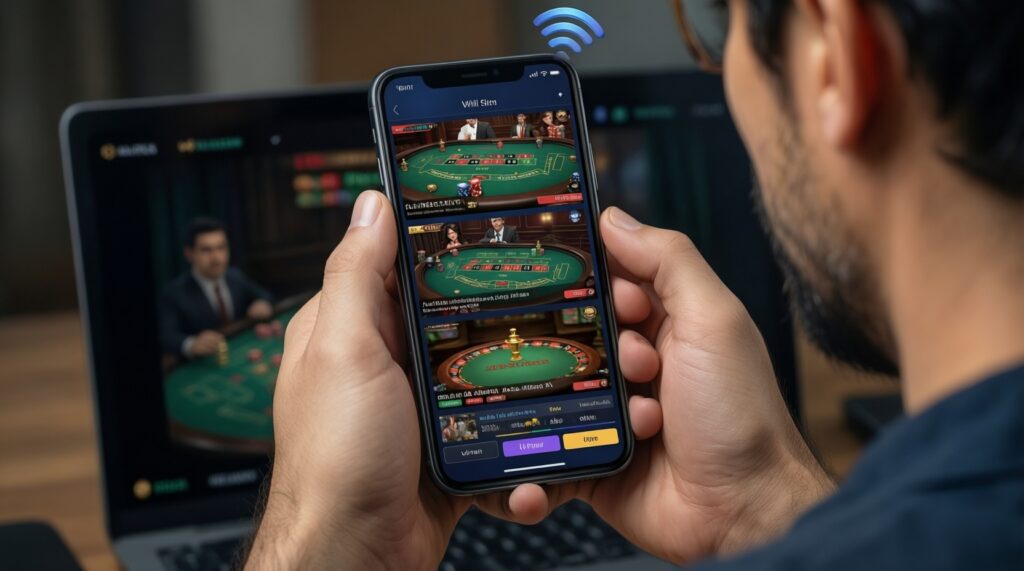
This check is for players comparing a live dealer casino online lobby across multiple providers, especially if you play on mobile or use Wi‑Fi. Skip deep testing if you only play low stakes casually; do it if you're choosing the best live dealer casino for longer sessions or higher limits.
- Camera coverage: You should see the full dealing area and key actions without cuts at decision points.
Red flag: frequent zoom/cut right before results.
Remediation: switch to another table/studio; prefer tables with a persistent overhead view. - Audio + callouts: Dealer announcements should match on-screen prompts (bets closed, no more bets, hit/stand confirmations).
Red flag: mismatched or missing calls.
Remediation: pause play, observe one full round without betting. - Latency feel: Your action window should allow normal decisions without rushing.
Red flag: timer runs out while the video is still catching up.
Remediation: reduce stream quality, change network, or pick tables with longer decision time. - On-screen overlays: Bets, outcomes, and payouts should update cleanly and immediately after result confirmation.
Red flag: overlays "correcting" after a pause.
Remediation: record the round ID/time and ask support to explain the correction.
Assessing Dealer Professionalism and Behavior
You'll need: access to the table's rules/info panel, the game history (last rounds), a stable connection, and the ability to take screenshots/notes (round ID, time, table name). If you play live casino games regularly, keep a simple log for 10-20 rounds before increasing stakes.
- Consistency under pressure: Dealer remains calm, repeats procedures the same way every round.
Red flag: rushing, skipping visible steps, arguing with chat.
Remediation: leave the table; don't "chase" on a table that feels chaotic. - Clear hand/table management: Hands stay visible; cards/balls are handled predictably; no unnecessary covering.
Red flag: hands frequently leave frame.
Remediation: choose a table with a wider angle or different studio. - Neutral interaction: Polite but not coaching or pressuring bets.
Red flag: "suggesting" side bets or reacting oddly to outcomes.
Remediation: mute chat; switch dealers/tables. - Error handling: Mistakes (misdeal, card exposed, ball drop) are announced and resolved via a published procedure.
Red flag: silent resets.
Remediation: ask support for the exact rule section covering that incident.
Verifying Game Integrity and Live Procedure Transparency
Prep checklist before you test a table
- Open the rules/info panel and locate: payouts, bet limits, decision timer, and dispute process.
- Confirm you can see: dealing area (blackjack), wheel + ball track (roulette), and any shuffler/shoe area if used.
- Turn on game history view (last results) and identify where the round ID is displayed.
- Stabilize your connection (prefer 4G/5G or strong Wi‑Fi); close background downloads/streams.
- Decide your test stake (small) and commit to observing at least 10 rounds before judging fairness.
-
Watch one full round without betting
Verify the exact sequence: "bets open" → bets placed → "bets closed" → live action → result confirmation → payouts posted. Any missing phase or unexplained cut is a transparency problem.
- Red flag: result appears while the decisive moment is off-camera.
- Remediation: move to a table where the wheel/shoe/dealing area stays visible at decision points.
-
Match on-screen outcomes to what you see
For live roulette online, the winning number must be visible as the ball settles; for blackjack, the card rank/suit must be clearly shown when revealed. Overlay changes should never "revise" the visible result.
- Red flag: overlay shows a number/card that was not clearly visible on video.
- Remediation: note the round ID and request a round review from support.
-
Verify the close-of-bets boundary
Your bet must be accepted only before "no more bets/bets closed." If late bets appear to be accepted (or rejected inconsistently), the timing boundary is unreliable.
- Red flag: accepted bets after the close message, or rejected bets well before close.
- Remediation: change tables; on mobile, reduce latency by lowering stream quality.
-
Confirm reshuffle/shoe procedures (blackjack)
When playing live dealer blackjack online, identify whether the table uses a shoe, continuous shuffler, or manual shuffle, and whether burn cards/cut card behavior is consistent. The timing of reshuffles should not feel arbitrary.
- Red flag: frequent reshuffles immediately after unusual streaks, without a visible cut card/trigger.
- Remediation: choose tables with clearly visible shoe/cut card or published reshuffle trigger.
-
Test payouts with minimum stakes
Place simple bets that have unambiguous payouts (e.g., even-money roulette bets; standard blackjack outcomes) and confirm the credited amount matches the posted table payouts. Do this for a few rounds before raising limits.
- Red flag: payout differs from the posted paytable without an explicit rule exception.
- Remediation: screenshot the rule panel + round result and escalate to support.
Checking Licensing, Certification, and Independent Audits
- Find the operator license details in the site footer or "About/Legal" section; it should name a recognized regulator and a license holder.
- Confirm the live product provider (studio brand) is named per table (info panel or lobby provider tag).
- Look for a dedicated "Responsible Gaming" and disputes/complaints path with clear escalation steps.
- Verify the rules page is versioned or at least stable (a link you can open outside the game client).
- Check whether the operator publishes testing/audit statements for RNG where applicable and live game control standards (even if live outcomes are physical, systems still handle bet acceptance and settlement).
- Ensure terms for voids/interruptions are written (stream drop, dealer error, misdeal, wheel fault) and not "at our sole discretion" without criteria.
- Test support with one precise question (e.g., "Where is the table rules link for this roulette table and what's the void policy on ball drops?"). Vague answers are a trust signal in the wrong direction.
Reading Table Rules, Betting Limits and Payout Mechanics
- Assuming rules are "standard": Blackjack can vary by dealer stands/hits, double rules, split limits, surrender, and blackjack payout. Always read the specific table rules.
- Ignoring minimum/maximum bet structure: Some side bets have different limits than the main bet. Confirm limits before placing multi-click bets.
- Missing decision timer behavior: Some tables auto-stand/auto-fold on timeout. Know the default action before you play.
- Not checking roulette bet settlement rules: Understand how the table handles neighbor bets, racetrack UI, and what happens if you place complex bets near "no more bets."
- Confusing insurance/even money with value: Rules may differ in how they present payouts; verify the payout text and the actual credited amount on a test stake.
- Overlooking void policies: Misdeals, card exposure, ball drops, or stream interruptions should have explicit resolution rules. If unclear, treat it as higher risk.
- Overcommitting before confirming settlement accuracy: If you can't reconcile a result to a visible action + posted rule, don't scale stakes on that table.
Tools and Techniques: Stream Analysis, Logs and Delay Detection
- Round log notebook (manual): Track table name, round ID, time, bet, visible outcome, credited payout. Use this when you suspect settlement mismatches or inconsistent procedures.
- Device/network A/B test: Compare the same table on Wi‑Fi vs mobile data, or another device. Use this when actions time out or overlays lag; it helps separate network latency from table issues.
- Delay sanity check: Observe whether the stream appears behind the UI (timer vs video). Use this when "bets closed" happens while the video still shows "bets open." If persistent, switch provider/table.
- Evidence capture for disputes: Screenshot rule panel + round ID + final screen state (win/loss/payout). Use this instead of screen recording if your device struggles; it's safer and usually sufficient for support escalation.
Answers to Common Technical and Fairness Concerns
How do I know the stream isn't showing me an edited result?
Watch for uninterrupted visibility at the decisive moment (ball settling, card reveal) and confirm the overlay matches what you can see. Frequent cuts exactly at result time are a strong reason to change tables.
Is a delay between video and the betting UI automatically unfair?

No, but it becomes risky if the close-of-bets boundary is inconsistent or you time out while the video is still catching up. If timer and video are out of sync, switch tables or reduce stream quality.
What's the fastest way to sanity-check roulette fairness on a single table?
Observe at least 10 rounds with no betting, ensuring the winning number is clearly visible on camera and matches the history log. Then place minimum, simple bets and confirm settlement matches posted rules.
In live dealer blackjack, what procedure issues should make me leave immediately?
Cards handled off-camera, unclear shoe/cut card visibility when relevant, or silent corrections after a hand ends are strong red flags. Pick a table with better camera coverage and transparent error procedures.
Can I rely on "standard payouts" without reading rules?
No-blackjack payouts, doubling/splitting rules, and side-bet paytables vary by table. Always read the in-client rules and run a minimum-stake payout check first.
What should I collect before contacting support about a disputed round?
Save the round ID, table name, timestamp, screenshots of the rules panel, and the final settlement screen. Keep your description factual: what you saw, what the UI showed, and what payout was credited.