
Responsible gambling is a set of practical safeguards that make gambling a planned, limited activity rather than an impulsive one. Use a checklist to set gambling limits for money and time, recognize personal triggers early, and apply platform controls such as deposit caps, cooling-off, and gambling self exclusion. If control is slipping, escalate to third-party support.
Core checklist items for safer play
- Set gambling limits for money (budget, stake cap, loss stop) before you log in.
- Schedule your play window and enforce a session end time with alarms.
- Identify triggers (stress, boredom, alcohol, chasing losses) and define a stop rule for each.
- Enable responsible gambling tools (deposit/loss limits, cooling-off, reality checks) at the account level.
- Use gambling self exclusion when rules are repeatedly broken or urges feel unmanageable.
- Keep a simple log and review it weekly; adjust limits downward after near-misses.
Establishing financial boundaries: budgets, bankrolls and stake caps

- Choose a fixed entertainment budget: assign a non-essential amount you can afford to lose without borrowing, selling assets, or delaying bills. Template: "My gambling budget is separate from rent, debt, and savings."
- Split budget into a bankroll per session: move only the session bankroll to your gambling account/wallet and keep the rest out of reach (separate bank account/e-wallet).
- Cap your stake size: decide the maximum bet per round/hand/spin and keep it constant; avoid "just this once" increases after losses.
- Define a hard stop-loss rule: pre-commit to stopping when the session bankroll is gone; do not reload during the same day.
- Who this suits: intermediate players who can follow written rules and have stable income/cashflow.
- When not to do this (escalate instead): if you are using credit, borrowing, hiding gambling, or repeatedly breaking limits-skip "tweaks" and move straight to cooling-off, self-exclusion, and problem gambling help.
Time management strategies: session limits, breaks and scheduling
- Device controls: set a phone timer plus OS app limits (Screen Time/Digital Wellbeing) for gambling apps and browsers.
- Account features: enable "reality checks" or session reminders in the operator's online casino responsible gambling settings (wording varies by site/app).
- Calendar block: schedule gambling in a fixed window (e.g., after dinner) and block the rest of the day as "no-play" time.
- Break protocol: plan a forced break (stand up, water, short walk) before you start; don't rely on willpower mid-session.
- Access to statements: ensure you can view deposit and betting history quickly (in-app history, email receipts, bank/e-wallet statements).
Example phrasing: "I play only in my scheduled window; when the alarm rings, I cash out what I can and log off-no exceptions."
Recognizing triggers: emotional, situational and behavioural warning signs
- Open a note called "My triggers + stop rules" and keep it pinned on your phone.
- Decide your non-negotiable stop signals (e.g., anger, secrecy, alcohol, chasing losses).
- Pick one accountability channel (friend/partner chat, or a single trusted contact) for check-ins.
- Pre-load alternatives for urges (walk, shower, gym, game that is not gambling, call someone).
- Prepare an "exit script" you will follow when triggered.
-
Label your top triggers (no judgment): write 3-5 situations that reliably lead to risky play, such as stress after work, boredom, or drinking. Treat triggers as predictable inputs, not personal failures.
- Emotional: anxiety, anger, loneliness, "I deserve a win."
- Situational: being alone at night, payday, watching gambling content, being in a bar.
- Behavioural: increasing stakes, skipping meals/sleep, checking balances repeatedly.
-
Define one clear stop rule per trigger: convert each trigger into an if/then action that ends the session fast. Keep rules short enough to follow under pressure.
- If I feel the urge to chase losses, then I end the session and enable cooling-off for 24 hours.
- If I've had alcohol, then I do not log in at all.
- If I start hiding play (closing tabs, deleting messages), then I stop and tell my accountability contact.
-
Watch for escalation cues during play: check in at fixed moments (start, mid-session, before any reload). Escalation is often marked by speed, secrecy, and stake creep.
- Ask: "Am I following my plan or trying to fix my mood?"
- Ask: "Am I trying to win back losses today?"
-
Execute the exit script immediately: log out, close the app/site, and physically change context (stand up, move rooms, go outside). Delay is the enemy; speed helps.
- Send one message: "I'm triggered, I stopped, I'm taking a break."
- Do a 10-minute replacement activity you prepared.
- Post-session reset and limit tightening: if a trigger appeared, reduce access for the next period (lower deposit cap, shorter sessions, more frequent reminders). Treat near-misses as a signal to add friction.
Applying technical safeguards: deposit limits, loss caps and cooling-off
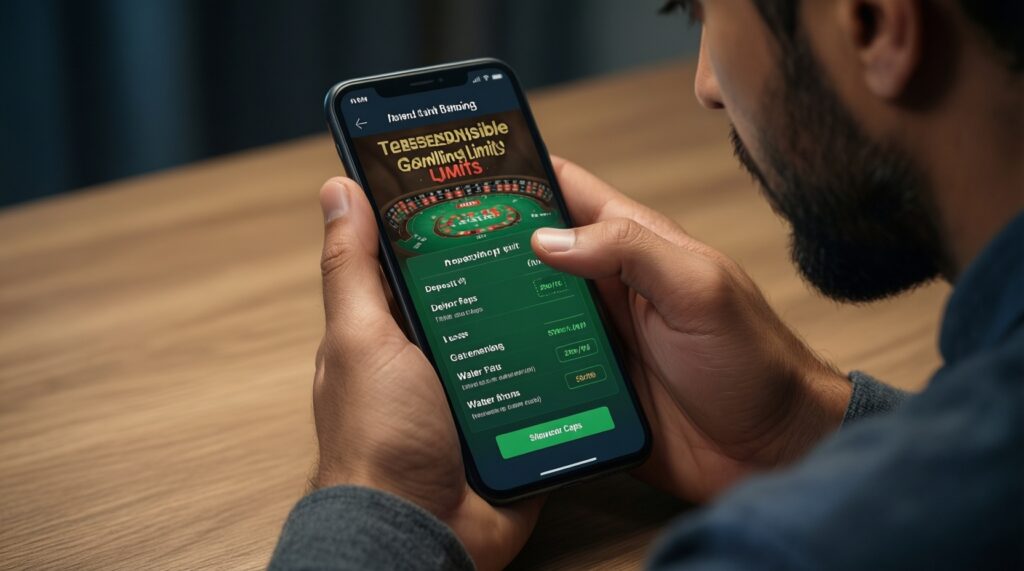
- Deposit limits are set to a level that matches your entertainment budget, not your "worst day" impulses.
- Loss limits (where available) are enabled and you know exactly what happens when the cap is hit (blocked play vs. warning only).
- Wagering/bet limits are set (if offered) so you cannot spike stakes mid-session.
- Session/time limits and reality checks are enabled and tested (you have seen at least one reminder pop-up).
- Cooling-off is configured as your default escalation step (e.g., same-day lockout when rules are broken).
- Marketing controls are tightened (opt out of promos/push notifications where possible) to reduce impulse re-entry.
- Payment friction is added (remove saved cards, disable one-click deposits, avoid credit where applicable).
- You know where the responsible gambling tools are located in the account menu and can change them without searching.
Using self-exclusion and seeking third‑party interventions
- Waiting for a crisis: delaying gambling self exclusion until money is gone or relationships are damaged; use it at the first repeated rule-break.
- Partial coverage: excluding from one site while keeping access to others; include apps, mirror sites, and any second accounts.
- Relying on memory: not documenting which operators you excluded from; keep a dated list so you do not "accidentally" return.
- Keeping fast payment rails active: leaving saved cards/instant transfers enabled, which undermines the barrier self-exclusion creates.
- Confusing cooling-off with exclusion: cooling-off is short-term friction; exclusion is a stronger boundary when you cannot reliably stop.
- Skipping accountability: not telling anyone; a single trusted person increases follow-through and reduces relapse-by-isolation.
- Ignoring support pathways: if urges feel uncontrollable, add problem gambling help from qualified local services and your healthcare provider, not only platform settings.
Operational template: "If I break my rules twice in a month, I start a cooling-off immediately; if it happens again, I initiate self-exclusion and ask my accountability contact to verify I've done it."
Tracking and reviewing: logs, metrics and iterative adjustments
- One-line session log (best for most people): after each session, record date, spend, time, and whether you followed rules; use it when you want the simplest system that still creates feedback.
- Bank/e-wallet review (best for budget control): review gambling-related transactions weekly and reconcile them with your planned budget; use it if in-app histories are incomplete or you use multiple sites.
- Account-level friction upgrades (best after near-misses): tighten limits, remove payment methods, increase reminders; use it when behaviour is drifting but not yet out of control.
- Professional support plan (best for recurring loss of control): replace self-management with structured treatment/support plus strict access controls; use it when repeated rule-breaking continues despite limits and responsible gambling tools.
Practical concerns and quick operational fixes
Which limit should I set first if I'm overwhelmed?
Start with a deposit limit that matches your entertainment budget, then add a session time limit. Money and time caps together reduce both reloading and marathon play.
What if the site's limits are easy to raise?
Set limits to the lowest safe level and add external friction: remove saved cards and use OS app limits. If you repeatedly raise limits, move to cooling-off or self-exclusion.
How do I set gambling limits without killing the fun?
Make limits predictable and pre-committed, not punitive. A stable stake cap and a fixed session window preserve entertainment while preventing escalation.
Are responsible gambling tools enough on their own?
They work best when paired with a written plan and accountability. If you keep breaking rules, tools should escalate to cooling-off and exclusion rather than being repeatedly adjusted upward.
What are the fastest warning signs of a trigger taking over?
Stake increases, chasing losses, secrecy, and an urgent need to continue are the quickest signals. Treat any one of these as a stop cue.
How do I start gambling self exclusion without overthinking it?
Use the operator's responsible gambling menu and choose the longest period you can commit to today. Then document the action (date, operator) and remove payment methods immediately.
When should I seek problem gambling help beyond self-management?
If you gamble with money needed for living costs, hide gambling, or feel unable to stop once you start, escalate to professional support and local services. Treat this as a safety step, not a failure.