
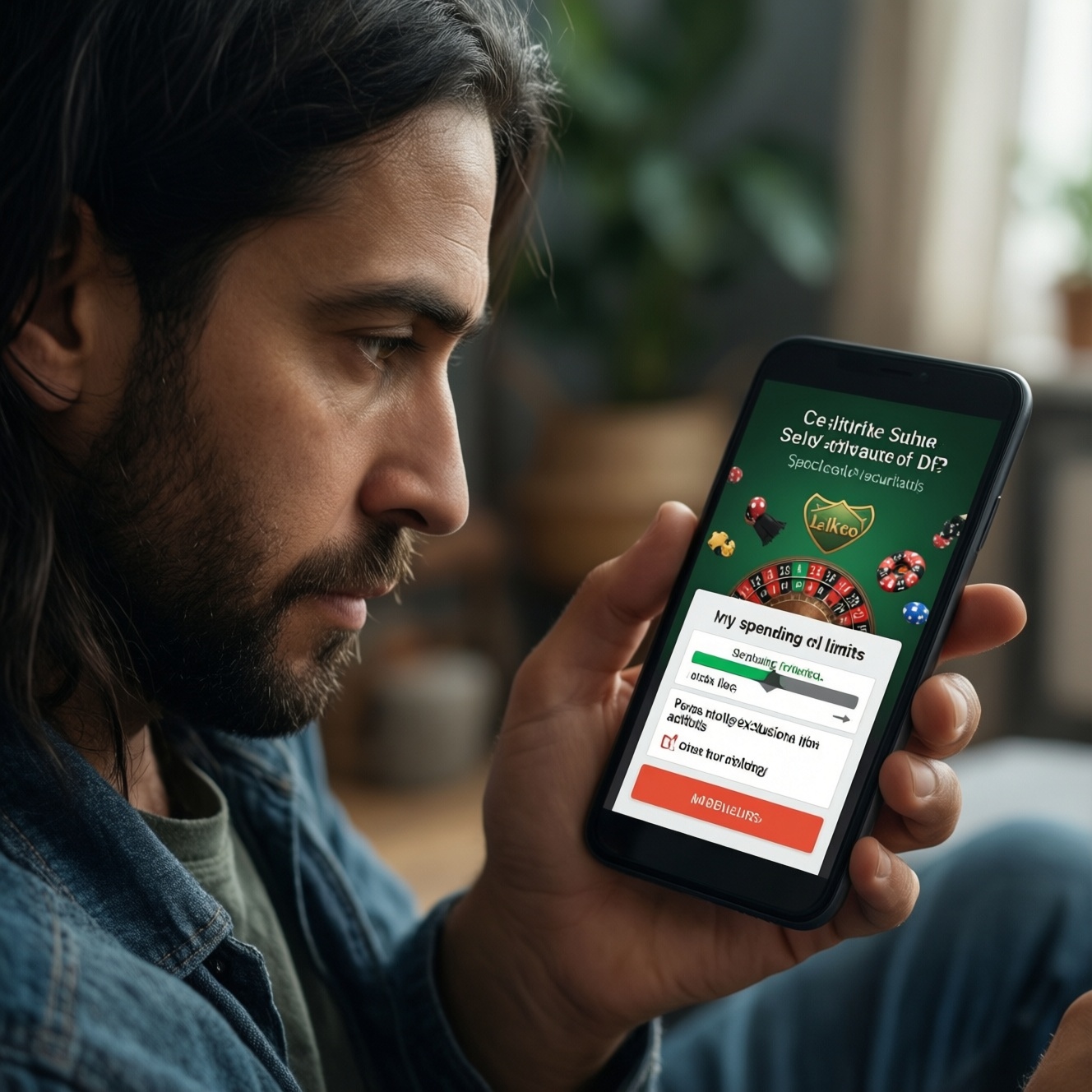
Responsible gambling works best when you pre-commit to clear limits: a fixed budget, short sessions, and simple self-checks that trigger automatic breaks or blocks. Use responsible gambling tools like deposit limits, reality checks, and exclusion features, then verify weekly that you stayed within plan. If you can't keep limits, escalate fast to stronger blocks and professional support.
Practical Limits at a Glance
- Set a weekly gambling budget you can lose without borrowing; split it into daily caps.
- Use platform controls to set deposit limits online casino accounts before you play.
- Cap sessions (for example, 30-60 minutes) and schedule mandatory breaks.
- Run a 2-minute self-check after each session; treat red flags as stop signals, not debate points.
- Escalate early: cooling-off, then self exclusion gambling if limits keep failing.
- Save a local problem gambling help hotline contact now, not later.
Setting Financial Boundaries: Budgets, Loss Limits, and Reality Checks
Who this fits: People who gamble for entertainment and can treat limits as non-negotiable rules. It's also suitable if you want a simple system that reduces impulsive top-ups and makes outcomes measurable.
When not to rely on this alone: If you're already chasing losses, hiding gambling, using credit/loans, or repeatedly breaking limits, jump directly to stronger controls (cooling-off, self exclusion gambling) and consider gambling addiction treatment support rather than trying to "optimize" your budget.
- Budget (weekly): Choose an amount you can afford to lose; keep it separate from rent, food, bills, and savings.
- Loss limit (per day/session): Stop when reached-no "one more bet" to recover.
- Deposit limit (platform): Lock in caps inside the casino/app so willpower isn't the only barrier.
- Reality check reminders: Enable pop-ups that show time spent and net result, then act on them.
Micro-template: Daily budget split
Weekly budget ÷ number of planned gambling days = daily cap. If you skip a day, do not "roll over" the unused cap automatically; decide weekly, not emotionally.
Time Management Strategies: Session Limits, Breaks, and Cooling-Offs

What you need ready before you start:
- Access to your gambling account settings (limits, reality checks, cooling-off, self-exclusion).
- A phone timer (or OS Screen Time/Digital Wellbeing) for session caps and forced breaks.
- A calendar reminder for a weekly review (10 minutes).
- A payment method you can cap (bank/app spending controls if available) and no saved cards where possible.
- A short message you will follow when triggered (see below).
Set time controls at three layers:
- Session limit: Pick a maximum length (many people start with 30-60 minutes). When it ends, you exit the app/site, even if you're "up".
- Break rule: Insert a mandatory break (for example, 10-15 minutes) after any emotionally intense moment (big win/loss, near-miss, tilt).
- Cooling-off: Pre-select a minimum period (24 hours to several days) that you will activate if you break a limit once.
Micro-template: Cooling-off message to yourself
"I'm not deciding anything while activated. I will close the app now, move money back to my main account, and review in 24 hours."
Behavioural Self-Checks: Quick Signals That You're Over the Line
Preparation checklist (2 minutes):
- Write your today's cap (money) and session cap (minutes) on a note you can see.
- Confirm limits are active (deposit limit, reality check, session timer).
- Remove easy top-up paths (disable one-click deposits; log out of payment apps where practical).
- Choose one "exit activity" (walk, shower, meal, short workout, call a friend).
- Decide your red-flag trigger (any one below = stop).
-
Run a 4-question check before you start
Answer quickly, without negotiating. If you hit a red flag, switch to a break or cooling-off immediately.
- Am I trying to win back money I lost?
- Am I stressed, angry, bored, or lonely right now?
- Am I planning to gamble longer or spend more than my written caps?
- Would I hide this session or its cost from someone close?
-
Watch for in-session "tilt" behaviours
These are practical stop signals because they predict limit-breaking. Treat them like a smoke alarm, not a performance issue.
- Increasing stakes/bet size to "make it back"
- Switching games rapidly after losses
- Ignoring reality-check pop-ups or closing them instantly
- Depositing again after hitting your planned cap
-
Do a 60-second checkpoint at the halfway mark
When your timer hits halfway, pause and record two numbers: time used and net spend. If either is above plan, end the session.
-
End-of-session review: label the session in one sentence
Write one line: "I followed the plan" or "I broke the plan." If you broke it, activate your next-level control (cooling-off or self exclusion gambling) the same day.
-
Weekly pattern check: look for escalation
Once a week, review your deposits, time spent, and whether you chased losses. If your trend is worsening for two weeks, move to stronger blocks and consider gambling addiction treatment options.
Effective Tools and Apps: Proven Tech to Reduce Harm
- I can see and confirm my deposit limit and loss limit in account settings.
- I used "reality check" reminders and acted on them at least once (paused or ended a session).
- I set an external timer (phone/OS) that I cannot ignore inside the gambling app.
- I removed saved payment methods or turned off one-click deposits where possible.
- I enabled bank/app spending controls or alerts for gambling transactions (if available).
- I blocked gambling content on at least one device (browser/app or DNS-based blocking).
- I can't access gambling sites/apps during work/sleep hours because of device limits.
- I know exactly how to trigger cooling-off and self exclusion gambling on the platforms I use.
- I saved a problem gambling help hotline contact in my phone for Thailand (TH) and my current location.
Designing a Personal Action Plan: Rules, Routines, and Accountability
Common mistakes that quietly break responsible gambling plans:
- Keeping limits "flexible": If you can change caps while emotional, they aren't limits.
- Using only one barrier: Relying on willpower without platform limits and device timers.
- Rolling over unused budget automatically: This encourages binge sessions after "good days."
- Letting wins rewrite the plan: Winning doesn't justify larger stakes or longer sessions.
- Chasing disguised as "strategy": Any plan that requires recovering losses is a risk plan, not entertainment.
- Not defining escalation rules: You need a pre-decided "if X happens, I do Y" path.
- Hiding activity: Secrecy is an early indicator you need stronger controls and accountability.
- Ignoring sleep and alcohol: Late-night play and drinking weaken impulse control.
Accountability routine (simple): Share your weekly caps with a trusted person or keep a visible log. The goal is not permission-it's friction and honesty.
Escalation Pathways: When to Seek Help and How to Enforce Blocks
Use the option that matches your risk level and recent behaviour:
- Low risk (limits usually hold): Tighten deposit limits online casino accounts, add external timers, and keep a weekly review. Appropriate if you rarely feel urge-driven and don't chase losses.
- Medium risk (limits fail sometimes): Activate cooling-off for 24 hours to several days after any limit break, remove saved payment methods, and add device-level blocking. Appropriate if you notice tilt, secrecy, or repeated top-ups.
- High risk (limits fail repeatedly): Use self exclusion gambling features across all platforms you use, extend blocks to devices/networks, and involve a trusted person to help enforce barriers. Appropriate if you chase losses, borrow, or feel unable to stop once started.
- Crisis / can't regain control: Contact a problem gambling help hotline and ask about gambling addiction treatment options (counselling, structured programs). Appropriate if gambling is harming finances, work, relationships, or mental health, or if you feel trapped.
Quick Answers to Practical Concerns
How do I set deposit limits online casino accounts if I use multiple sites?

Set limits on every site you actively use, then add a device-level block to reduce "site hopping." If you can't reliably maintain this, move to self exclusion gambling across platforms.
What session length is realistic for an intermediate player?
Start with a cap you can follow consistently (often 30-60 minutes). If you regularly run over, shorten it and add a hard external timer.
Which responsible gambling tools matter most if I only pick two?
Pick a deposit limit plus a session timer with reality-check reminders. Together they constrain both money and time, the two main drivers of harm.
What's the fastest self-check I can do when I feel the urge to chase?

Ask: "Am I trying to get back losses?" If yes, stop the session and trigger a break or cooling-off immediately.
When is self exclusion gambling the right move?
When you break limits more than once, hide gambling, or keep returning after deciding to stop. Exclusion is a safety measure, not a punishment.
What should I do if I think I need a problem gambling help hotline?
Call or message as soon as you notice loss of control or real-life harm. Ask for next steps available in Thailand (TH), including counselling and referral pathways.
Is gambling addiction treatment only for severe cases?
No-treatment can be appropriate whenever gambling is causing stress, financial strain, or repeated failed attempts to cut back. Early support is typically easier than waiting for a crisis.