
VIP rewards programs generally pay back your play in three currencies: points (redeemable balances), cashback (a percent-style rebate credited under rules), and comped perks (non-cash benefits like rooms or event access). In a casino VIP program, the real value depends on redemption rate, timing, eligibility, and restrictions-not your tier name or promised "exclusive" labels.
Snapshot: how points, cashback and comped perks operate
- Points are an internal unit you earn from tracked activity; value is set at redemption, not at earning.
- Cashback is a rebate tied to a formula (often net loss, sometimes wager volume) and may be capped or time-limited.
- Comps (including casino comp points and discretionary comps) are benefits with "face value" that can be lower than your personal utility.
- Tier/VIP level mainly changes multipliers, access, and eligibility; it doesn't guarantee better conversion rates.
- Liquidity ranking (typical): cash/withdrawable credits > points you can convert anytime > comps with booking/availability constraints.
- Best practice: compare everything in one unit (e.g., THB per 1 point or THB per 100 wagered) before chasing the "best VIP loyalty programs".
Myths and misconceptions about VIP benefits
Myth: VIP automatically means profitable. A VIP badge usually means you've hit activity thresholds; rewards reduce cost of play but rarely change the underlying house edge enough to flip expected value on their own.
Myth: all points are equal. "Points" can mean at least three things: (1) tier points for status, (2) redeemable points for rewards, and (3) promo points with wagering requirements. Mixing them up is a common reason people overestimate VIP points and cashback value.
Myth: comps are free. Comped perks are funded by marketing budgets and negotiated vendor rates; they are still "paid for" by your tracked value to the operator, and the benefit you receive can be constrained by dates, inventory, and approval rules.
Boundary to keep in mind (Thailand context). Many Thai players use offshore platforms. Terms, currency handling (THB vs. USD), and VIP accounting can differ by brand, so treat each program as its own contract rather than assuming a standard market model.
How points accrual really works: earning rates, multipliers and triggers
- Tracked activity is the base. Earning is calculated from whatever the operator tracks (bet volume, theoretical value, fees, or a mix). If an activity isn't tracked, it often earns nothing.
- Game weighting applies. Different products (slots, live casino, sportsbook, fishing/arcade) can earn at different weights, even when your wager size is the same.
- Tier multipliers stack (sometimes). A VIP tier may multiply earning, but promos can be "either/or" rather than additive.
- Triggers matter more than slogans. Daily missions, reload offers, and "VIP days" can change accrual materially for short windows.
- Rollover/wagering requirements can shadow points. Some reward conversions create bonus balances that must be wagered before withdrawal; that changes the real liquidity.
- Expiry and dormancy rules are silent killers. Points that expire or accounts that reset after inactivity can turn high headline earning into low realized value.
Measuring value: converting points into cash, discounts and experiences
To compare rewards across a casino VIP program, convert each benefit to an effective value you would actually use. A practical metric is:
Value per point (VPP) = (THB you can realistically extract from redemption) ÷ (points required)
Common redemption scenarios to price correctly
- Cash conversion. Points convert to cash/credit at a posted rate; treat any withdrawal limits or wagering requirements as a discount to value.
- Fee/commission offsets. Points used to reduce deposit/withdrawal fees or exchange spreads can be worth more than "store items" because they replace real costs.
- Discounts and vouchers. A voucher is worth what you would have paid out-of-pocket, not its face value, and only if you would have bought it anyway.
- Merchandise catalog. Price-check against the local Thai retail price and delivery friction; catalog pricing is often inflated.
- Travel/event comps. Value equals your personal willingness to pay minus restrictions (dates, minimum stay, blackout periods) and approval uncertainty.
Mini calculation (illustrative numbers)
If 10,000 points can be redeemed for a THB 300 credit, then VPP = 300 / 10,000 = THB 0.03 per point. If the same 10,000 points buy a "THB 500 voucher" you would only pay THB 250 for, your effective VPP is 250 / 10,000 = THB 0.025.
Comparison table: points vs cashback vs comps
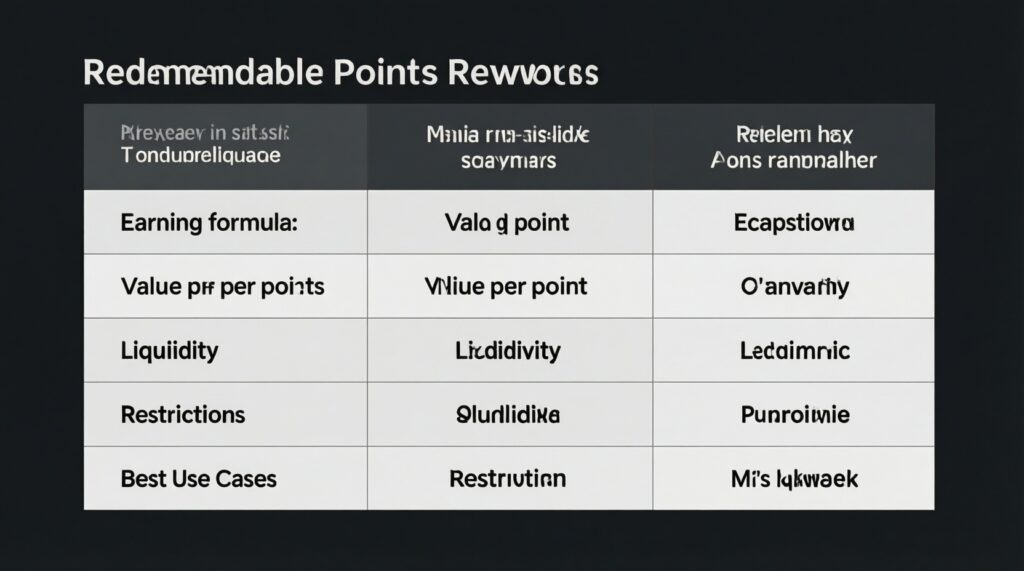
| Reward type | How you typically earn it | How to value it | Liquidity | Typical restrictions to watch | Best use case |
|---|---|---|---|---|---|
| Points (redeemable) | Tracked activity × earning rate × tier/promo multipliers | THB received ÷ points spent (VPP) | Medium | Expiry, redemption catalog pricing, minimum redemption, conversion into bonus with rollover | Flexible "budget" for credits, fees, small perks |
| Cashback | Formula on net loss or wager volume over a period | Expected cashback actually credited after caps/tiers | High to medium | Caps, limited windows, calculation basis (net loss vs turnover), excluded games | Reducing volatility; smoothing downswings |
| Comped perks (incl. casino comp points + discretionary comps) | Eligibility by tier, host approval, campaigns, partner inventory | Your willingness to pay minus friction/constraints | Low | Availability, blackout dates, non-transferable, approval risk, "use it or lose it" | High-utility experiences you would otherwise buy |
Cashback mechanics: structures, caps and accounting implications
Common cashback structures
- Net-loss cashback: cashback is calculated from losses after wins over a period; can feel "smaller" than turnover-based offers but aligns to actual outcomes.
- Turnover cashback: based on wager volume; can look generous but may exclude low-margin products or apply weighting.
- Tiered cashback: higher VIP levels unlock higher percentages or better thresholds.
- Windowed cashback: daily/weekly/monthly cycles; timing affects whether your activity counts.
Caps, clawbacks, and bookkeeping you should model
- Caps and minimums: a hard cap can make additional play earn zero incremental cashback past a point.
- Eligibility filters: excluded games, max bet rules, or only certain providers count.
- Credit type: cashback may be withdrawable cash, restricted credit, or bonus with wagering requirements-each has different real value.
- Negative carryover rules: some programs reset each cycle; others offset prior cashback or prior period results.
- Audit trail: keep your own log (date, product, stakes, result) so you can reconcile operator statements if "missing cashback" occurs.
Comped perks: eligibility, delivery methods and vendor economics
- Eligibility is often discretionary. Even at the same tier, comp approval can depend on recent activity, payment behavior, and internal risk rules.
- Delivery method changes value. A comp delivered as a voucher code, wallet credit, or third-party booking each carries different friction and refundability.
- Face value is not your value. Operators may quote rack rates; you should value comps at what you would pay in Thailand (or your actual travel market) after comparing alternatives.
- Inventory constraints are real. "Free room nights" depend on availability and blackout dates; if you can't use them, their value is near zero.
- Comps can replace better rewards. Taking a comp may reduce negotiable cashback/point offers in some host-managed setups because the operator targets a total reinvestment budget.
Practical optimization: when to prioritize points, cashback or comps
Use a simple rule: optimize for the reward type that has the highest realizable value for your next 30-60 days, not the one with the highest headline rate. In Thailand, prioritizing liquidity often matters because FX spreads, banking friction, and timing can dominate small reward differences.
Quick practical tips you can apply today
- Ask support/host what earns redeemable points vs tier points; don't assume they're the same.
- Before chasing "best VIP loyalty programs", compute one metric for each program: THB rewards you can realize per THB wagered (using your own recent play mix).
- If you prefer low friction, pick cashback where the credited balance is withdrawable (or has minimal rollover).
- If you travel or value experiences, take comps only when dates/inventory are confirmed; otherwise treat them as marketing noise.
- Redeem points on a schedule (e.g., monthly) if expiry/dormancy exists; don't let balances sit idle.
Mini-case decision flow (pseudo-logic)
- Calculate PointsValue = points earned × (THB you can redeem per point).
- Calculate CashbackValue = expected cashback after caps and exclusions.
- Calculate CompsValue = your realistic out-of-pocket avoided cost (not face value) × probability you can actually use it.
- Choose the highest of (PointsValue, CashbackValue, CompsValue), then re-check any wagering/withdrawal constraints.
Example: if your comps require uncertain approval, discount them heavily; a smaller but guaranteed VIP points and cashback package can be the better choice.
Concise answers to common practical doubts about VIP rewards
Are VIP points and cashback the same thing?
No. Points are a redeemable unit (or sometimes just tier tracking), while cashback is a rebate computed by a separate formula and schedule; their restrictions and liquidity can differ.
Do casino comp points always convert to cash?
Not always. Some casino comp points only redeem for catalog items or services, and some convert into bonus credit that may carry wagering requirements.
Why did my casino VIP program cashback look smaller than expected?
Common causes are caps, excluded games/providers, net-loss calculation (wins offset losses), and timing windows that moved some play into a different cycle.
Is a higher tier automatically better in VIP rewards programs?
Higher tiers usually improve multipliers and eligibility, but you still need to check conversion rates, caps, and whether your main games are weighted down.
How can I compare the best VIP loyalty programs without overcomplicating it?

Convert everything to one unit: expected THB you can actually realize over a period, divided by your wagered amount for the same period.
Are comped perks "free money"?

No. They are non-cash benefits funded by the operator's reinvestment budget and constrained by availability and rules; value depends on whether you would have paid for them anyway.