

To manage deposits and withdrawals safely, pick a payment rail that matches your verification level, currency needs, and risk tolerance, then follow a consistent checklist: confirm account ownership, validate destination details, fund the deposit, and withdraw back to the same name. This guide covers deposit and withdrawal methods for cards, e‑wallets, bank transfer deposit and withdrawal, and crypto deposits and withdrawals.
Essential Action Summary for Deposits & Withdrawals
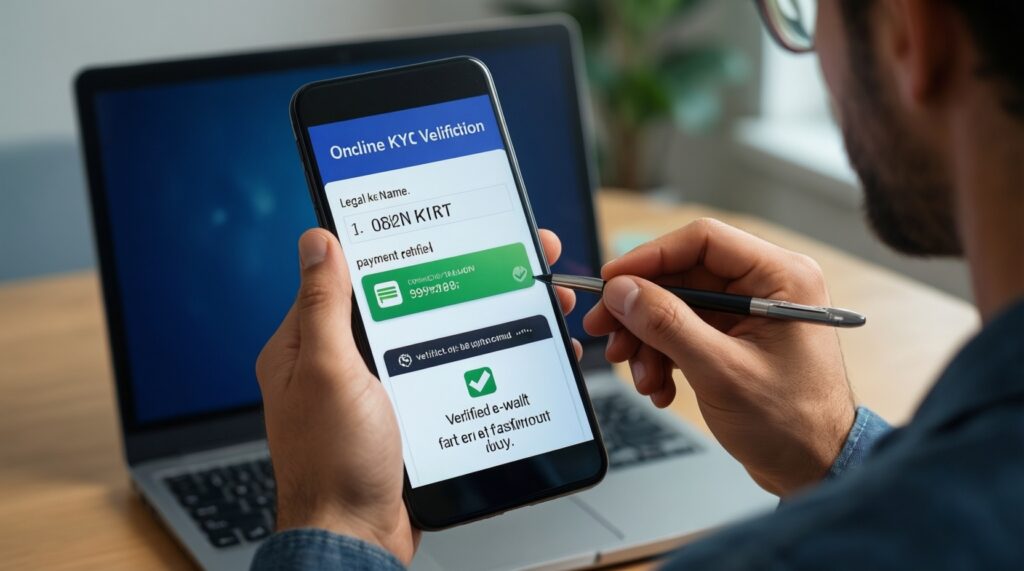
- Complete KYC early (ID + proof of payment ownership) to avoid holds at cashout time.
- Use the same legal name across your profile and payment method; mismatches are a top cause of reversals.
- For instant deposits and withdrawals, prefer verified e‑wallets; cards often refund rather than "withdraw."
- For bank transfer deposit and withdrawal, save beneficiary templates and double-check reference fields for reconciliation.
- For crypto deposits and withdrawals, verify chain/network, address type, and required memo/tag before sending.
- Track fees and FX: deposit currency, settlement currency, and withdrawal currency should be intentional, not accidental.
Preparing Transactions: Verification, Limits, and Risk Controls
Best fit: users who can verify identity and keep consistent payment ownership across deposits and withdrawals. This is the fastest path to predictable settlement, regardless of whether you use cards, e‑wallets, bank transfer, or crypto.
Do not proceed yet if any of these apply (fix first):
- Your account name differs from your bank/card/wallet holder name (even minor spelling differences).
- You plan to deposit with one person's method and withdraw to another person (commonly blocked).
- You cannot access the phone/email tied to 2FA, or you cannot receive OTPs reliably (risk of lockout).
- You're unsure which currency will be charged/settled (hidden FX is a frequent cost driver).
- You don't have a clean device/network environment (public Wi‑Fi + financial actions increases fraud flags).
| Method | Typical speed | Fees & FX exposure | Limits predictability | Fraud/rollback risk | Best use case |
|---|---|---|---|---|---|
| Cards | Deposits often quick; withdrawals commonly processed as refunds first | Possible issuer FX; merchant/acquirer fees may be embedded | Issuer limits vary; declines common if MCC/3DS triggers | Higher chargeback/rollback exposure | Fast funding when you can pass 3DS and accept refund-style cashout |
| E‑wallets | Often near-instant when verified | Wallet fees vary; FX depends on wallet conversion settings | More predictable once verified and linked | Medium; disputes depend on wallet policies | Instant deposits and withdrawals with strong audit trail |
| Bank transfer | Depends on rails and cutoffs; clearing can take longer than card/e‑wallet | Bank fees possible; FX spreads on cross-currency transfers | High for established accounts; compliance checks can delay | Lower rollback risk once settled | Higher-value funding/cashout, formal reconciliation via references |
| Crypto | On-chain confirmation dependent; varies by network congestion | Network fees + exchange/wallet spread; FX if converting | Protocol limits rare; platform limits and compliance may apply | Irreversible if mis-sent; high user-error risk | Cross-border movement when you can manage chain/address hygiene |
Card Payments: Step‑by‑Step Deposit and Refund/Withdrawal Flow
What you need before starting:
- A card in your name with online payments enabled and sufficient balance/credit.
- 3‑D Secure (3DS) capability (bank app/SMS OTP) and access to the registered phone number.
- Billing address readiness (some processors validate postal code/address formats).
- Awareness that "withdrawals" to cards may be handled as refunds up to deposited amounts, with any remainder sent via another method.
- A clean trail: avoid repeated rapid retries after declines (can trigger issuer fraud rules).
- Confirm card eligibility and 3DS: In your bank app, ensure international/online payments and 3DS approvals are enabled. If you frequently travel or use VPNs, expect additional verification prompts.
- Make a small test deposit first: Use the smallest practical amount to validate routing, currency handling, and 3DS flow. Save the successful receipt/transaction ID for later matching.
- Verify the merchant descriptor and currency: Check how the transaction appears in your statement and whether the card was charged in local or foreign currency. If the charge currency is unexpected, stop and correct settings before larger deposits.
- For cashout, expect refund logic: Many providers return funds to the original card as a refund (often up to what you deposited via that card). Keep the card active; closed/replaced cards can delay refunds until the issuer reroutes them.
- Escalate cleanly on reversals/declines: Use one retry after confirming details; then contact your issuer with the timestamp, amount, and descriptor. Multiple retries can create multiple pending authorizations.
E‑Wallets: Linking Accounts, Instant Deposits, and Cashouts
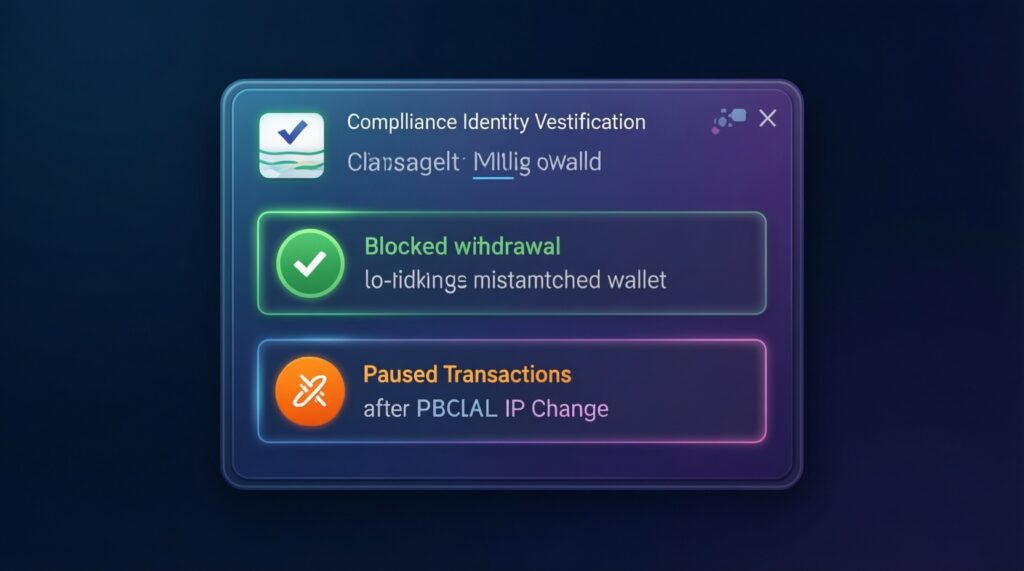
Risk-aware limits to understand before steps:
- Withdrawals are usually restricted to the same wallet identity used for deposits (name + wallet ID).
- Unverified wallets may deposit but fail at withdrawal due to compliance checks.
- Instant deposits and withdrawals can be paused if your device/IP changes sharply (fraud controls).
- Some wallets default to auto-FX conversion; confirm conversion settings to avoid surprise spreads.
- Choose the wallet that matches your profile currency and residency: Prefer an e‑wallet where your legal name, phone, and email can be verified. If you routinely need multiple currencies, ensure the wallet supports holding balances without forced conversion.
- Complete wallet verification (before funding): Finish identity checks inside the wallet app (ID, selfie, address if required) and enable 2FA.
- Keep screenshots or PDFs of verification approval pages where possible.
- Use the same spelling order as your main account profile.
- Link the wallet inside the platform and confirm ownership: Add the wallet as a payment method and follow any micro-authorization or token approval flows. Avoid linking a wallet that's shared or business-registered if your platform profile is personal.
- Run a small deposit to validate "instant" behavior: Make a minimal deposit and confirm it appears immediately on both sides (platform ledger and wallet history).
- If it shows as "pending," do not duplicate the deposit; wait for the final status first.
- Withdraw back to the same wallet ID: Initiate a withdrawal using the exact wallet account you deposited with. Double-check wallet email/ID and currency.
- If multiple wallets are connected, select the one with matching deposit history to reduce compliance friction.
- Reconcile and archive proofs: Save transaction IDs, timestamps, and confirmation emails. This speeds up support resolution if a transaction is "completed" on one side but missing on the other.
Bank Transfers: Initiation, Clearing Times, Reconciliation, and SWIFT/SEPA Nuances
Use bank transfer deposit and withdrawal when you need higher-value movement, formal references, and predictable ownership checks. Delays typically come from cut-off times, intermediary routing (especially international), and missing/incorrect reference data.
Verification checklist (after you initiate a transfer):
- Beneficiary name matches the destination account name exactly (no abbreviations unless required by your bank).
- Account number/IBAN is correct; for international routes, confirm SWIFT/BIC as applicable.
- Transfer reference/description is present and follows the required format (important for automated reconciliation).
- Currency is correct and you understand who pays fees (sender/receiver/shared) if your bank offers that choice.
- You captured a bank confirmation (receipt, UETR/trace number where available, or bank transaction ID).
- Status tracking: "sent," "processing," and "completed" can differ between bank UI and receiving side posting.
- If returning funds (withdrawal), confirm the receiving account can accept incoming transfers in that currency.
- If using an intermediary bank route, ensure your beneficiary details include any required intermediary information.
Cryptocurrency Moves: Wallet Types, On‑chain Transfers, Confirmations, and Chain Risk
Crypto deposits and withdrawals are operationally simple but unforgiving: most errors are irreversible. Treat every transfer as a controlled procedure with address validation, network selection, and proof capture.
Common mistakes to avoid:
- Sending on the wrong network/chain (asset name matches, but network differs).
- Forgetting a required memo/tag (common for certain exchanges and assets); funds may not auto-credit.
- Copy-paste malware or clipboard replacement changing the destination address.
- Using a smart-contract address when a personal wallet address is required (or vice versa).
- Ignoring minimum deposit rules (tiny deposits may not credit automatically).
- Withdrawing to an address type the receiver doesn't support.
- Assuming "confirmed" equals "credited" (platforms may require additional confirmations or compliance checks).
- Reusing addresses in ways that break your own privacy model or trigger extra screening.
- Failing to keep the transaction hash (TXID); without it, support investigations are slower.
Fees, Limits, FX Handling and Reconciliation Best Practices
When the default rail is inefficient, switch methods intentionally based on cost, speed, and reversibility.
- Use an e‑wallet instead of cards when you want instant deposits and withdrawals with fewer refund/chargeback complications and clearer transaction IDs.
- Use bank transfers instead of e‑wallets when you need stronger reconciliation via references, higher-value settlement, or reduced rollback risk once posted.
- Use crypto instead of bank transfers when cross-border banking friction is high and you can reliably manage chain selection, address hygiene, and compliance checks at both ends.
- Use cards only for funding (and plan an alternate cashout rail) when your provider processes withdrawals primarily as refunds and you need flexible cashout destinations.
- FX control: choose where conversion happens (issuer, wallet, bank, or platform) and keep it consistent across deposit and withdrawal to reduce "missing amount" confusion.
- Reconciliation habit: for every transaction, store (1) amount, (2) currency, (3) timestamp, (4) method, (5) platform transaction ID, (6) bank/wallet TX reference or TXID.
- Risk mitigation: avoid rapid retries; keep devices trusted; do withdrawals to previously-used, verified destinations whenever possible.
Practical Answers to Common Transaction Scenarios
Which deposit and withdrawal methods are most reliable for consistent cashouts?
Verified e‑wallets and bank transfers are usually the most consistent because ownership checks and references are clearer. Cards can work, but cashouts often follow a refund path and may not behave like a direct withdrawal.
How to deposit and withdraw money if my card deposit succeeds but card withdrawal is unavailable?
Withdrawals to cards are commonly restricted to refunds up to your deposited amount. Use a verified e‑wallet or bank transfer for the withdrawal route, and keep the name/ownership identical to your account profile.
Why do "instant deposits and withdrawals" sometimes become pending?
Fraud controls, device/IP changes, incomplete verification, or currency mismatches can trigger manual or automated review. Don't duplicate transactions; capture the transaction ID and wait for a final status before retrying.
What's the safest way to do a bank transfer deposit and withdrawal without losing track?
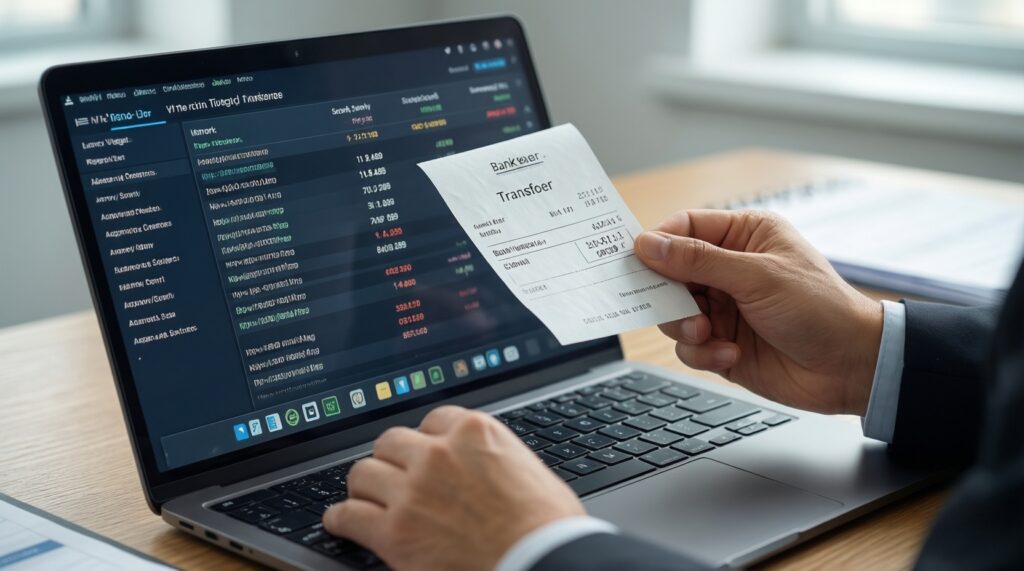
Always include the required transfer reference and save the bank receipt/trace details. Reconcile by matching amount, currency, date/time, and the bank reference against your platform ledger entries.
What's the single biggest cause of failed crypto deposits and withdrawals?
Wrong network/chain selection or missing memo/tag. Validate the network on both sides and do a small test transfer when using a new address or asset.
Can I deposit in one currency and withdraw in another?
Sometimes, but it introduces FX conversions and may trigger additional checks depending on the method. If you must, decide where conversion happens (bank, wallet, platform) and keep documentation of rates and fees.