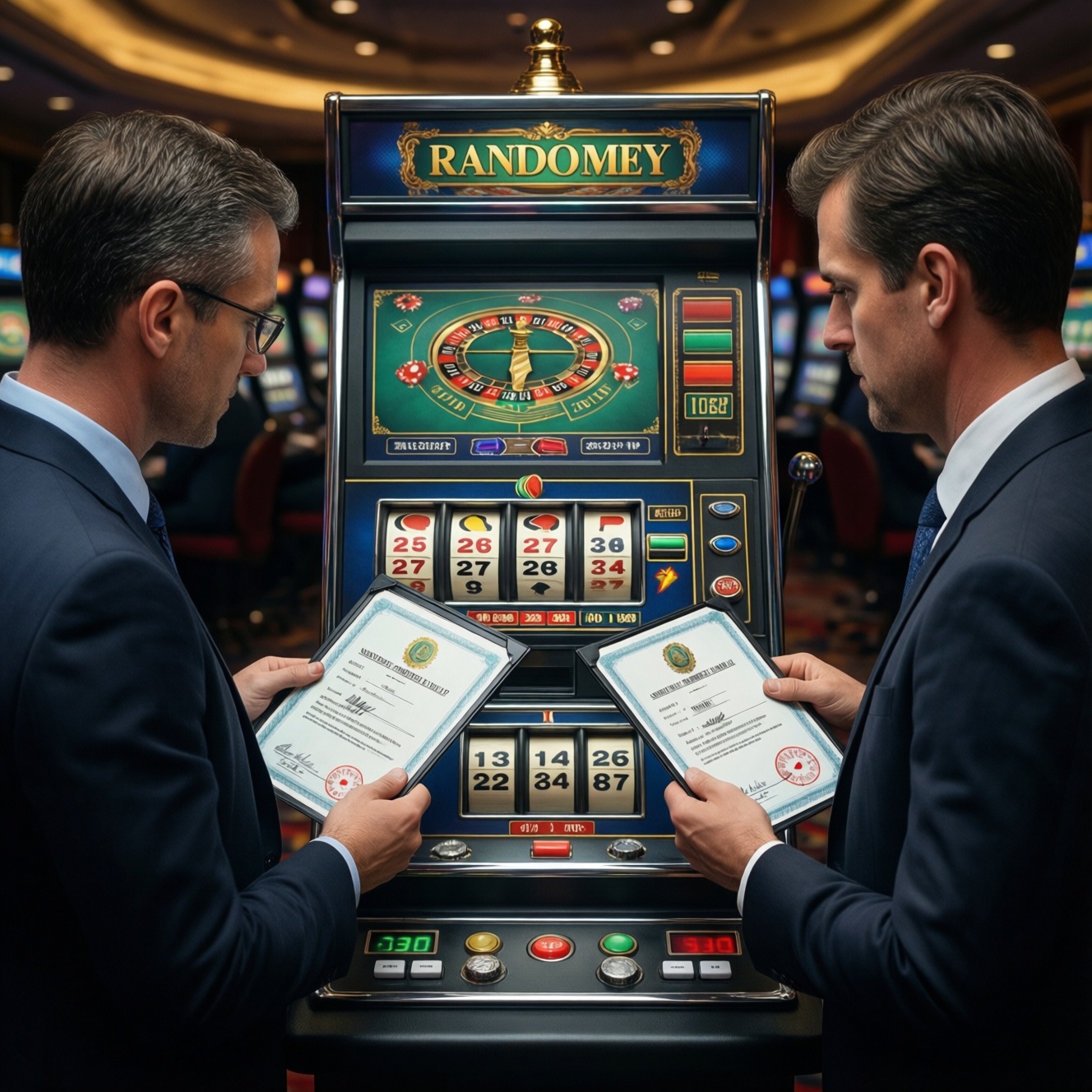
Independent RNG audits verify that a casino's random number generator behaves unpredictably and fairly under defined test conditions, and that the deployed game build matches what was tested. You can validate fairness by checking the lab, scope, build/version identifiers, dates, and certificate authenticity. This guide shows how audits work and where to find real certificates.
Core Principles Behind Fair Play and RNG Verification
- Testing targets the RNG and game logic as implemented, not marketing claims.
- Scope matters: the certificate must match the exact product, platform, and environment you use.
- Independence matters: a credible lab signs the report and can be cross-verified from the lab's domain.
- Traceability matters: certificate IDs, hashes/build versions, and dates should let you tie results to a specific release.
- Regulatory context matters: some certificates are "lab-only" unless recognized by the relevant jurisdiction.
- Ongoing compliance matters: change control and periodic re-tests reduce "tested once, changed later" risk.
What RNG Testing Actually Measures

RNG testing evaluates whether outcomes are generated in a way consistent with randomness requirements under a defined model (for example, statistical behavior, predictability resistance, and correct mapping from RNG output to game outcomes). It also checks that the tested build is the one deployed, so an online casino RNG audit report is as much about configuration and version control as it is about math.
This is most useful if you're choosing between casinos/providers, verifying a specific game's integrity, or checking a dispute claim that "the game is rigged." It's not worth doing if you only have access to a screenshot of a logo, if the casino can't provide any verifiable certificate details, or if you're trying to prove that you personally "should have won" a single session (audits don't validate individual streaks).
Standards and Protocols Used by Independent Testing Labs
Independent labs typically apply recognized statistical test batteries and software assurance practices (build integrity, environment controls, and configuration review). The deliverable is often an independent casino audit certificate (public-facing) plus a deeper technical report (often private to operators/regulators).
What you need to verify an RNG testing certification claim safely as an end user:
- Access to the casino's official site pages (footer, "About", "Fairness", "Security", "Responsible Gaming").
- The provider name and game identifier (studio/provider, game title, sometimes game ID or package name).
- Certificate metadata: lab name, certificate/report ID, issue date, scope, and covered products.
- Ability to cross-check on the lab side (lab website certificate lookup, published certificate PDF, or directory listing).
- Basic document hygiene: confirm the certificate is hosted on the lab's domain or is cryptographically verifiable (signed PDF), not only as an image.
Examples you may see referenced include eCOGRA RNG certification and an iTech Labs RNG certificate. Treat these as starting points: your job is to confirm scope, recency, and authenticity for the specific casino/product you are using in Thailand.
Step-by-Step: How an Independent Audit Is Conducted
-
Define scope and target build. The operator and lab agree what is being tested (RNG library, game server, specific games, platform, and configuration). A meaningful audit ties results to a precise build/version so later changes can't be silently substituted.
- Check for: product names, environment (live/staging), and covered game list.
-
Secure code/build intake and integrity controls. The lab receives code and/or compiled binaries, plus configuration details. Controls are applied to ensure the artifact tested is exactly the artifact described (versioning, hashing, access control).
- Check for: build identifiers, hashes, or explicit release tags referenced in the report.
- Review RNG design and implementation. Auditors inspect the RNG approach (entropy sources where applicable, seeding, state handling, and how outputs are consumed). They also review how RNG output maps into game outcomes to prevent biased transformations.
- Run statistical and predictability test suites. The lab generates large sample sets under controlled conditions and applies statistical tests appropriate to the RNG type and usage. The point is to detect bias, correlations, or predictable patterns beyond acceptable thresholds defined by the lab's methodology.
- Validate game logic integration. Auditors confirm that game outcomes (e.g., reels/cards/number draws) correctly reflect the RNG and declared rules. This can include boundary-condition testing and verification that return-to-player parameters are locked to approved configurations when applicable.
-
Document findings and issue deliverables. The lab produces an audit report and, if intended for public display, a certificate summary. The deliverable typically includes scope, tested items, dates, identifiers, and the lab's signature/verification mechanism.
- Check for: certificate/report ID, issue date, and a way to verify it on the lab's site.
- Ongoing compliance and change management. Credible programs define what triggers re-testing (RNG changes, major releases, platform migration). Without change control, an old certificate can be used to imply coverage for a newer untested build.
Fast mode: the 4-check algorithm
- Match scope: the certificate must name your casino/provider and the product class (RNG, games, platform).
- Match identifiers: confirm certificate/report ID, version/build, and issue/validity context.
- Verify on the lab domain: find the same certificate in a lab directory/lookup, not only on the casino site.
- Reject logo-only claims: if you can't find a traceable PDF/ID or lab-side verification, treat it as unverified.
How to Read and Interpret RNG Test Results and Certificates
- Lab identity is explicit: legal lab name, website domain, and contact/verification method are present.
- Document has a unique ID: certificate number or report reference you can quote and search.
- Scope is precise: it states what was tested (RNG, specific games, platform, deployment model).
- Covered entity is unambiguous: operator/casino legal name and/or provider name matches the site's legal footer.
- Build/version traceability exists: version, release tag, hash, or other build identifier is listed.
- Issue date and context are clear: you can tell when it was issued and whether it refers to a point-in-time assessment.
- Methodology is described at a high level: you can see what categories of testing occurred (code review, statistical testing, integration checks) even if detailed datasets are not public.
- Findings are stated plainly: "pass/meet requirements" language is tied to scope, not vague promises like "100% fair."
- Signature/verification is present: signed PDF, verification link, or other authenticity marker that is hard to fake.
Where to Locate Official Audit Certificates and Verify Authenticity
Start from official, stable locations and verify cross-links. A trustworthy certificate can usually be validated from at least two independent paths (casino site and lab site).
- Mistake: trusting a footer logo. A logo is not proof; look for the actual certificate PDF or certificate ID next to the claim.
- Mistake: downloading a file hosted only on the casino domain. Prefer certificates hosted on the lab's domain or a lab verification portal; if it's casino-hosted, verify the same ID exists on the lab side.
- Mistake: not checking the legal entity name. The operator in the certificate should match the casino's legal entity in the Terms/Privacy pages.
- Mistake: confusing provider certificates with operator certificates. A game studio's RNG assessment doesn't automatically certify how a specific casino deploys or configures products.
- Mistake: assuming "certified" means "regulated in Thailand". A lab audit is technical assurance; regulation/licensing is a separate question and may depend on jurisdiction.
- Mistake: ignoring scope exclusions. Some certificates exclude specific games, live dealer products, jackpots, or third-party integrations.
- Mistake: relying on undated screenshots. You need the issue date and a persistent reference (ID/URL) to verify it later.
- Mistake: treating "RNG certified" as equivalent to "payout guaranteed". RNG audits are about randomness/integrity under tested conditions, not personal outcomes.
Practical places to look:
- Casino site: "Fairness", "Security", "About us", "Compliance", Terms & Conditions appendices.
- Testing lab site: certificate directory, validation/lookup page, published announcements.
- Regulator/authority portals (when applicable): listings that reference the same lab report ID or certificate number.
Common Red Flags in Audit Reports and How to Contest Them

If something looks wrong, contest it with evidence and requests that a compliance team can act on. Keep the conversation anchored to identifiers, scope, and verification paths.
Red flags worth escalating
- No lab-side verification: you cannot find the certificate ID or document on the lab's official site.
- Vague scope: "all games are fair" without listing products, environments, or tested components.
- Mismatch in names: certificate names an entity that doesn't match the casino's legal operator.
- Unverifiable document integrity: image-only certificates, missing signatures, or PDFs with obvious editing artifacts.
- Outdated context: very old certificates presented as if they cover today's live platform without change-control notes.
- Broken links or redirected verification pages: verification URLs that no longer exist or redirect to unrelated content.
How to contest safely (without exposing sensitive data)
- Capture stable references: save the certificate URL, certificate/report ID, issue date, and screenshots of the page showing the claim.
- Request verification artifacts: ask support for the lab verification link on the lab domain, and the scope statement covering your exact product/platform.
- Ask for match details: request the operator legal name and license/compliance page that corresponds to the certificate entity.
- Escalate to compliance: if support can't answer, ask for compliance/security escalation; keep it factual and ID-based.
Alternatives when a full certificate is missing or unclear
- Switch to a casino with verifiable lab listings when you can't confirm any genuine RNG testing certification details.
- Prefer well-documented providers when only specific studios show consistent, traceable third-party assessments across multiple operators.
- Use regulator-facing information when available, as it can corroborate the existence of audits even if the full report is not public.
Practical Technical Answers on Audits, Certificates and Verification
Is an RNG certificate enough to prove every game outcome is fair?
No. It supports that the tested RNG and integration met requirements under the audited scope; it does not validate individual sessions or guarantee personal results.
What should I look for first in an online casino RNG audit report?
Start with lab name, certificate/report ID, scope (what systems/games), and build/version identifiers. If any of these are missing, treat the claim as unverified.
How do I validate an independent casino audit certificate if it's only shown as a logo?
Ask for the certificate PDF or certificate number and verify it from the testing lab's official website. If there is no lab-side listing or lookup, don't rely on the logo.
Is eCOGRA RNG certification tied to a specific operator or provider?
It can be tied to a specific entity and scope, so you must confirm the legal name and the covered products match what you're using. Don't assume it covers all games or all brands using the same platform.
What fields should an iTech Labs RNG certificate include to be meaningful?
At minimum: the lab identity, certificate/report ID, the audited entity, scope, and an issue date, plus a verification method. Missing scope or missing identifiers is a practical red flag.
How often are RNG audits repeated?
It depends on the lab program and change-control policy. Treat audits as point-in-time unless the documentation clearly explains ongoing monitoring or re-test triggers.
Can I request the full technical report from the casino?
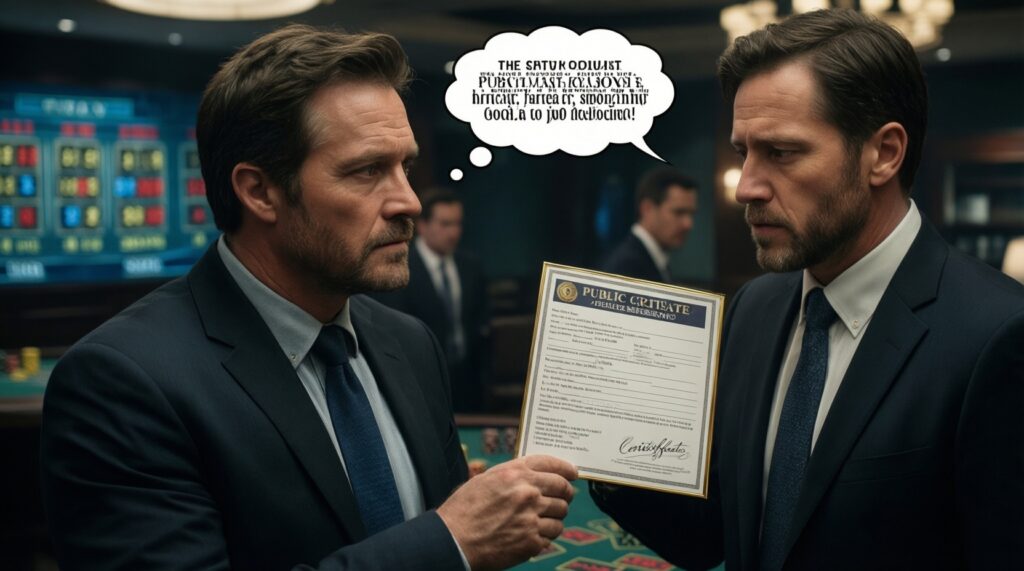
You can ask, but many full reports are shared only with regulators and operators. If the casino won't share details, ask for verifiable public certificate references and precise scope instead.