
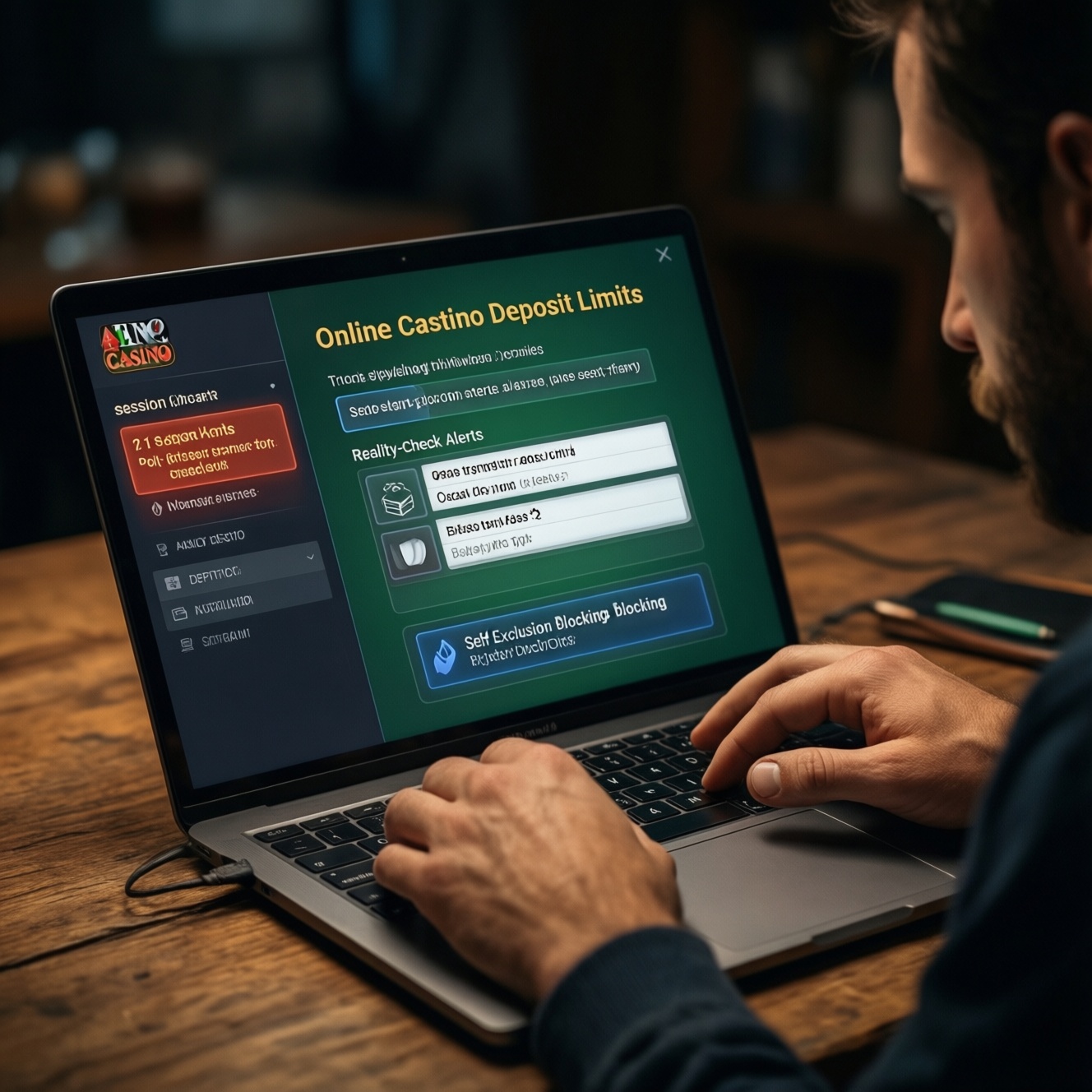
Responsible gambling works best when you combine clear money rules, hard time boundaries, and friction-based tools that stop impulsive play. Start with gambling deposit limits and a fixed budget, add session limits and reality-check prompts, then back it up with blocking, online casino self exclusion options, and a plan for problem gambling help online if you lose control.
At-a-Glance Practical Limits and Reality Checks
- Use a separate "gambling-only" wallet/account; never fund play from rent, bills, or debt.
- Set deposit caps, loss caps, and a strict rule: no top-ups during a session.
- Schedule sessions; end on time even if you are "about to win it back."
- Turn on gambling reality check tools (pop-ups, timers, spend summaries) and treat them as stop signs, not suggestions.
- Prefer hard barriers (blockers, bank controls, self-exclusion) over willpower.
- Escalate early: if rules keep breaking, switch to stronger responsible gambling tools and involve a trusted person.
Setting Financial Limits: Budgets, Loss Caps, and Funding Rules
Who this fits: players who can still follow rules most of the time and want predictable, contained spend. It's also useful if you gamble across multiple sites and need one personal policy that travels with you.
When not to rely on this alone: if you frequently chase losses, hide gambling, borrow to play, or repeatedly override limits, budgeting by itself is too weak-move straight to stronger controls like online casino self exclusion and bank-level blocks.
- Budget: a fixed amount you can comfortably lose without impacting essentials.
- Loss cap: the maximum you'll lose in a day/week before you stop.
- Funding rules: where money can come from (salary "fun" bucket only) and where it cannot (credit, overdraft, borrowed funds).
Managing Time: Session Limits, Cool-offs, and Scheduling Techniques
Prepare these before you play, so you don't have to "decide while activated":
- Account access: logins for each casino/sportsbook so you can enable time limits, deposit caps, and reality-check notifications.
- A timer you respect: phone timer, smartwatch alarm, or OS-level focus mode that ends the session on a schedule.
- A calendar slot: a pre-planned window (start and stop time) rather than "whenever."
- Cooling-off option: knowledge of where the site/app stores "cool-off" or "take a break" settings.
- Emergency friction: a pre-set step such as moving your bank card away, uninstalling apps after sessions, or using device-level blockers.
Behavioral Triggers and Reality Checks: Recognizing When to Pause
- Limits can be bypassed if you add new accounts, use alternative payment methods, or switch devices.
- Reality checks are only effective if you commit to an action when they appear (pause, cash out, or log off).
- Chasing losses is a high-risk state; decisions made there are usually rule-breaking decisions.
- If gambling is used to manage stress, boredom, or debt, simple limits may fail without support.
-
Define your "pause triggers" in plain language
Write 5-8 personal triggers that mean you stop immediately. Keep them visible (notes app or paper near your device) so you don't renegotiate mid-session.
- Examples: "I'm topping up," "I'm hiding it," "I'm angry at the game," "I'm extending time," "I'm trying to win back losses."
-
Turn reality-check prompts into a decision rule
Enable gambling reality check tools (spend/time pop-ups) and pair them with one rule: when the prompt appears, you must stand up and do a 60-second reset before continuing.
- Reset script: "What have I spent? How long have I played? Am I following my plan? If I stop now, what do I protect?"
-
Set "one-way" money boundaries before you open the app
Apply gambling deposit limits and decide your maximum loss for that session. Make it one-way: you can lower the limit later, but you cannot raise it the same day.
- Funding rule example: "Only prepaid balance; no credit, no overdraft, no borrowing."
-
Use a stop-time that is independent of outcomes
Pick an end time and stop regardless of wins or losses. Outcome-based stopping ("I'll stop when I'm even") reliably extends sessions and increases risk.
- Practical phrase: "Time ends the session, not the score."
-
Add friction for the moment you want to break rules
Plan a barrier that costs effort: remove saved cards, log out, require a password manager, or block gambling sites during off-hours. Friction is a core category of responsible gambling tools because it interrupts impulse.
-
Escalate immediately if you break your plan twice
If you override limits, chase, or conceal gambling two times in a short period, treat it as a signal to upgrade controls. Move from "soft" reminders to hard blocks or online casino self exclusion.
Proven Tools: Self‑exclusion, Blocking Software, and Financial Controls
- Deposit, loss, and time limits are enabled on every gambling account you use (not only your main one).
- Your gambling deposit limits are set to an amount you can lose without affecting essentials, and raising them requires a delay (not instant).
- Reality-check notifications are turned on, readable, and you have a defined action when they appear (pause/leave/log).
- At least one device-level barrier exists (blocker, DNS filter, or restricted mode) that you cannot disable in one click.
- At least one payment-level barrier exists (merchant block, separate account, removal of stored cards, or lower card limits).
- You know where to activate online casino self exclusion for each platform you use, including duration options and re-entry rules.
- Your "no top-ups during a session" rule is enforced by setup (no saved card, no quick deposit).
- You have a written escalation plan that includes who you will contact for problem gambling help online if you feel out of control.
Blending Technology and Human Support: When to Escalate
- Setting limits that are so high they function as permission rather than protection.
- Relying on reminders without any hard barrier (pop-ups alone are easy to ignore).
- Using multiple sites or new accounts to bypass limits you already set elsewhere.
- Keeping credit/borrowed money available "just in case," which turns into chasing fuel.
- Negotiating with yourself mid-session ("just one more bet," "I can fix it now").
- Hiding gambling activity; secrecy is a strong sign you need stronger controls and support.
- Stopping support as soon as you have a good week; stability usually requires repetition and maintenance.
- Waiting for a crisis before seeking problem gambling help online; earlier is simpler and more effective.
Measuring Success: Metrics, Logs, and Iterative Adjustments
If your current setup isn't holding, use one of these alternatives depending on what's failing:
- If money rules fail: switch from personal budgets to bank-level controls (separate account, merchant blocks, card restrictions) and remove stored payment methods.
- If time rules fail: move to scheduled access only (device/app blocking outside a fixed window) and add mandatory cool-offs after each session.
- If urges overwhelm tools: use online casino self exclusion across all operators you use, and add structured support (counseling, peer support, accountability partner).
- If tracking is inconsistent: keep a simple log after each session (time started/stopped, money in/out, trigger hit, tool used) and adjust one variable at a time weekly.
Common concerns and concise answers
Are gambling deposit limits enough on their own?
Often not. They help, but you still need time limits and a rule against topping up, plus at least one hard barrier so you can't simply switch sites or payment methods.
What are the most reliable responsible gambling tools for impulsive play?
Hard barriers: online casino self exclusion, device/site blocking, and payment controls. Reminders and pop-ups help only when paired with a pre-committed action.
Do gambling reality check tools actually reduce harm?
They can, but only if you treat them as decision points. Use a fixed response (stand up, review spend/time, then stop or continue) instead of clicking through.
How do I choose between cooling-off and self-exclusion?
Cooling-off fits short-term control and recovery from a bad session. If you repeatedly break rules or gamble to escape stress or debt pressure, online casino self exclusion is the safer default.
What should I do if I keep bypassing limits?
Escalate immediately: add blockers, remove payment methods, and move to self-exclusion where available. Consider problem gambling help online so you're not relying on solo willpower.
Is it safer to switch to "low stakes" games instead of stopping?
Lower stakes can still produce long sessions and chasing behavior. If the issue is loss of control, change the controls (limits, blocks, exclusion), not only the game.