

To implement responsible gambling tech in a casino, combine three controls: a reliable casino self-exclusion system (account blocking across channels), real-time reality checks that interrupt play with clear session summaries, and AI gambling risk monitoring that flags harmful patterns for human review. The safest approach is policy-first, privacy-by-design, and escalation workflows that prioritize player welfare over automation.
Critical Controls at a Glance
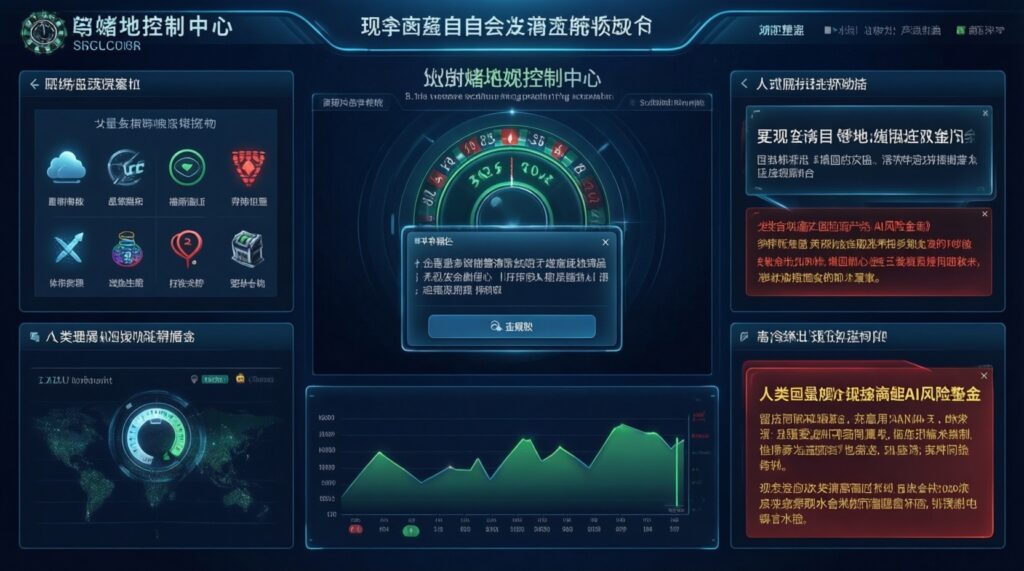
- Deploy a casino self-exclusion system that works across web, app, and on-prem accounts with immediate enforcement.
- Use reality check tools for online casinos that interrupt play on a timed cadence and show spend/time in plain language.
- Implement AI gambling risk monitoring only with human-in-the-loop decisions and documented thresholds.
- Standardize event logging so responsible gambling software sees the same signals across all products and wallets.
- Build triage queues with clear severity levels, response templates, and case audit trails.
- Minimize data, restrict access, and prove compliance via periodic audits and replayable model decisions.
Designing Robust Self‑Exclusion Systems
Best fit: any operator offering multi-channel gambling (website/app/retail) or multiple brands under one identity stack. This is foundational responsible gambling software because it provides a hard stop when a player requests it.
Not a good starting point: if you cannot reliably identify accounts across channels, or your wallet/identity systems cannot enforce immediate blocking. In that case, fix identity resolution and enforcement points first; a partial solution can create false reassurance.
Minimum enforcement checklist (implementation-oriented)
- One player, one decision: a single exclusion record must block all linked accounts and wallets.
- Immediate effect: exclude must invalidate active sessions and prevent re-authentication.
- Coverage: block deposits, betting, bonus issuance, marketing messages, and VIP/host outreach.
- Durations: support fixed periods and indefinite options; prevent "instant reversal" flows.
- Re-entry gating: require a documented review step after the exclusion ends (not automatic reactivation).
Operator template: self-exclusion record
- Player identifier: internal player_id + identity keys used for linking (e.g., hashed email/phone, KYC id where applicable)
- Scope: channels, brands, product verticals
- Start/end: timestamps, timezone, duration type
- Reason code (optional): player request, staff assist, third-party request
- Enforcement status: applied, pending, failed (with error code)
- Audit: who initiated, how verified, what notifications sent
Implementing Real‑Time Reality Checks
Reality checks are interruption controls: they must be visible, timed, and consistent, not buried in account history. Treat them as first-class responsible gambling tools for casinos, with the same reliability expectations as payments.
What you need before building
- Event access: near-real-time feed of bets, wins/losses, deposits, withdrawals, session start/stop, and product context.
- Sessionization logic: a consistent definition of "session" across web/app (and retail if applicable).
- UI surfaces: modal/overlay capability in all clients; safe fallback for older clients (forced navigation to a summary page).
- Config store: per-jurisdiction and per-product timing rules; ability to change without redeploy.
- Logging: impression, acknowledgement, dismiss actions, and time-to-acknowledge.
Reality check message template (keep it neutral)
- Time: "You have been playing for [X]."
- Net outcome: "Net result this session: [+/− amount] (based on settled bets)."
- Spending: "Deposits this session: [amount]."
- Choice: "Continue" and "Take a break / Set limits / Self-exclude" (link to controls).
Integrating AI for Behavioral Risk Monitoring
AI gambling risk monitoring should prioritize safety, explainability, and operational actionability. The goal is to detect patterns early, route them to trained staff, and apply proportionate interventions. Avoid using AI to target promotions or to optimize revenue; that breaks responsible gambling intent.
Preparation checklist (do this before model work)
- Define "risk" operationally: list behaviors you will act on and the allowed interventions per severity.
- Confirm data readiness: consistent timestamps, player identifiers, and settlement logic across products.
- Establish human ownership: name a case team responsible for outcomes, not just alerts.
- Set safety constraints: require human review for any restriction beyond gentle nudges (e.g., self-exclusion assistance).
- Document governance: who can change thresholds, deploy models, and access sensitive fields.
-
Map signals to measurable features
Translate behaviors into features you can compute reliably (e.g., session length, deposit frequency, chasing indicators, volatility of stake size). Keep features stable across games so the model doesn't learn product quirks.
- Use separate feature sets for frequency (how often), intensity (how much), and loss recovery patterns.
- Prefer settled outcomes; label "pending" separately to avoid misleading net results.
-
Build a baseline rules layer first
Start with deterministic rules for clear risk patterns so you can act safely even before ML maturity. This also provides explainability and a backstop if models fail.
- Example outputs: "Reality check frequency increased," "Offer limit-setting prompt," "Recommend self-exclusion support contact."
-
Choose a model approach aligned to action
Use interpretable models where possible and ensure every score maps to a defined response tier. If you cannot explain a score to staff, you cannot safely operationalize it.
- Define 3-4 severity bands and attach an intervention playbook to each.
- Log top contributing factors for each alert to support staff decisions.
-
Validate with offline replay and stress tests
Before any live use, replay historical streams to measure stability, false positives, and time-to-detection. Stress test edge cases like big wins, bonus periods, and unusual session breaks.
- Check for bias across channels (app vs web) caused by different session tracking.
- Confirm the system remains safe when data arrives late or out of order.
-
Deploy with human-in-the-loop triage
Ship the model as a decision-support tool, not an automatic enforcement engine. Route alerts to a case queue with context, recommended next steps, and a requirement for staff confirmation.
- Provide "confirm / dismiss / needs more info" outcomes to improve future tuning.
- Include links to player history, previous interventions, and active limits/exclusions.
-
Monitor drift and iterate thresholds safely
Track whether alert volumes or feature distributions shift after product changes. Update thresholds via change control, not ad-hoc edits, and keep a rollback plan.
- Freeze major changes during peak campaigns unless safety demands it.
- Record model/version per alert for auditability.
Data Architecture, Retention and Privacy Safeguards
- Single source of truth: player_id resolution is consistent across brands/channels before any scoring or exclusion enforcement.
- Event immutability: raw events are append-only; corrections are separate events with references.
- Least privilege: only case staff can view sensitive details; engineers see pseudonymized data where feasible.
- Purpose limitation: risk signals are not reused for marketing segmentation or VIP targeting.
- Retention controls: keep only what is needed for responsible gambling operations and audits; delete/aggregate older data per policy.
- Explainability logs: store which features/rules contributed to an alert so actions are reviewable.
- Secure transport/storage: encrypt in transit and at rest; rotate keys; monitor access.
- Incident readiness: documented response for data leaks involving self-exclusion or risk flags.
Operationalizing Alerts, Case Triage and Staff Interventions
- Alert overload: generating too many low-quality alerts; staff start ignoring the queue and high-risk cases are delayed.
- No action mapping: scores exist but there is no defined, permitted intervention per severity band.
- Automation overreach: imposing restrictions automatically without review or a clear, recorded rationale.
- Missing context: staff receive an alert without recent deposits, session history, prior contacts, or active limits/exclusion status.
- Inconsistent channels: interventions occur in email but not in-app (or vice versa), leading to repeated prompting and player confusion.
- Poor audit trails: decisions are not logged (who did what, when, and why), making it impossible to defend or improve the program.
- Unsafe messaging: contacting players in a way that feels promotional or accusatory rather than supportive and neutral.
- Broken escalation paths: no clear route for urgent cases, third-party concerns, or repeated high-risk flags.
Metrics, Audits and Continuous Improvement Checklist
Use alternatives when they reduce risk faster than complex builds, or when your data and staffing maturity is limited.
- Rules-only monitoring (no ML): appropriate when you need transparent triggers quickly and can't support model governance yet.
- Vendor-provided responsible gambling tools for casinos: appropriate when you need faster deployment, but only if you can audit decision logic and integrate your self-exclusion enforcement reliably.
- Enhanced reality checks + limit setting first: appropriate when your biggest gap is player awareness and your triage team is still being formed.
- Manual case review program: appropriate for smaller operators; start with high-signal cases (repeat exclusions, repeated failed deposits, long sessions) while building data pipelines.
Quick Operator Clarifications
Is "responsible gambling software" a single product or a stack?
It is usually a stack: identity + enforcement (self-exclusion), messaging (reality checks), monitoring (rules/ML), and a case management workflow. Treat integration and auditability as core requirements.
What makes a casino self-exclusion system "robust" in practice?

Immediate blocking across all channels and brands, with deposits and marketing also stopped. Robustness is measured by enforcement coverage and verifiable audit logs, not by UI screens.
How often should reality check tools for online casinos interrupt play?
Pick a cadence that is consistent and configurable per jurisdiction and product. The key is that it must interrupt play, summarize time and net outcome in plain language, and log acknowledgement reliably.
Can AI gambling risk monitoring automatically suspend accounts?
It should not by default. Use AI to prioritize human review, then apply proportionate actions based on documented policy and staff confirmation.
Which signals are most useful when starting AI or rules-based monitoring?
Start with signals that are hard to spoof and easy to compute consistently: session length/frequency, deposit frequency, stake volatility, and repeated high-intensity play. Avoid over-relying on a single product-specific metric.
How do we prevent "responsible gambling tools for casinos" from becoming a marketing channel?
Separate risk tooling from CRM audiences, permissions, and KPIs. Enforce purpose limitation in data access and review message templates for neutrality.